
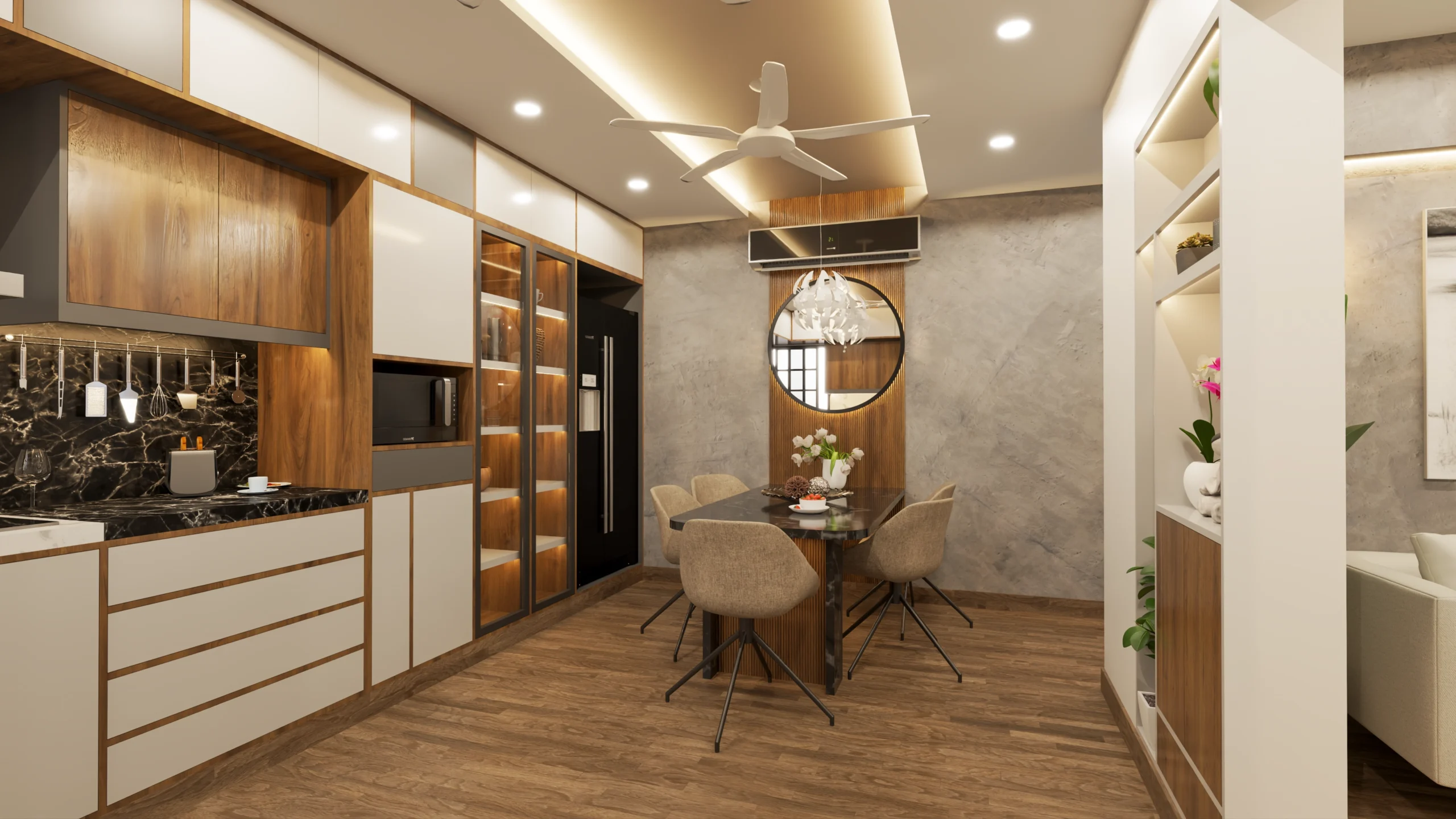
I am writing this from a quiet corner of a gallery in Mayfair, where a single Flemish oil painting dominates an otherwise bare wall, and the afternoon light falls across the parquet floor in long, amber ribbons. It is the kind of room that asks nothing of you and yet gives everything. There is no excess here, no performance; only a deeply considered arrangement of things that have earned their place. It is, I think, the most honest expression of what I have come to understand as the European approach to luxury interior design: a philosophy rooted not in accumulation, but in restraint, memory, and the quiet authority of materials that have lived. This is what I want to explore with you today, because in a world increasingly seduced by the disposable and the instantaneous, the continental tradition of comfort offers something genuinely radical.
The Architecture of Ease: What European Comfort Actually Means
Comfort as Cultural Philosophy
There is a persistent misconception, particularly among those who have encountered European interiors only through the curated lens of travel photography, that continental elegance is synonymous with formality. That it is cold, untouchable, a museum of good taste rather than a home. In my experience, having worked across Paris, Milan, Vienna, and the Algarve, the precise opposite is true. The European approach to luxury interior design is fundamentally about ease; a deeply ingrained cultural understanding that a beautiful room must first and foremost be liveable. The French call it art de vivre, the Italians speak of dolce far niente, and the Danes have given the world hygge, but beneath these linguistic distinctions lies a shared conviction: that comfort is not an afterthought to elegance, it is its very foundation.
The Weight of Inherited Space
What distinguishes a truly European interior from its global counterparts is often the presence of history, not as decoration, but as architecture. I have sat in Parisian apartments where the original Haussmann cornicing frames a contemporary sofa in aged leather, and the conversation between old and new feels entirely natural, entirely unforced. The walls carry the memory of previous lives, and rather than erasing that memory with a fresh coat of magnolia, the European sensibility leans into it. A worn stone threshold, a slightly uneven plaster ceiling, a window that rattles faintly in the winter wind: these are not flaws to be corrected. They are the credentials of a space that has earned its character. This is the kind of comfort that cannot be purchased wholesale from a showroom floor; it must be cultivated, layer by patient layer, over time.
Material Intelligence: The Raw Vocabulary of Continental Interiors
Stone, Linen, and the Honesty of Natural Surfaces
If there is a single material principle that unifies the European approach to luxury interior design across its many regional dialects, it is the primacy of the natural and the unmediated. Marble, in its many incarnations, from the cool grey of Carrara to the warm amber of Portuguese Lioz, is not deployed as a status symbol in the continental tradition; it is chosen because it is honest. It is cold in summer and holds warmth in winter. It ages with extraordinary grace, developing a patina that synthetic surfaces can only approximate. Similarly, aged oak, raw linen, hand-thrown ceramics, and unlacquered brass are valued not for their price point but for their capacity to change, to respond to light and use and time. These are materials that participate in the life of a room rather than merely furnishing it.
The Edit as Discipline
One of the most instructive lessons I have absorbed from years of working within the European design tradition is the discipline of the edit. A room in a Milanese apartment or a Lisbon townhouse is rarely crowded. There is space between objects, a deliberate breathing room that allows each piece to be seen, considered, and felt. This is not minimalism in the austere, almost punitive sense that the word sometimes implies; it is curation. Every object present has been chosen with intention, and every object absent has been consciously excluded. The result is a kind of visual silence that is, paradoxically, deeply expressive. It is the silence of a room that knows exactly what it is. At The Shape Interiors, this philosophy of the considered edit is central to how we approach every project, because we believe that what you remove from a space is as significant as what you introduce.
Light, Proportion, and the Geometry of Continental Living
The European Relationship with Natural Light
To understand the European approach to luxury interior design, one must understand the European relationship with light, which is, above all else, a relationship of reverence. In the northern latitudes, from Copenhagen to Edinburgh, light is precious and scarce for much of the year, and interiors are designed to capture and amplify every available lumen. Pale, chalky walls reflect the grey northern sky back into the room. Mirrors are positioned not for vanity but for luminosity. Curtains, when they exist at all, are sheer and generous, pooling softly on the floor to suggest abundance without obstruction. In the Mediterranean south, the calculus reverses: thick walls and deep-set windows filter the fierce afternoon sun into something golden and manageable, and the interior becomes a sanctuary of cool shadow, punctuated by shafts of warm, directional light that move slowly across the day like a sundial.
Proportion as the Silent Architect
There is a reason that European rooms, even modest ones, so often feel right in a way that is difficult to articulate but immediately sensed upon entering. That reason is proportion. The classical European architectural tradition, from the Palladian villas of the Veneto to the Georgian terraces of Dublin, was built upon a rigorous understanding of the relationship between height, width, and depth, and the way those relationships affect the human body’s experience of space. A ceiling of the correct height does not merely provide headroom; it creates a particular quality of air, a sense of vertical generosity that is both calming and enlivening. A doorway of the right width does not merely permit passage; it frames the room beyond as a picture is framed, preparing the eye and the mind for what is to come. These are the invisible architectures of comfort, and they are the inheritance of a continent that has been thinking seriously about how human beings inhabit space for several thousand years.
The Living Room as a Portrait: Personalising the Continental Ideal
Objects with Provenance, Rooms with Memory
The most compelling European interiors I have encountered in my career share a quality that I can only describe as biographical. They tell a story, not loudly or didactically, but in the way that a well-chosen collection of objects, each with its own history and provenance, creates a cumulative narrative of a life thoughtfully lived. A bronze figure acquired in an Athens flea market sits beside a contemporary ceramic from a London studio potter. A nineteenth-century writing desk, its surface marked by decades of use, anchors a corner furnished otherwise with clean-lined modern seating. These juxtapositions are not accidental; they are the result of a curatorial intelligence that understands how objects in conversation with one another create something richer than any single piece could achieve alone. The room becomes, in the most literal sense, a portrait of its inhabitant.
Scent, Texture, and the Sensory Completeness of a Well-Designed Room
I have always maintained that a room is not truly finished until it engages all five senses, and the European tradition, perhaps more than any other, understands this instinctively. The scent of beeswax polish on an old oak floor, the slight roughness of a hand-woven wool throw against the skin, the particular acoustic quality of a room with high ceilings and soft furnishings that absorbs sound without deadening it: these are not incidental pleasures. They are the difference between a room that is merely beautiful and a room that is genuinely inhabitable. The continental approach to luxury interior design has always understood that comfort is a full-body experience, and that the most sophisticated interiors are those that have been designed with as much attention to the tactile and the olfactory as to the visual.
The Elena Edit: Design Dictates for Continental Elegance
- Prioritise natural materials with inherent patina: marble, aged oak, raw linen, and unlacquered metals that evolve gracefully over time.
- Embrace the discipline of the edit; remove anything that cannot justify its presence with either beauty, function, or personal meaning.
- Design for light first: understand the quality and direction of natural light in your space before selecting any surface finish or textile.
- Invest in proportion; a room with correct architectural proportions will always feel more comfortable than one furnished with expensive pieces in a poorly scaled space.
- Layer history into the present; allow objects of different periods and provenance to coexist, creating a biographical richness that no single-era scheme can achieve.
- Attend to the sensory register beyond the visual: scent, texture, and acoustic quality are the hallmarks of a truly complete interior.
- Choose quality of craft over novelty of concept; a beautifully made object will outlast any trend and grow more interesting with age.
There is, I think, something quietly urgent about returning to these principles at this particular moment in design history. We live in an era of extraordinary visual abundance, where images of interiors proliferate across every digital platform, each one more polished and more immediately gratifying than the last. And yet, for all this visual richness, there is a growing hunger for spaces that feel genuinely real, genuinely inhabited, genuinely human. The European approach to luxury interior design, with its deep roots in material honesty, architectural proportion, and the slow accumulation of meaning, offers precisely that. It is not a style to be adopted wholesale, like a costume; it is a sensibility to be absorbed, adapted, and made one’s own. It is the understanding that a beautiful room is not a destination but a practice, one that rewards patience, discernment, and a willingness to live with intention. I find myself returning to that Mayfair gallery in my mind, to the painting and the light and the silence, and I wonder: what would it mean for each of us to design our lives with that same quality of attention?
The architecture of your legacy is defined not merely by the objects you choose, but by the standard of life you refuse to compromise on. At The Shape Interiors, we specialise in the silent language of luxury, transforming raw space into sophisticated environments that resonate with the human spirit and professional excellence. Whether you are defining a private sanctuary or a global corporate headquarters, the requirement remains the same: a vision executed with absolute precision.
We invite you to explore our work and discover why the world’s most discerning individuals trust us with their most personal and professional environments.
Refine Your World.
Your journey toward an unparalleled environment begins with a single conversation. Connect with our global design team to initiate your bespoke project.