
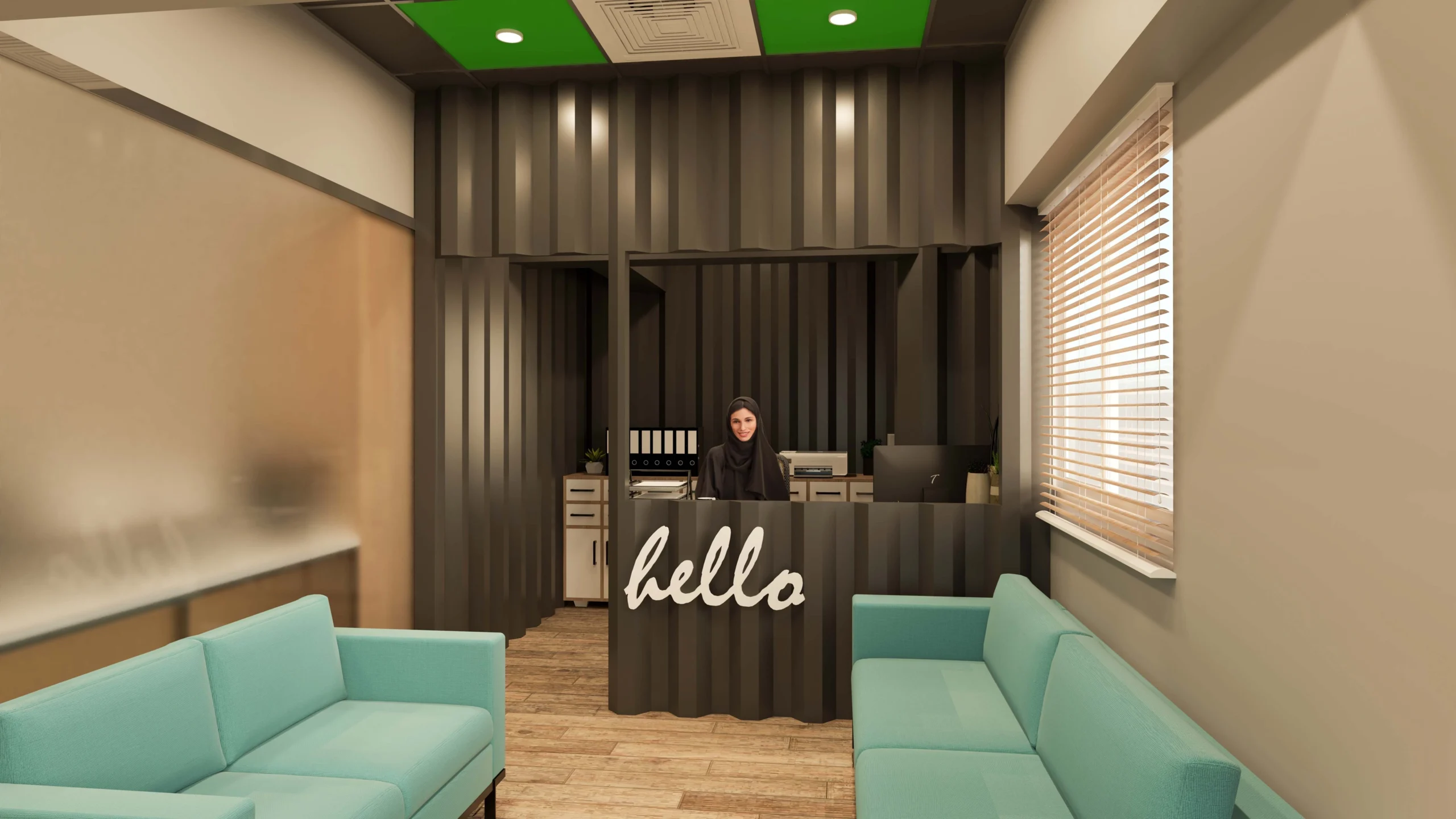
I am writing this from the quiet anteroom of a private gallery in Mayfair, where the afternoon light falls in long, amber columns across a floor of aged Calacatta marble. There is a particular stillness here, the kind that only a well-considered entrance can produce, and it has prompted me to reflect, once again, on a subject that has occupied my thinking for the better part of two decades: the philosophy of the threshold. It is, I believe, one of the most underestimated conversations in luxury interior design. We speak endlessly of the drawing room, the principal bedroom, the chef’s kitchen; yet it is the entryway, that first breath of a home, that sets the emotional register for everything that follows. The threshold is not merely a corridor. It is a declaration.
The Entryway as Spatial Philosophy: First Impressions and the Architecture of Arrival
The Psychological Weight of the First Step
There is a moment, familiar to anyone who has ever stepped into a truly considered home, when the outside world simply falls away. The noise of the street, the weight of the day, the accumulated friction of modern life: all of it recedes, replaced by something quieter and more intentional. This is not accidental. It is the result of deliberate spatial philosophy, a conscious orchestration of proportion, material, light, and scent that communicates, before a single word is spoken, the values of the people who live within. The entryway is the home’s opening sentence, and like all great opening sentences, it must be precise, evocative, and entirely impossible to ignore. When I consider a new residential commission, the threshold is always where I begin, not because it is the largest space, but because it is the most psychologically loaded.
Proportion, Volume, and the Sense of Welcome
Architectural proportion in an entrance hall operates on a deeply instinctive level. A ceiling that soars, even modestly, above the standard domestic height creates an immediate sense of release; the body exhales, the shoulders drop, and the visitor understands, without conscious analysis, that they have entered somewhere of consequence. Conversely, a compressed, poorly lit entrance communicates anxiety before a single object has been placed within it. This is why I always advocate for the removal of unnecessary partitions in entrance spaces, for the prioritisation of volume over storage, and for the careful calibration of ceiling height relative to floor area. The mathematics of welcome are surprisingly precise, and they reward those who take the time to understand them.
Material Intelligence: What the Threshold Communicates Through Surface and Texture
The Language of Stone and Aged Material
If the architecture of an entryway establishes the grammar of a home, then its materials provide the vocabulary. And in my experience, nothing speaks with greater authority than stone. A floor of honed limestone, a wall clad in book-matched travertine, a single console of aged Verde marble: these are not decorative choices. They are statements of permanence, of a relationship with geological time that transcends the transient cycles of trend. Stone carries memory within its veining; it has witnessed centuries before it arrived in your entrance hall, and it will witness centuries more. This is precisely why I favour raw, natural materials over their engineered counterparts in threshold spaces. The imperfection of a hand-cut edge, the slight variation in a marble slab’s tone, the cool weight of a stone floor underfoot: these qualities communicate authenticity in a way that no composite surface can replicate.
Aged Leather, Brass, and the Patina of Considered Living
Beyond stone, the entryway benefits enormously from the presence of materials that age with grace. A hall bench upholstered in thick, vegetable-tanned leather will deepen in colour over years of use, developing a patina that speaks of a life richly lived. Brass hardware, left unlacquered, will shift from its initial brightness to a warmer, more complex tone that no factory finish can replicate. These are the materials of what I privately call “considered living”: an approach to the home that values the accumulation of character over the maintenance of pristine newness. The threshold, as the most transited space in any residence, is the ideal canvas for this philosophy. It is the space that will age most visibly, and so it must be furnished with materials that improve, rather than deteriorate, with the passage of time.
Light, Scent, and the Sensory Architecture of the Entryway
Curating the Quality of Light
Light in an entrance hall is perhaps the single most powerful tool available to the designer, and it is also the most frequently mishandled. The instinct, in many residential projects, is to flood the space with brightness, to eliminate shadow in the name of practicality. I would argue, with some conviction, that this instinct is precisely wrong. The most memorable threshold spaces I have encountered, in private residences from Belgravia to the hills above Florence, have all shared a quality of layered, considered illumination. A single pendant of sculptural weight, casting a warm pool of light onto a stone floor. A concealed uplighter that grazes the texture of a plastered wall, revealing its depth and irregularity. A narrow skylight that draws a line of natural light across a console table at a particular hour of the afternoon. These are not accidents; they are the result of a lighting philosophy that understands shadow as a design element in its own right.
The Olfactory Dimension: Scent as Spatial Memory
We rarely discuss scent in the context of interior design, and yet it is, neurologically speaking, the sense most powerfully connected to memory and emotion. The fragrance that greets a visitor upon crossing the threshold of a home will be encoded in their memory with a fidelity that no visual impression can match. This is why I consider the olfactory dimension of an entryway with the same rigour I apply to its material palette. A diffuser of aged cedarwood and vetiver, positioned near the entrance, creates an immediate sense of warmth and rootedness. Fresh flowers, chosen for their subtlety rather than their volume, introduce a note of living beauty. The absence of synthetic fragrance, of the kind that announces itself aggressively, is as important as the presence of something considered. Scent, in a well-designed threshold, should be felt rather than noticed.
The Edit: Restraint, Curation, and the Power of the Considered Object
Why Less Is Always More in the Threshold Space
The entryway is not a storage solution. It is not the appropriate home for the accumulated detritus of daily life: the coats that have missed their hooks, the shoes that have not found their cupboard, the post that has not been sorted. And yet, in the majority of homes I visit, it is precisely this function that the entrance hall has been asked to perform. The result is a space that communicates chaos at the very moment it should be communicating calm. The philosophy I apply at The Shape Interiors is one of rigorous editing: every object in the threshold must earn its place, not merely through utility, but through beauty, through meaning, through the quality of its making. A single sculptural vessel on a console table. A mirror of architectural proportion that doubles the light and the sense of space. A work of art, chosen for its emotional resonance rather than its investment value. These are the elements of a curated threshold.
The Elena Edit: Design Dictates for the Considered Entryway
For those who wish to apply these principles with immediate effect, I offer the following curated framework, distilled from years of threshold design across some of the world’s most considered private residences:
- Prioritise volume over storage: Remove unnecessary furniture and allow the architecture to breathe. The entrance hall should feel spacious, even in a modest footprint.
- Invest in the floor: The floor is the largest surface in the threshold and the one most in contact with the human body. Stone, aged hardwood, or large-format ceramic of genuine quality will always reward the investment.
- Layer your light sources: Never rely on a single overhead fitting. Combine ambient, accent, and natural light to create depth and warmth.
- Choose one significant object: A console, a mirror, a work of art. One object of genuine quality and considered proportion will always outperform a collection of lesser pieces.
- Edit the colour palette to three tones or fewer: The threshold is not the space for complexity. A restrained palette of stone, warm white, and a single accent tone creates immediate sophistication.
- Introduce a living element: A single architectural plant, a branch of seasonal foliage, or a bowl of garden flowers connects the interior to the natural world and introduces a note of vitality.
- Consider the scent deliberately: Choose a fragrance that is subtle, natural, and consistent. It will become part of the home’s identity in the memory of every visitor.
The threshold, considered through this lens, becomes something far more significant than a transitional space. It becomes the home’s most concentrated expression of its owner’s values, sensibility, and relationship with the world. It is the space that says, before anything else can be said: this is who we are, and this is how we choose to live. That is a responsibility that deserves to be taken seriously, and a creative opportunity that deserves to be embraced with the full weight of one’s design intelligence.
I find myself returning, in my quieter moments, to the question of what it means to truly arrive somewhere. Not merely to enter a building, but to feel the particular quality of a space that has been designed with the human spirit in mind; a space that acknowledges the significance of the transition from public to private, from the world’s demands to one’s own interior life. The threshold, when it is designed with this understanding, becomes one of the most profound gestures a home can make. It says: you are welcome here, and here, you may become yourself again. I wonder, as I gather my things and prepare to step back out into the Mayfair afternoon, whether you have ever paused to consider what your own threshold is saying. And whether, perhaps, it is time to listen more carefully to its answer. I would very much welcome your reflections in the comments below.
The architecture of your legacy is defined not merely by the objects you choose, but by the standard of life you refuse to compromise on. At The Shape Interiors, we specialise in the silent language of luxury, transforming raw space into sophisticated environments that resonate with the human spirit and professional excellence. Whether you are defining a private sanctuary or a global corporate headquarters, the requirement remains the same: a vision executed with absolute precision.
We invite you to explore our work and discover why the world’s most discerning individuals trust us with their most personal and professional environments.
Refine Your World.
Your journey toward an unparalleled environment begins with a single conversation. Connect with our global design team to initiate your bespoke project.