
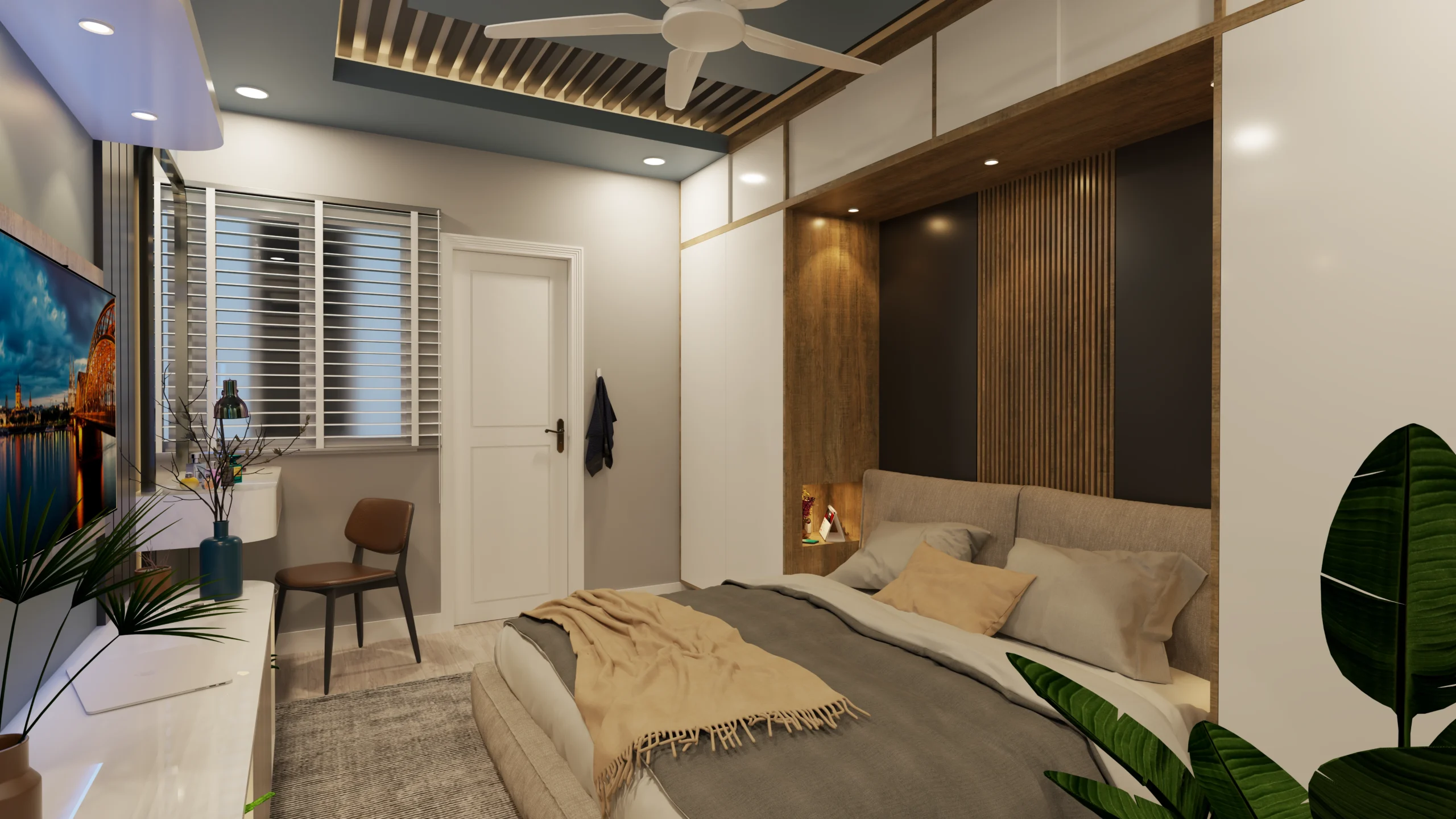
I am writing this from a quiet corner of a gallery in Mayfair, where a single slab of book-matched Calacatta marble is propped against a whitewashed wall, catching the late afternoon light in a way that no photograph could ever fully honour. There is a stillness to it, a kind of geological patience, and I find myself thinking, as I often do in moments like these, about the profound difference between a surface that is merely beautiful and one that is genuinely quality finishes in luxury interiors made manifest. It is a distinction that has defined my practice for nearly two decades, and it is one that feels more urgent now than ever before.
We live in an era of extraordinary convenience. Objects arrive at our doors within hours, rooms are assembled from flat-packed components over a weekend, and entire aesthetic identities are constructed from algorithmically curated feeds. And yet, something is missing. I hear it in the conversations I have with clients who have filled their homes with things and still feel, inexplicably, that the space does not quite hold them. The room functions, certainly, but it does not resonate. It does not breathe. What they are searching for, though they may not yet have the language for it, is craftsmanship: the quiet, irreplaceable intelligence of a hand that has spent years learning to understand a material.
The Philosophy of the Made Object: Why Craftsmanship Defines a Room
The Sensory Argument for Handmade Surfaces
There is a tactile vocabulary that exists only in handcrafted work, a language spoken not through the eyes but through the fingertips. When you run your hand along a piece of hand-plastered lime render, you feel the slight irregularity of the trowel’s passage, the ghost of a human decision made in real time. That imperfection is not a flaw; it is a signature. It tells you that a person was present, that time was invested, that the wall in front of you is not a product but a consequence of skill. This is the sensory argument for quality finishes in luxury interiors, and it is one that no amount of digital rendering or mass production can replicate.
Consider the difference between a lacquered cabinet produced in a factory and one finished by a craftsman who has spent thirty years understanding how pigment behaves across different grain structures. The former is consistent, predictable, and entirely without soul. The latter carries within it a depth of colour that shifts with the light, a surface that seems almost to have an interior life. This is not romanticism; it is material intelligence, and it is the foundation upon which every truly distinguished interior is built. The room that endures, the room that clients return to after ten years and find still compelling, is always the room where someone made a considered choice about how a surface should feel, not merely how it should photograph.
The Cultural Weight of Traditional Techniques
Craftsmanship is never culturally neutral. Every traditional technique carries within it the accumulated knowledge of a place and a people: the Venetian plasterers who developed marmorino as a response to the particular humidity of the lagoon city, the Japanese artisans whose shou sugi ban charring of timber was born from a practical need to resist fire and insects, the Moroccan zellige tileworkers whose geometric precision is inseparable from a broader cosmological understanding of pattern and repetition. When we choose these techniques for a contemporary interior, we are not simply selecting a finish; we are inviting a lineage into the room. We are acknowledging that beauty has a history, and that history enriches the present.
This is precisely why the return to quality finishes in luxury interiors feels less like a trend and more like a correction. After decades of prioritising speed and scalability, the design world is remembering what it always knew: that the most powerful spaces are those in which the past and the present are in genuine conversation. The aged leather of a reading chair, the hand-forged iron of a window fitting, the raw silk of a curtain panel woven on a traditional loom: these are not decorative choices. They are philosophical ones.
Material Intelligence: Reading a Room Through Its Surfaces
Stone as Spatial Narrator
Of all the materials available to the contemporary designer, stone remains the most eloquent. It is the only material that carries within it a literal record of time: the fossilised shells visible in a cross-section of limestone, the iron deposits that streak a slab of quartzite with veins of amber and rust, the crystalline structure of granite that catches light differently at every hour of the day. To specify stone thoughtfully is to introduce a geological timeline into a domestic space, to remind the occupant, however subliminally, that they are part of something vastly larger than the present moment. This is the quiet power of quality finishes in luxury interiors: they situate us.
I have always believed that the selection of a stone slab should be treated with the same seriousness as the selection of a work of art. Each piece is unique; the veining will never be repeated, the colour will shift as the material is cut deeper into the quarry. A kitchen worktop in honed Pietra Serena is not merely a functional surface; it is a daily encounter with Florentine architectural history, with the same stone that Brunelleschi used to articulate the structural logic of the Pazzi Chapel. That context does not need to be spoken aloud to be felt. It simply is, and the room is richer for it.
The Quiet Authority of Aged Metals
There is a particular quality of light that exists only in rooms where aged or patinated metals are present. Unlacquered brass, allowed to develop its natural oxidation over time, casts a warmth that is entirely different from the cold precision of polished chrome. Hand-hammered bronze, used for door furniture or light fittings, introduces a surface that is simultaneously ancient and entirely contemporary. These are materials that improve with age, that record the life of the space in their surface, and that reward the kind of slow, attentive looking that our current culture so rarely encourages. The decision to specify an aged metal finish over a factory-polished one is, at its core, a decision about what kind of relationship one wishes to have with one’s environment.
The Edit: Curating Finishes with Discipline and Intention
The Principle of Material Restraint
One of the most common errors I encounter in spaces that aspire to luxury but do not quite achieve it is an excess of materials. The impulse is understandable: if one beautiful stone is good, surely three are better. But this is precisely the logic that undermines a room’s authority. The most powerful interiors I have encountered, from the spare elegance of a Kyoto machiya to the considered restraint of a Milanese apartment, are those in which a very small number of materials are used with absolute conviction. The discipline of the edit is not a limitation; it is the very mechanism through which quality finishes in luxury interiors are allowed to speak.
At The Shape Interiors, this principle of material restraint is not merely an aesthetic preference; it is a structural commitment. We begin every project by asking not what we might add, but what we might remove. What is the irreducible core of this space? Which materials, if chosen with sufficient intelligence and care, will carry the entire emotional weight of the room? The answers to these questions are rarely obvious, and they require the kind of deep material knowledge that only comes from years of working closely with craftspeople, quarries, and ateliers. But when the edit is right, the room achieves a quality of stillness that no amount of decoration can manufacture.
The Elena Edit: Design Dictates for Quality Finishes
- Specify for longevity, not immediacy: Choose finishes that will develop character over decades, not surfaces that will date within a season.
- Honour the material’s origin: Understand where a stone was quarried, how a timber was seasoned, who wove the textile. Provenance is part of the finish.
- Limit your material palette: Three materials used with absolute conviction will always outperform ten used with hesitation.
- Prioritise touch as well as sight: A finish that rewards physical contact creates a deeper relationship between occupant and space.
- Commission, where possible: A bespoke finish, made by a craftsperson for a specific space, carries an irreplaceable quality of intention.
- Allow for imperfection: The slight variation in a hand-applied surface is not a defect; it is evidence of human presence, and it is precisely what distinguishes craft from manufacture.
Timeless Interiors and the Legacy of the Well-Finished Room
What Endures and Why
I am often asked by clients how to ensure that an interior will remain relevant over time, how to avoid the creeping obsolescence that afflicts so many beautifully photographed spaces within a few years of their completion. My answer is always the same: invest in the quality of the finish, not the novelty of the form. Silhouettes change; proportions shift with cultural mood; colour palettes cycle through fashion with predictable regularity. But a room finished in materials of genuine quality, applied with genuine skill, does not date. It deepens. The lime plaster that looked quietly beautiful on the day of completion looks extraordinary after five years, when it has absorbed the particular light of the space and developed the subtle tonal variations that only time can produce.
This is the central promise of timeless interiors: not that they will look the same in fifty years, but that they will look better. The aged leather of a well-chosen chair, the patina of a bronze door handle worn smooth by daily use, the slight darkening of an oak floor where the light falls most consistently: these are not signs of deterioration. They are signs of a life being lived in a space that was built to receive it. Quality finishes in luxury interiors are, at their most essential, an act of faith in the future.
The Craftsperson as Collaborator
No conversation about quality finishes is complete without an acknowledgement of the people who produce them. The master plasterer, the stone carver, the metalsmith who has spent a lifetime learning the particular behaviour of bronze at different temperatures: these are not service providers. They are collaborators, and the best interiors are always the result of a genuine creative dialogue between designer and maker. I have learned more about the expressive potential of a material from the craftspeople who work it daily than from any design school or publication. Their knowledge is embodied, practical, and irreplaceable, and the decision to commission their work is not merely an aesthetic one. It is an ethical one, a commitment to preserving a form of human intelligence that the convenience economy is quietly eroding.
There is something quietly radical, in the current cultural moment, about choosing to wait. About commissioning a piece of hand-finished joinery that will take three months to complete rather than ordering a flat-packed alternative that will arrive on Thursday. About selecting a stone that must be quarried, cut, and shipped from a specific region of Portugal because no other stone will do. This patience is not impracticality; it is a form of respect, for the material, for the maker, and for the space that will ultimately hold the work. It is, I would argue, the most sophisticated design decision one can make.
The rooms that I return to in memory, the spaces that have genuinely altered my understanding of what an interior can be, are never the rooms that were assembled quickly or finished cheaply. They are the rooms where someone cared enough to wait, to commission, to specify with precision, and to trust that the result would be worth the investment of time and attention. That care is visible in the finished surface, even if the observer cannot articulate exactly why. It is felt before it is understood, and it is that quality of felt experience that separates a room from a space, a home from a house, and craftsmanship from mere convenience.
The architecture of your legacy is defined not merely by the objects you choose, but by the standard of life you refuse to compromise on. At The Shape Interiors, we specialise in the silent language of luxury, transforming raw space into sophisticated environments that resonate with the human spirit and professional excellence. Whether you are defining a private sanctuary or a global corporate headquarters, the requirement remains the same: a vision executed with absolute precision.
We invite you to explore our work and discover why the world’s most discerning individuals trust us with their most personal and professional environments.
Refine Your World.
Your journey toward an unparalleled environment begins with a single conversation. Connect with our global design team to initiate your bespoke project.