
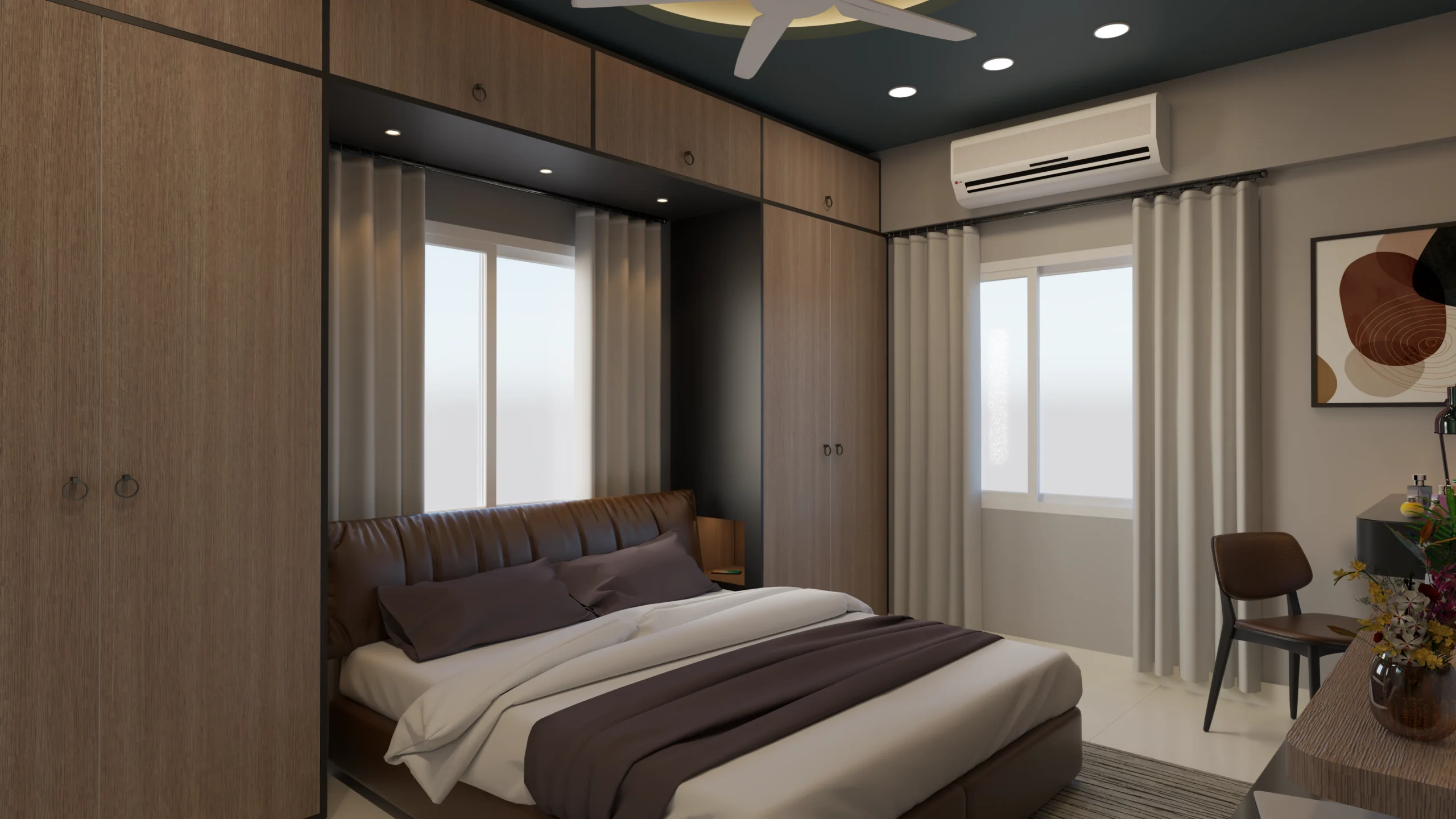
I am writing this from a quiet corner of a gallery in Mayfair, where a single Giacometti bronze stands in a pool of warm halogen light, commanding the entire room with nothing more than its presence and proportion. There is no clutter here, no competing narrative, no desperate attempt to fill silence with noise. There is only the object, the space around it, and the considered intelligence of whoever decided that this particular piece, in this particular position, was enough. This, I find myself thinking, is professional curation in its most distilled form. And it is precisely this quality, this capacity to see not just what is present but what is absent, that separates the truly gifted interior designer from the merely competent decorator. Professional curation in interior design is not a trend, nor a technique one acquires from a weekend workshop. It is a lens, ground slowly over years of observation, travel, material study, and an almost obsessive attentiveness to the way light falls across a surface at four o’clock on a November afternoon.
The world of high-end interiors is saturated with beautiful things. Marble quarried from the hills above Carrara, aged leather that carries the memory of the animal and the craftsman’s hand, hand-knotted silk rugs that took three years and twelve pairs of eyes to complete. Beauty, in this context, is not the challenge. The challenge, and the true measure of professional curation in interior design, is knowing which of these beautiful things belongs in a given space, in what proportion, and in what relationship to everything else. It is an act of profound editorial discipline, and it demands a quality of attention that most people, even those with considerable taste, have never been asked to develop.
The Architecture of Restraint: What Professional Curation in Interior Design Actually Means
The Edit as the Highest Form of Design Intelligence
There is a persistent misconception, particularly among clients who have spent considerable time accumulating beautiful objects, that more is more. That a room filled with exceptional pieces is, by definition, an exceptional room. I have walked through penthouses in Knightsbridge and villas on the Côte d’Azur that were furnished with items of genuine rarity and cost, and yet felt, inexplicably, exhausting. The eye had nowhere to rest. Every surface competed for attention. The space, for all its material wealth, communicated nothing coherent. This is the failure of accumulation masquerading as curation, and it is far more common than the design industry cares to admit. Professional curation in interior design begins with the radical act of removal. Before a single new piece is introduced, the practised eye must first ask what can be taken away, what can be simplified, and where the room is being asked to carry a weight it was never designed to bear.
Silence as a Design Material
The Japanese concept of ma, the meaningful pause, the productive emptiness between objects and moments, is perhaps the most sophisticated design principle I have encountered in thirty years of working across continents. It is not emptiness for its own sake, nor minimalism as aesthetic posture. It is the deliberate creation of breathing room, the spatial equivalent of the rest in a musical score, without which the notes themselves lose their resonance. When I speak of professional curation in interior design, I am speaking, in large part, about the intelligent deployment of ma: the confidence to leave a wall bare, to allow a single sculptural chair to occupy a corner without apology, to resist the urge to fill every surface with objects that, however lovely in isolation, collectively diminish one another. This restraint is not cold. Executed with warmth and material intelligence, it produces rooms of extraordinary emotional depth.
Material Intelligence: Reading the Language of Surface and Substance
Why Raw Materials Speak Louder Than Finish
There is a quality of honesty in raw materials that no amount of surface treatment can replicate. A slab of Calacatta marble, veined in gold and grey, carries within it the geological memory of millions of years. Aged oak, with its silver patina and the ghost of its grain, speaks of time in a way that no engineered wood panel ever could. Unlacquered brass, allowed to oxidise and develop its own character over months and years, becomes a living element of the room rather than a static fixture. This is what I mean by material intelligence: the capacity to select substances not merely for their visual beauty but for their narrative depth, their sensory complexity, and their ability to age with grace rather than obsolescence. Professional curation in interior design demands this level of material literacy. It requires the designer to understand not just how a material looks on the day of installation, but how it will look, feel, and smell in five, ten, and twenty years. The rooms I am most proud of are those that have grown more beautiful with time, where the patina of lived experience has deepened rather than diminished the original intention.
The Sensory Dimension of a Curated Space
We speak endlessly about the visual qualities of interiors, and rightly so, but the truly curated room engages all five senses with equal deliberateness. The slight resistance of a hand-stitched linen cushion cover beneath the fingertips. The cool, faintly mineral scent of a stone floor on a warm afternoon. The particular quality of silence that a room with heavy curtains and deep rugs produces, a silence that feels inhabited rather than empty. The warmth of a reading lamp positioned precisely to illuminate a page without casting shadows across the face. These are not accidents. They are the result of a designer who has thought not just about how a room will photograph, but about how it will feel to live within it, day after day, season after season. This is the dimension of professional curation that separates the editorial from the merely decorative.
The Curated Edit: Principles That Govern the Professional Eye
Design Dictates for the Discerning Space
Over the years, I have distilled the principles that govern my own editorial process into a set of working dictates. These are not rules in the prescriptive sense; they are orientations, ways of approaching a space that consistently produce results of lasting quality. I share them here not as a checklist but as a framework for thinking about what professional curation in interior design truly demands of the practitioner and, indeed, of the client who must be willing to trust the process.
- Prioritise provenance over price: A piece with a story, a material with a history, will always outperform a costly item of uncertain origin. Ask where it came from and how it was made before asking what it costs.
- Honour the architecture first: Every design decision should begin with a conversation with the existing structure. The bones of a room are its most permanent feature; work with them, never against them.
- Resist the impulse to fill: Emptiness is not failure. A considered void is as powerful as any object placed within it. Learn to see space itself as a material.
- Edit in layers: Introduce elements gradually and live with them before committing. The room will tell you what it needs if you are patient enough to listen.
- Invest in the tactile: Surfaces that are touched daily, door handles, upholstery, flooring, deserve the highest quality. These are the points of contact through which a room communicates its character most directly.
- Let light lead: Before selecting a single piece of furniture or fabric, study how natural light moves through the space across the full arc of a day. Every subsequent decision should be made in service of that light.
- Choose longevity over novelty: Trend-led interiors age poorly and expensively. The curated room is assembled with pieces that will remain relevant, beautiful, and meaningful for decades.
The Role of the Client in the Curation Process
Professional curation in interior design is never a solitary act. It is, at its finest, a deeply collaborative process between the designer’s trained eye and the client’s lived experience. The most successful projects I have undertaken at The Shape Interiors have been those where the client arrived not with a Pinterest board of aspirational images, but with a genuine willingness to articulate how they wished to feel within their space. Not what they wanted it to look like, but how they wanted it to function emotionally: the quality of morning light they craved, the texture they wished to encounter first upon waking, the atmosphere they wanted to inhabit at the end of a long day. These are the conversations that produce rooms of genuine distinction, spaces that feel not merely designed but deeply, personally inhabited.
The Long View: Why Curation Is a Practice, Not a Project
Living With the Edit Over Time
One of the most profound shifts I have observed in my clients over the years is the transition from thinking about interior design as a project with a beginning and an end, to understanding it as an ongoing practice of attention and refinement. The curated room is never truly finished. It evolves as the light changes with the seasons, as the materials develop their patina, as the inhabitants themselves grow and change and bring new objects and memories into the space. This is not a failure of the original design; it is its greatest success. A room that has been designed with sufficient intelligence and restraint will absorb these changes gracefully, accommodating the new without losing the coherence of the whole. Professional curation in interior design, understood in this way, is less about the creation of a static image and more about the establishment of a living framework, a set of proportions, materials, and spatial relationships robust enough to hold meaning across time.
The Philosophical Dimension of the Designer’s Lens
I return, in closing, to that Giacometti bronze in the Mayfair gallery. What moved me about it was not the object itself, extraordinary as it was, but the quality of attention that had been paid to its placement. Someone had stood in that room, perhaps for a long time, and had thought carefully about where the light would fall, how the surrounding space would frame the figure, what the viewer would feel upon entering. That quality of sustained, intelligent attention is, I believe, the true definition of professional curation in interior design. It is not a skill that can be acquired quickly or demonstrated through the accumulation of expensive objects. It is a practice of seeing, refined over years, that transforms a collection of beautiful things into a coherent, emotionally resonant whole. It is, in the end, the difference between a room that impresses and a room that endures.
I wonder, as I close my notebook and prepare to step back out into the grey London afternoon, whether we have lost something in our collective rush towards the immediate and the visually spectacular. Whether the slower, more considered art of the edit, the willingness to sit with a space and truly listen to what it requires, is a discipline we might all benefit from reclaiming. Not just in our homes and offices, but in the broader way we choose to inhabit our lives. What would it mean to apply the designer’s lens to everything we surround ourselves with? What might we discover if we were brave enough to remove what no longer serves, and patient enough to wait for what truly belongs? I would love to know your thoughts in the comments below.
The architecture of your legacy is defined not merely by the objects you choose, but by the standard of life you refuse to compromise on. At The Shape Interiors, we specialise in the silent language of luxury, transforming raw space into sophisticated environments that resonate with the human spirit and professional excellence. Whether you are defining a private sanctuary or a global corporate headquarters, the requirement remains the same: a vision executed with absolute precision.
We invite you to explore our work and discover why the world’s most discerning individuals trust us with their most personal and professional environments.
Refine Your World.
Your journey toward an unparalleled environment begins with a single conversation. Connect with our global design team to initiate your bespoke project.