
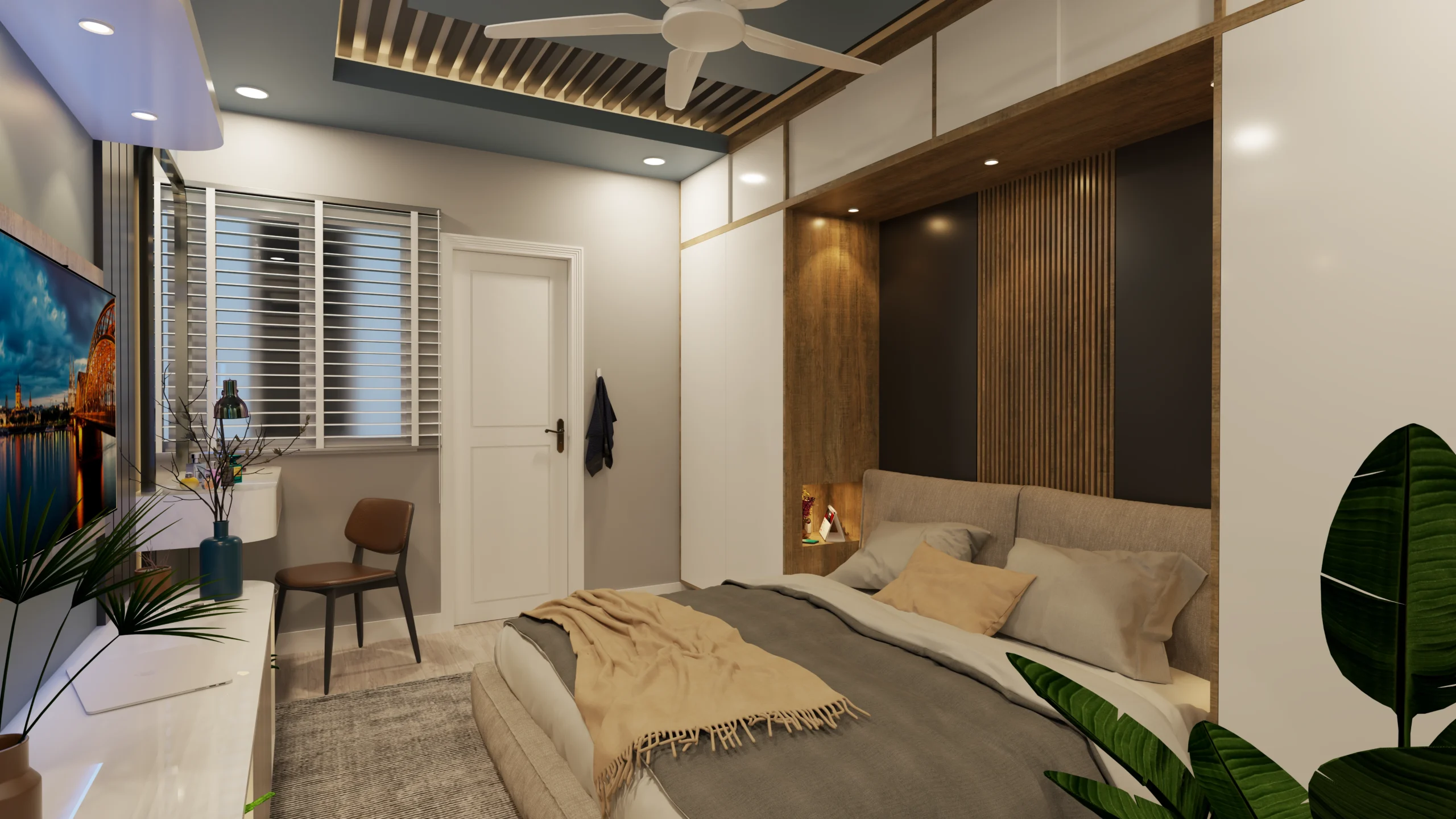
I am writing this from a quiet corner of a gallery in Mayfair, where a single walnut console table sits beneath a pool of warm halogen light. It is not particularly large, nor is it adorned with anything beyond its own grain. Yet every person who passes it slows, almost involuntarily, as though the wood itself is asking to be acknowledged. That table was made by hand, by a craftsman who spent four decades learning the language of timber, and it shows in every considered curve and every silken joint. It is, in the truest sense, a piece of handmade luxury furniture, and it reminds me precisely why I have spent the better part of my career championing the bespoke over the manufactured, the considered over the convenient.
There is a particular kind of silence that settles into a room furnished with pieces that were made slowly, with intention. It is not the silence of emptiness; it is the silence of sufficiency. When a chair has been shaped by human hands, when a dining table has been jointed without a single nail, when a cabinet has been finished with wax applied by a cloth rather than a spray gun, the room around it seems to exhale. This is the quiet power of the handmade, and it is something no algorithm, no flat-pack system, and no mass-production line has ever been able to replicate.
The Enduring Value of Timeless Interiors Built on Handcrafted Foundations
Investment Thinking in Interior Design
There is a conversation I have regularly with clients who are accustomed to thinking in terms of investment, and it goes something like this: the most expensive piece of furniture you will ever own is the one you replace three times. A handmade luxury furniture piece, crafted from solid materials by a skilled artisan, does not need to be replaced. It needs to be polished, occasionally re-waxed, perhaps re-upholstered after a decade or two, but it does not need to be discarded. When you calculate the true cost of ownership over a twenty or thirty-year period, the bespoke piece almost invariably represents the more economical choice, to say nothing of the environmental one. This is investment thinking applied to the domestic sphere, and it is a mode of reasoning that the most discerning clients understand instinctively.
The notion of timeless interiors is not about freezing a room in a particular historical moment; it is about making choices that transcend trend cycles. Handmade furniture, by its very nature, tends toward the timeless because it is rooted in the enduring logic of material and craft rather than the ephemeral logic of fashion. A beautifully made oak sideboard does not become dated because it was never fashionable in the first place; it was simply excellent, and excellence does not expire.
Patina, Provenance, and the Passage of Time
There is a concept in the world of fine objects that the French call patine, the beautiful surface quality that develops on materials as they age with use and care. It is the warm glow of a leather armchair that has been sat in for twenty years, the slight softening of a marble tabletop that has been wiped clean a thousand times, the deepening of a walnut grain that has been fed with oil through successive seasons. Patina cannot be manufactured or applied; it can only be earned, and it is one of the most compelling arguments for investing in handmade luxury furniture. A mass-produced piece does not develop patina; it develops wear. The distinction is everything.
The Elena Edit: Principles for Commissioning Handmade Luxury Furniture
A Curated Framework for the Discerning Client
Over the years, I have distilled my approach to commissioning bespoke furniture into a set of principles that I return to with every project. They are not rules in the prescriptive sense; they are more like orientations, ways of approaching the process that tend to produce the most satisfying and enduring results. I offer them here as a framework for anyone considering the move from the manufactured to the made.
- Begin with the room, not the piece: Understand the architectural volume, the quality of natural light, and the primary function of the space before you consider what furniture it requires. The piece should serve the room; the room should not be rearranged to accommodate the piece.
- Choose materials for their future, not just their present: Consider how a material will age. Solid hardwoods, natural stone, and full-grain leather improve with time. Veneers, composites, and synthetic upholstery do not.
- Invest in the joint, not the finish: A beautiful surface finish can disguise poor construction for a year or two. A well-made joint will hold for a century. Ask your maker about their joinery techniques before you discuss colour or texture.
- Allow for the dialogue: The best bespoke pieces emerge from genuine conversation between client, designer, and maker. Resist the urge to arrive with a fixed image; arrive instead with a set of values and allow the collaboration to find its form.
- Consider the room’s future inhabitants: A truly bespoke piece should be designed with enough integrity and neutrality to outlast your current aesthetic preferences. Think in decades, not seasons.
- Honour the maker’s expertise: A craftsman who has spent thirty years working with a particular material knows things about it that no brief can capture. Leave room in the process for their knowledge to shape the outcome.
- Resist the impulse to fill: One exceptional handmade piece in a room will always outperform six mediocre ones. Edit ruthlessly, and let quality speak without competition.
The Room as a Living Archive
When a room is furnished with pieces that have been made by hand, with care and with craft, it begins to function as something more than a domestic interior. It becomes a living archive, a collection of decisions made with intention, each object carrying within it the story of its making and the story of its use. This is the deepest value of handmade luxury furniture: not its monetary worth, though that is considerable, but its capacity to make a room feel inhabited in the fullest sense of the word. It is the difference between a space that has been decorated and a space that has been lived in, and that difference is, ultimately, the difference between a house and a home.
I find myself returning, always, to that walnut console in Mayfair. It is not trying to impress anyone. It does not need to. It simply exists, with complete confidence in its own making, and in doing so it makes the entire room around it more certain of itself. That is the quiet authority of the handmade, and it is, I believe, one of the most powerful forces available to us in the creation of spaces that truly endure. What does it mean to you to surround yourself with things that were made to last? I wonder, genuinely, whether we have lost the habit of asking that question, and whether the answer, when we find it, might change the way we choose to live entirely.
The architecture of your legacy is defined not merely by the objects you choose, but by the standard of life you refuse to compromise on. At The Shape Interiors, we specialise in the silent language of luxury, transforming raw space into sophisticated environments that resonate with the human spirit and professional excellence. Whether you are defining a private sanctuary or a global corporate headquarters, the requirement remains the same: a vision executed with absolute precision.
We invite you to explore our work and discover why the world’s most discerning individuals trust us with their most personal and professional environments.
Refine Your World.
Your journey toward an unparalleled environment begins with a single conversation. Connect with our global design team to initiate your bespoke project.