
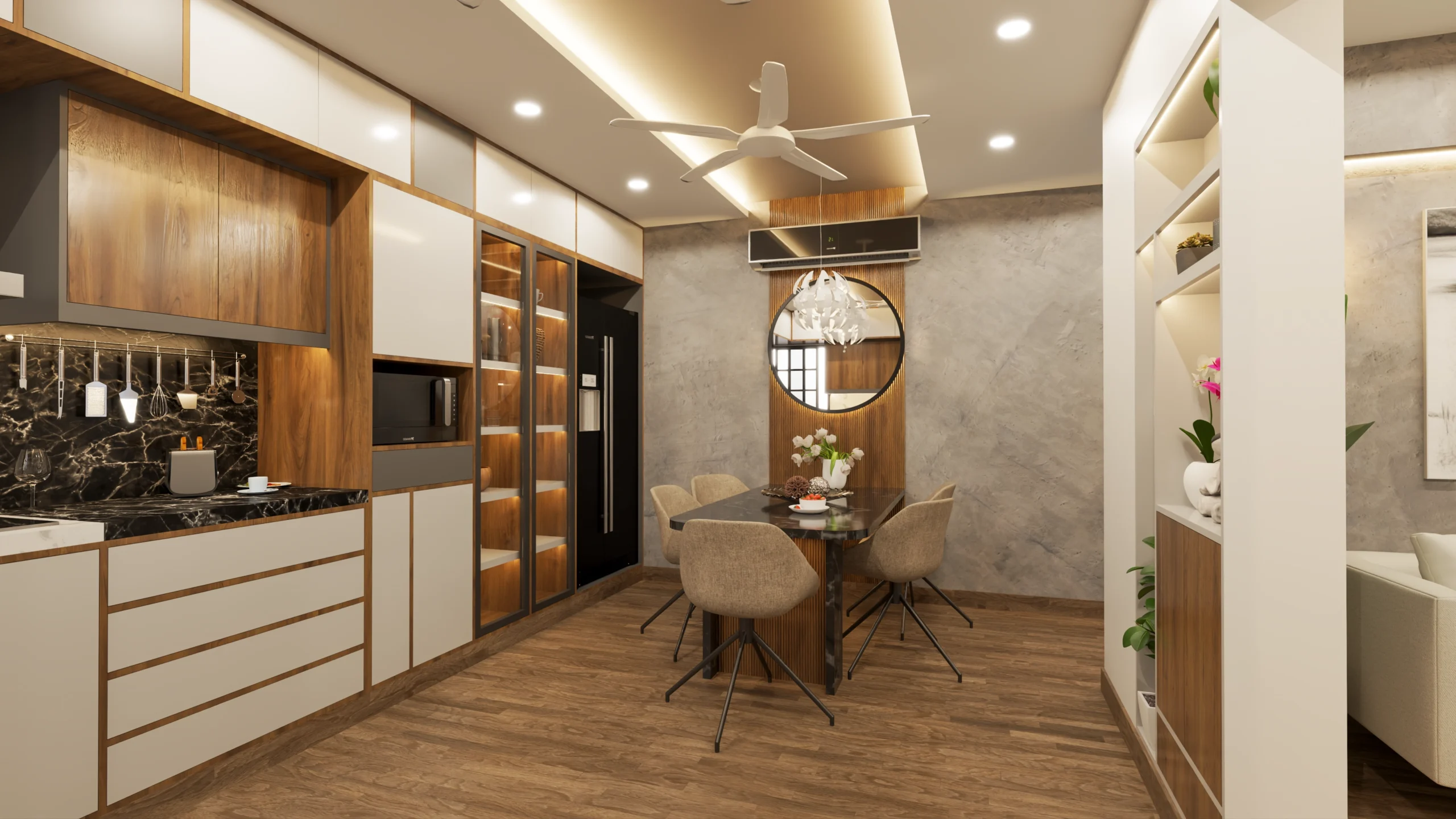
I am writing this from a quiet corner of a gallery in Mayfair, where a single Edo-period Japanese lacquer cabinet sits in conversation with a raw-edged slab of Portuguese marble, and the pairing is, quite simply, breathtaking. There is no curatorial note required, no explanatory placard; the objects simply speak to one another across centuries and continents with a fluency that only great design possesses. It is precisely this kind of cross-cultural curation that has occupied my thinking for the better part of two decades, and it is the subject I wish to explore with you today. The art of blending international artifacts is not a decorative exercise; it is a philosophical one, rooted in the belief that beauty is a universal language, and that the most compelling interiors are those that carry the memory of the world within their walls.
What does it mean, truly, to live with objects gathered from across the globe? It means accepting that your home is not a showroom but a biography, a layered, evolving narrative written in stone, textile, ceramic, and light. The finest interiors I have encountered in my travels, from the sun-warmed courtyards of Marrakech to the spare, luminous apartments of Copenhagen, share one defining quality: they are edited with intention. Nothing is present by accident. Every piece has earned its place, and in earning it, it contributes to a spatial story that is richer, more resonant, and more deeply human than any single cultural tradition could produce alone.
The Philosophy of Cross-Cultural Interior Design
Objects as Cultural Emissaries
When I speak of cross-cultural interior design, I am not referring to the superficial layering of global motifs, a Moroccan lantern here, a Balinese carving there, assembled without context or conviction. I am speaking of something far more considered: the act of understanding an object’s cultural provenance, its material history, its original function, and then finding for it a new context in which it can continue to speak with authority. A hand-thrown ceramic vessel from Oaxaca carries within its imperfect walls the memory of the artisan’s hands, the mineral composition of local clay, the particular quality of afternoon light in a Mexican highland workshop. To place it carelessly is to silence it. To place it with intelligence is to allow it to sing.
This is the foundational principle of cross-cultural curation: respect for origin, combined with the creative courage to imagine new conversations. The most gifted collectors I have had the privilege of working with understand instinctively that an artifact is not merely decorative; it is a cultural emissary, carrying the values, aesthetics, and spiritual sensibilities of its place of origin into your living room. The responsibility that comes with that is not inconsiderable, and it is one that separates the truly curated interior from the merely well-furnished one.
The Edit as a Form of Respect
There is a discipline required in cross-cultural curation that I find deeply satisfying, and it is the discipline of restraint. The temptation, when one travels widely and collects passionately, is to display everything, to create a kind of personal museum in which every surface tells a story. But the museum model, however intellectually rich, is rarely spatially successful. Rooms require breathing space; objects require silence around them in order to be truly seen. The edit, therefore, is not an act of exclusion but an act of respect, both for the objects themselves and for the people who will inhabit the space. Ask yourself: which pieces carry the most weight, the most meaning, the most visual authority? Begin there, and allow the room to breathe around them.
Material Intelligence Across Borders
The Universal Language of Raw Materials
One of the great joys of cross-cultural interior design is the discovery that certain raw materials transcend cultural specificity entirely. Marble, aged leather, hand-woven linen, burnished bronze: these are materials that appear, in various forms, across virtually every design tradition on earth, and they possess an innate capacity to harmonise with one another regardless of their geographic origins. A slab of Calacatta marble from the quarries of Carrara will sit in quiet, effortless dialogue with a hand-stitched leather panel from a Kyoto atelier, because both materials share a commitment to the authentic, the tactile, and the enduring. It is in this shared material intelligence that the foundation of successful cross-cultural curation is laid.
I have always believed that the most sophisticated interiors are those in which the materials themselves do the heavy lifting, where the quality of a surface, the weight of a textile, the patina of an aged metal, communicates more than any decorative gesture could. When you are working with objects from diverse cultural traditions, this principle becomes even more critical. A room anchored in exceptional raw materials, in stone, in natural fibre, in hand-worked metal, provides a neutral but deeply resonant stage upon which culturally specific artifacts can perform without competition. The material ground unifies; the artifacts individualise. It is a relationship of extraordinary elegance.
Patina, Age, and the Beauty of Imperfection
There is a concept in Japanese aesthetics, wabi-sabi, that celebrates the beauty of imperfection, impermanence, and incompleteness, and it is one that I find profoundly relevant to the practice of cross-cultural curation. Objects that carry the marks of age, of use, of the human hand, possess a quality of presence that no newly manufactured piece can replicate. A worn kilim from the Anatolian highlands, a cracked celadon bowl from the Song dynasty, a piece of driftwood gathered from a Cornish beach: these objects carry time within them, and time, in the context of interior design, is perhaps the most luxurious material of all. When you place such objects in conversation with one another, you are not simply decorating a room; you are constructing a meditation on the passage of human experience.
Composing the Cross-Cultural Room
Spatial Hierarchy and Visual Rhythm
The composition of a cross-cultural interior requires the same structural thinking that one brings to the arrangement of any complex space, but with an additional layer of cultural sensitivity. Every room needs a hierarchy: a dominant element that anchors the eye and establishes the spatial narrative, supported by secondary pieces that provide rhythm and depth, and tertiary details that reward close inspection. In a cross-cultural context, this hierarchy must also account for the visual weight and cultural resonance of each object. A large-scale African ceremonial mask, for instance, carries an authority that demands a certain spatial generosity around it; to crowd it with competing objects is to diminish both the piece and the room.
Rhythm, in the cross-cultural interior, is achieved not through repetition of style but through repetition of quality. When every object in a room has been chosen with the same level of discernment, regardless of its cultural origin, the eye moves through the space with a sense of ease and pleasure, recognising the common thread of excellence that connects a Tang dynasty horse to a mid-century Scandinavian chair to a contemporary piece of hand-blown Venetian glass. This is the rhythm of the truly curated interior, and it is one of the most satisfying spatial experiences a designer can create.
Colour, Light, and Cultural Resonance
Colour is perhaps the most culturally loaded element in any interior, and it requires particular sensitivity in the cross-cultural context. The ochres and terracottas of North African design carry a very different emotional register from the muted greys and whites of Nordic interiors, and yet, handled with intelligence, these palettes can coexist with extraordinary beauty. The key, I have found, is to allow one cultural colour tradition to establish the dominant tone of the room, and to introduce others as accents, as moments of surprise and contrast that enrich rather than destabilise the overall composition. Light, too, plays a critical role: the quality of natural light in a London townhouse is fundamentally different from that of a Provençal farmhouse, and the way that light interacts with culturally specific objects, the way it catches the gold leaf of a Byzantine icon, or deepens the indigo of a Japanese indigo-dyed textile, must be considered with the same care as any other design decision.
The Elena Edit: Curated Principles for Cross-Cultural Interiors
Design Dictates for the Globally Minded Collector
- Anchor in raw materials: Establish your spatial foundation in universal materials, marble, aged leather, natural stone, hand-woven textiles, before introducing culturally specific artifacts. The material ground provides coherence.
- Prioritise provenance: Understand the cultural and historical context of every object you introduce. An artifact understood is an artifact that speaks; an artifact misunderstood is merely decoration.
- Edit with severity: In cross-cultural curation, less is invariably more. Allow each object the spatial silence it requires to be fully seen and appreciated.
- Seek tonal unity: Even the most diverse collection of international artifacts will harmonise if they share a common tonal register. Work within a consistent palette of warm or cool tones to create visual coherence across cultural boundaries.
- Honour scale: Respect the visual weight of each piece. Large-scale artifacts from any tradition require generous spatial settings; do not diminish them through overcrowding.
- Embrace imperfection: The most compelling cross-cultural interiors celebrate the marks of age, use, and the human hand. Perfection is the enemy of authenticity.
- Light with intention: Consider how your chosen light sources, both natural and artificial, will interact with the specific materials and surfaces of your international collection. Light is the final curator.
The Living Archive
At The Shape Interiors, we speak often of the interior as a living archive, a space that accumulates meaning over time, that deepens and enriches as new objects are introduced and old ones are reconsidered. This is, I believe, the highest aspiration of cross-cultural curation: not to create a finished, static composition, but to establish a framework of such quality and intelligence that it can absorb new influences, new acquisitions, new experiences, without losing its essential coherence. The globally curated interior is never complete; it is always in the process of becoming, always in conversation with the world beyond its walls.
Consider the homes of the great collectors of the twentieth century, those extraordinary individuals who moved through the world with open eyes and cultivated sensibilities, gathering objects not as trophies but as companions. Their interiors were not museums; they were conversations, ongoing, evolving, deeply personal dialogues between the inhabitant and the wider world. This is the model I return to again and again in my own practice, and it is the model I would commend to anyone who wishes to live beautifully in an increasingly complex and richly diverse world.
There is a particular quality of stillness that the finest cross-cultural interiors possess, a quality that has nothing to do with minimalism and everything to do with intention. When every object in a room has been chosen with care, when the materials speak to one another across centuries and continents, when the light falls with the precision of a well-composed photograph, the result is a space that feels, above all else, deeply inhabited. Not decorated, not styled, but lived in, in the fullest and most considered sense of that phrase. And it is in that quality of deep inhabitation that the true purpose of cross-cultural interior design reveals itself: not to impress, but to nourish; not to display, but to connect; not to close the world out, but to invite it, in all its magnificent diversity, inside.
I find myself returning, always, to the question of what we are really doing when we curate a space with objects gathered from across the globe. Are we collectors, or are we translators? Are we decorators, or are we philosophers? Perhaps the most honest answer is that we are all of these things simultaneously, and that the cross-cultural interior, at its finest, is the most complete expression of a life lived with curiosity, with reverence, and with an undiminished appetite for the beautiful. I would love to know how you navigate this in your own spaces; do share your thoughts below.
The architecture of your legacy is defined not merely by the objects you choose, but by the standard of life you refuse to compromise on. At The Shape Interiors, we specialise in the silent language of luxury, transforming raw space into sophisticated environments that resonate with the human spirit and professional excellence. Whether you are defining a private sanctuary or a global corporate headquarters, the requirement remains the same: a vision executed with absolute precision.
We invite you to explore our work and discover why the world’s most discerning individuals trust us with their most personal and professional environments.
Refine Your World.
Your journey toward an unparalleled environment begins with a single conversation. Connect with our global design team to initiate your bespoke project.