
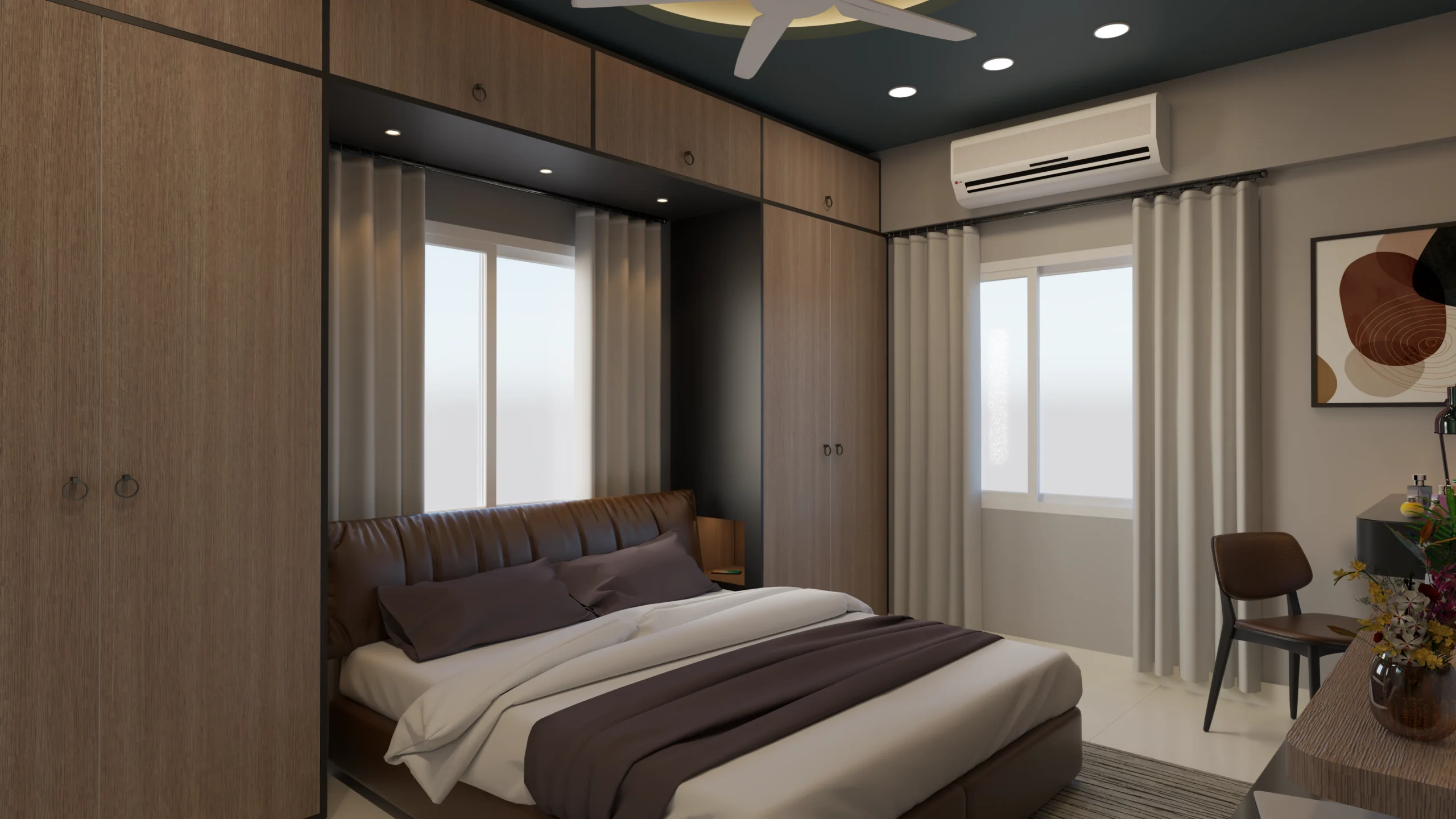
I am writing this from a quiet corner of a gallery in Mayfair, where a single shaft of afternoon light is falling across a worn marble plinth, and I find myself thinking, as I so often do, about the stories that spaces hold. There is a particular quality to rooms that have been considered with genuine intention; they carry a kind of gravity, a sense that every surface, every shadow, every carefully chosen object has been placed in service of a larger, more personal narrative. This is the essence of what I have come to call interior design storytelling, and it is, I believe, the most profound discipline within our craft. A room is never simply a room. It is a biography, a philosophy, a quiet declaration of who one is and what one values.
I have spent the better part of two decades moving between cities, between cultures, between the grand salons of European heritage properties and the spare, meditative interiors of contemporary Tokyo apartments, and the one truth that has remained constant is this: the rooms that endure in memory are never the ones that were merely beautiful. They are the ones that spoke. They communicated something ineffable about the person who inhabited them, something that no amount of expensive furniture or fashionable wallpaper could manufacture. That quality, that narrative coherence, is what separates a designed space from a truly authored one.
The Architecture of Personal Narrative in Interior Design Storytelling
Reading the Room Before You Write It
Before a single material is selected, before a single piece of furniture is considered, the most essential act in interior design storytelling is one of deep listening. I always begin a project by asking my clients not what they want their home to look like, but what they want it to feel like at seven o’clock on a Tuesday evening, when the day has been long and the world has been loud. That question invariably unlocks something far more revealing than any mood board ever could. It surfaces the emotional architecture of a life, the textures of memory and aspiration that will ultimately give a space its singular voice.
Consider the difference between a room that has been assembled and a room that has been authored. The assembled room is a collection of individually admirable objects that share no common language; they coexist without conversing. The authored room, by contrast, operates as a coherent text. Every element, from the grain of the stone on the fireplace surround to the particular amber of the aged leather on a reading chair, contributes a sentence to a larger story. The patina of a material is not merely an aesthetic quality; it is a temporal marker, a reference to the passage of time and the accumulation of experience. When I specify a piece of hand-aged brass hardware or a slab of travertine with its natural voids left deliberately unfilled, I am making a statement about the value of imperfection, about the beauty of things that carry their history visibly.
Material Intelligence as Narrative Device
The materials we choose are, in the most literal sense, the vocabulary of our spatial stories. Marble speaks of geological time, of the deep earth, of a permanence that transcends the decorative. Aged leather speaks of use, of comfort earned rather than purchased, of a certain patrician ease that synthetic alternatives can never approximate. Raw linen speaks of restraint, of a considered rejection of excess in favour of honest texture. When these materials are brought together with genuine intelligence, when they are allowed to create a dialogue rather than a chorus, the result is a room that resonates at a frequency that the body recognises before the mind has had time to analyse it. This is the sensory dimension of interior design storytelling, and it is, I would argue, its most powerful register.
Light, Shadow, and the Emotional Grammar of Space
The Choreography of Natural Light
If materials are the vocabulary of a room’s narrative, then light is its grammar. The way light moves through a space across the arc of a day is one of the most profoundly affecting aspects of any interior, and yet it is among the most frequently underestimated. I have stood in rooms where the quality of the afternoon light, filtered through a sheer linen panel and falling in long, warm oblongs across a pale stone floor, has produced something close to an emotional response in me. That is not an accident; it is the result of a designer who understood that light is not merely a practical consideration but a compositional one, a narrative tool of the highest order.
The positioning of a window, the depth of a reveal, the choice of a sheer over a blackout, the angle at which a mirror is hung to redirect a beam of winter sun: these are all decisions that shape the emotional experience of a room as profoundly as any piece of furniture. A room that is flooded with flat, uniform light tells no story; it simply illuminates. A room where light is modulated, where it creates zones of warmth and pools of gentle shadow, where it changes character as the day progresses, is a room that lives and breathes. It is a room with a narrative arc.
The Quiet Power of Considered Shadow
Shadow is, I have always felt, the most undervalued element in the interior designer’s palette. We live in a culture that is deeply uncomfortable with darkness, that equates brightness with positivity and shadow with deficiency. But the great rooms of history, from the candlelit libraries of Georgian townhouses to the lantern-lit courtyards of Moroccan riads, have always understood that shadow is not the absence of light but its complement. Shadow gives depth to a surface, mystery to a corner, intimacy to a dining table. It is the punctuation in the sentence of a room, the pause that gives meaning to what surrounds it. In the context of interior design storytelling, shadow is where the subtext lives.
The Edit: Curation as the Highest Form of Design Intelligence
The Discipline of Restraint
There is a particular kind of courage required to edit ruthlessly, to remove the object that is beautiful in isolation but disruptive in context, to resist the accumulation that our culture so relentlessly encourages. The most narratively coherent rooms I have ever encountered have been, almost without exception, rooms of considered restraint. Not minimalism in the cold, clinical sense, but a kind of warm austerity, a space where every object has been granted the dignity of being seen, where nothing competes and everything contributes. This is the philosophy that underpins the work we do at The Shape Interiors, and it is a philosophy that requires both conviction and a certain willingness to disappoint the impulse toward more.
The edit is not a subtraction; it is a refinement. When you remove the object that does not belong, you do not diminish the room; you clarify it. You allow the remaining elements to speak more clearly, to carry their narrative weight without distraction. I often think of the great editors of literature, those quiet intelligences who understood that the most powerful sentence is frequently the one that has been stripped of everything superfluous. The same principle applies to space. A room that has been truly edited is a room that knows what it wants to say and says it without equivocation.
The Elena Edit: Design Dictates for Spatial Storytelling
For those who are beginning to consider their own spaces as narratives to be authored rather than rooms to be decorated, I offer the following principles, distilled from years of practice and observation:
- Begin with emotion, not aesthetics. Identify the feeling you wish the room to produce before you select a single material or piece of furniture. Let that emotional intention guide every subsequent decision.
- Invest in raw, honest materials. Marble, aged leather, hand-thrown ceramics, raw linen: these are materials that carry time within them and will only improve as they age. They are the foundation of a room with genuine narrative depth.
- Treat light as a design element, not a utility. Consider how natural light moves through your space across the day and design your interior to work in concert with it, not in spite of it.
- Edit with conviction. Remove anything that does not contribute to the room’s central narrative. Beauty in isolation is insufficient; relevance within context is the standard.
- Allow for silence. Every room needs moments of visual rest, surfaces unadorned, corners left quiet. These silences are not failures of imagination; they are the spaces where the narrative breathes.
- Honour the architecture. The bones of a room, its proportions, its ceiling height, its relationship to the exterior, are the first chapter of its story. Work with them, not against them.
- Choose objects with provenance. A piece that carries a history, whether a fragment of antique textile, a piece of studio pottery, or a work of art acquired with genuine feeling, will always communicate more than its decorative equivalent purchased for convenience.
Provenance, Memory, and the Long Life of a Well-Told Room
Objects as Vessels of Meaning
There is a particular quality that the finest rooms share, a quality that I can only describe as accumulated meaning. It is the quality of a space that has been lived in with intention, where the objects present have been gathered over time rather than purchased in a single afternoon, where the room reflects not a moment of decorative enthusiasm but the slow, considered accumulation of a life. This quality cannot be manufactured or expedited; it must be cultivated. But it can be encouraged from the very beginning of a project by making choices that prioritise provenance and personal resonance over novelty and trend.
When I advise clients on the acquisition of objects for their spaces, I always encourage them to ask a single question: does this object carry a story that I wish to tell? Not merely, is this beautiful, or is this expensive, or is this fashionable, but does it speak to something true about who I am and what I value? A room populated with objects that answer that question affirmatively is a room that will never feel generic, never feel assembled, never feel like a stage set. It will feel, instead, like a life.
The Room as Living Archive
The most enduring interiors I have encountered in my career have been those that function as living archives, spaces that hold within them the evidence of a life fully and deliberately lived. They are rooms where a piece of sculpture acquired on a research trip to Kyoto sits in quiet conversation with a fragment of Roman mosaic discovered in a Florentine antique market; where a contemporary work of art on canvas speaks to the geometry of an eighteenth-century architectural detail; where the new and the ancient are in a state of productive, respectful dialogue. This is the highest expression of interior design storytelling: a room that is simultaneously of its moment and beyond it, that carries within it the weight of history and the lightness of a present, considered life.
What does your space say about you when you are not in it? What story does it tell to the person who enters for the first time, before you have had the opportunity to explain yourself? These are not merely aesthetic questions; they are philosophical ones, and they deserve the kind of sustained, serious attention that we give to the other great narratives of our lives. A room, at its finest, is not a backdrop. It is a statement of values, a declaration of taste, a quiet but unmistakable expression of the self. And like all the best stories, it should be told with both courage and care.
I find myself returning, as I so often do at the end of these reflections, to that shaft of light on the marble plinth in Mayfair. There was nothing extraordinary about it in isolation; it was simply light, simply stone. But together, in that particular room, at that particular hour, they told a story that I have not forgotten. That is the power of a space that has been authored with genuine intention. It stays with you. It becomes part of your own narrative. And perhaps that is the most profound thing a room can do: not merely to shelter or impress, but to become, in some small and lasting way, a part of who you are. I would love to know which rooms have become part of your story; please do share your thoughts in the comments below.
The architecture of your legacy is defined not merely by the objects you choose, but by the standard of life you refuse to compromise on. At The Shape Interiors, we specialise in the silent language of luxury, transforming raw space into sophisticated environments that resonate with the human spirit and professional excellence. Whether you are defining a private sanctuary or a global corporate headquarters, the requirement remains the same: a vision executed with absolute precision.
We invite you to explore our work and discover why the world’s most discerning individuals trust us with their most personal and professional environments.
Refine Your World.
Your journey toward an unparalleled environment begins with a single conversation. Connect with our global design team to initiate your bespoke project.