
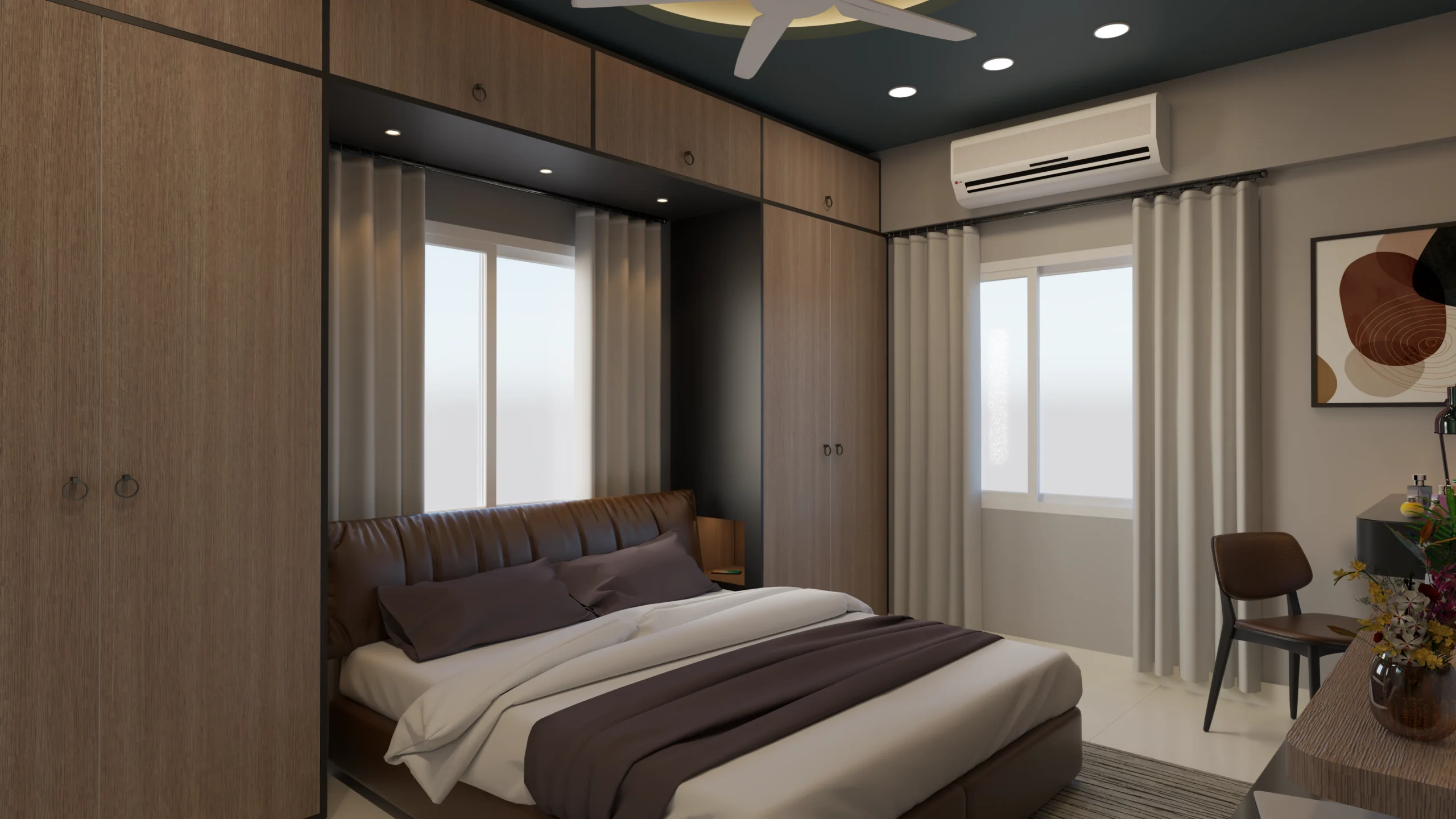
I am writing this from a quiet corner of a gallery in Mayfair, where a single bronze sculpture sits on a plinth of raw travertine, commanding the entire room without uttering a word. There is no excess here, no decorative flourish for its own sake; every element has been placed with the precision of a sentence in a great novel. It is in moments like this that I am reminded why I fell in love with interiors in the first place. Not the cushions, not the colour palettes, but the profound and almost philosophical question of what a space is truly for. Functional art in interior design is not a trend; it is a discipline, a way of seeing that separates the merely beautiful from the genuinely transformative. And it is a conversation I believe every discerning homeowner and business leader deserves to have.
The Philosophy Behind Functional Art in Interior Design
Where Purpose Meets Poetic Form
There is a particular kind of intelligence required to understand that a room is not a canvas upon which objects are arranged, but rather a living composition in which every element must earn its place. Functional art in interior design begins with this understanding: that beauty and utility are not opposing forces but deeply complementary ones. The ancient Greeks understood this with their concept of kalos kagathos, the idea that what is beautiful is also good, also useful, also morally sound. When I approach a project, whether it is a private residence in Belgravia or a corporate headquarters in the City, I carry this philosophy with me like a quiet compass. The question is never simply “what looks well here?” but rather “what serves this space, this life, this purpose?” It is a distinction that changes everything about the outcome.
The Rejection of Decoration for Its Own Sake
We live in an age of extraordinary visual noise. Social media has democratised the image of luxury to such a degree that the truly refined eye must work harder than ever to distinguish between what is genuinely considered and what is merely performative. A room filled with expensive objects is not, by any measure, a well-designed room. I have walked through penthouses dressed in the finest materials that felt utterly hollow, spaces where the decorator had confused accumulation with curation. Functional art in interior design demands the opposite impulse: the rigorous edit, the willingness to remove rather than add, the courage to let a single piece of aged leather or a slab of book-matched marble speak without interruption. Adolf Loos, the Viennese architect, wrote that ornament is crime; I would not go quite so far, but I understand his frustration with the gratuitous. Every line, every surface, every shadow in a well-considered room should have a reason for existing beyond mere visual pleasure.
Material Intelligence: The Language of Lasting Spaces
Raw Materials as Narrative Devices
If functional art in interior design has a vocabulary, it is written in materials. Not the synthetic approximations that flood the market, but the genuine article: hand-veined marble quarried from the mountains of Carrara, aged leather that carries the memory of the animal it once clothed, solid oak that has been allowed to breathe and silver over decades. These are not merely aesthetic choices; they are philosophical ones. When you choose a material with genuine provenance and natural character, you are choosing to introduce time into your space. You are acknowledging that a room is not a static image but a living environment that will evolve, deepen, and grow more beautiful as the years pass. This is the antithesis of fast furniture, of the disposable aesthetic that has come to define so much of contemporary interiors. At The Shape Interiors, this commitment to material intelligence is not a selling point; it is a foundational belief.
The Sensory Dimension of Considered Design
A truly great interior is not experienced through the eyes alone. Consider the cool weight of a marble countertop beneath your palm on a warm afternoon, the particular creak of a well-made timber floor underfoot, the faint mineral scent of a stone wall in a room that has been allowed to breathe. These are the sensory details that elevate a space from the merely attractive to the genuinely memorable. When I design a room, I think constantly about what it will feel like to inhabit it across the full spectrum of the senses. How will the light move through it at seven in the morning, when it is thin and golden and horizontal? How will it sound in the evening, when the city quiets and the space must hold its own silence? Functional art in interior design is, at its most refined, an act of sensory choreography, a discipline that considers not just what is seen but what is felt, heard, and even smelled within a space.
Architectural Nuance and the Art of Spatial Storytelling
The Room as a Composed Narrative
Every great room tells a story, and like all great stories, it requires structure, tension, and resolution. The architectural bones of a space provide the grammar; the materials and objects provide the vocabulary; and the edit, the ruthless, loving edit, provides the meaning. I often speak to clients about the concept of spatial storytelling, the idea that a room should unfold as you move through it, revealing itself gradually rather than presenting everything at once. A long corridor that opens suddenly into a double-height drawing room creates a moment of genuine drama, a held breath followed by release. A window seat positioned to frame a single tree in a garden invites contemplation in a way that no amount of decorative layering ever could. These are the architectural gestures that transform a house into a home and a home into a work of art. They require not just taste but genuine spatial intelligence, the ability to think in three dimensions and across time.
Light as the Primary Design Material
If I were forced to name the single most important element in any interior, I would not hesitate: it is light. Natural light, with its infinite variation and its capacity to transform the character of a room across the hours of a single day, is the material that no budget can fully replicate and no artificial system can entirely replace. The positioning of a window, the depth of a reveal, the angle at which light enters a room in the late afternoon; these decisions shape the emotional register of a space more profoundly than any piece of furniture or artwork. I have seen rooms of modest means made extraordinary by the quality of their light, and I have seen rooms of considerable expense rendered flat and lifeless by the absence of it. Functional art in interior design demands that light be treated not as an afterthought but as the primary architectural material it truly is.
The Curated Edit: Principles for Spaces That Transcend the Ordinary
The Discipline of Restraint
There is a particular kind of confidence required to leave space empty. In a culture that equates fullness with abundance and abundance with success, the decision to leave a wall bare, to allow a room to breathe, to resist the impulse to fill every surface, is a genuinely radical act. And yet it is precisely this restraint that defines the most extraordinary interiors I have encountered in my career. The Japanese concept of ma, the meaningful pause, the productive emptiness, is one I return to constantly in my practice. A room that has been edited with genuine rigour communicates something that no amount of expensive objects can replicate: it communicates confidence, clarity, and a deep understanding of what truly matters. This is the quality that distinguishes the collector from the accumulator, the designer from the decorator, the space that endures from the space that merely impresses.
The Elena Edit: Design Dictates for Spaces That Transcend
For those who wish to move beyond decoration and into the realm of functional art in interior design, I offer the following principles, gathered from years of practice across some of the world’s most considered spaces:
- Prioritise provenance: Choose materials and objects with genuine history and natural character over synthetic approximations, however convincing.
- Edit with courage: Remove before you add. A room that breathes is always more powerful than one that is filled to capacity.
- Design for all the senses: Consider texture, scent, acoustics, and temperature alongside the purely visual.
- Let light lead: Treat natural light as your primary material and design every other element in relation to it.
- Honour the architecture: Work with the bones of a space rather than against them; the best interiors amplify what is already there.
- Invest in the permanent: Allocate the greatest portion of your budget to the elements that cannot easily be changed: floors, walls, ceilings, and structural details.
- Resist the moment: Design for the life you intend to live over the next decade, not for the aesthetic that is currently circulating on social media.
These are not rules in the conventional sense; they are orientations, ways of approaching a space that consistently yield results of genuine depth and longevity. They apply equally to a private home in the Home Counties and to a corporate boardroom in Canary Wharf, because the underlying principles of functional art in interior design are universal, even as their expression is always particular.
There is a question I return to at the end of every project, when the last piece has been placed and the room is finally allowed to exist on its own terms: does this space make the life lived within it more fully itself? Not more impressive, not more photographable, not more aligned with any current aesthetic movement, but more genuinely, authentically expressive of the person or purpose it serves. When the answer is yes, I know that something beyond decoration has been achieved. I know that the space has crossed the threshold into functional art, into the territory where design becomes, quietly and without announcement, a form of living philosophy. It is a threshold I believe every space is capable of crossing, given the right intention, the right intelligence, and the willingness to ask the harder questions before reaching for the easier answers. I would love to know: what does your own space say about the life you are living, and is it telling the story you truly wish to tell?
The architecture of your legacy is defined not merely by the objects you choose, but by the standard of life you refuse to compromise on. At The Shape Interiors, we specialise in the silent language of luxury, transforming raw space into sophisticated environments that resonate with the human spirit and professional excellence. Whether you are defining a private sanctuary or a global corporate headquarters, the requirement remains the same: a vision executed with absolute precision.
We invite you to explore our work and discover why the world’s most discerning individuals trust us with their most personal and professional environments.
Refine Your World.
Your journey toward an unparalleled environment begins with a single conversation. Connect with our global design team to initiate your bespoke project.