
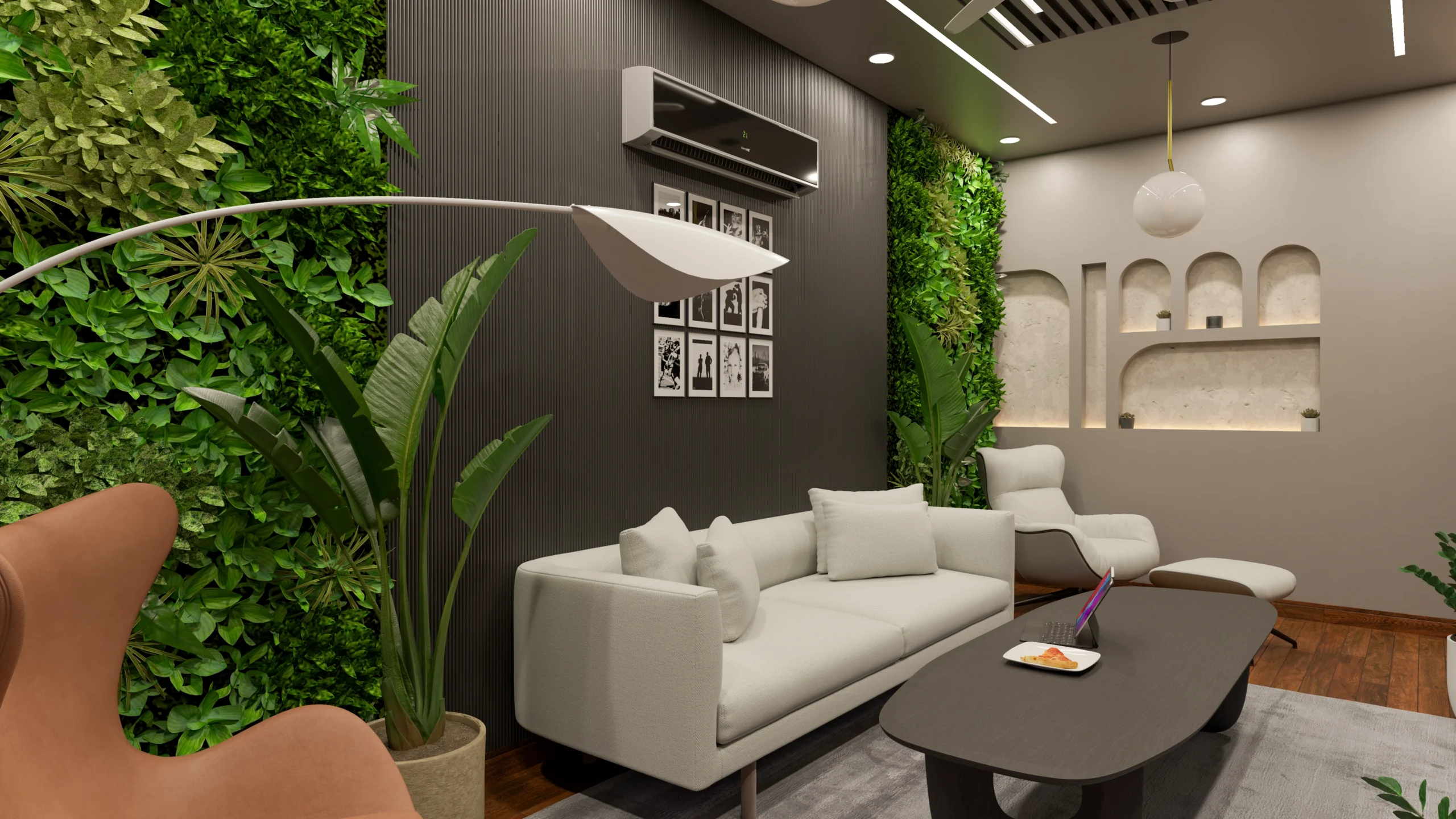
I am writing this from a quiet corner of a gallery in Mayfair, where a single slab of honed Calacatta marble rests against a wall of rough-hewn limestone, and the conversation between the two is, quite simply, extraordinary. There is no competition here, no visual argument; only a dialogue so considered, so deliberately composed, that one feels the intelligence of the hand that arranged it. It is this precise tension, the alchemy of textures in interior design, that has occupied my thoughts for the better part of two decades. The balance of raw and refined materials is not a trend, nor a stylistic preference; it is a foundational philosophy, one that separates a room that is merely decorated from a space that is genuinely felt.
The question I return to, again and again, is this: what does a room say when no one is speaking? The answer, invariably, lies in its surfaces. In the grain of an aged oak floor, in the cool resistance of a stone basin, in the way a bolt of unbleached linen catches afternoon light differently from a panel of polished lacquer. These are not decorative choices; they are editorial ones, and they demand the same rigour and cultural literacy as any great piece of writing or architecture.
The Language of Material Contrast in Luxury Interiors
Why Tension Creates Beauty
There is a mathematical grace to contrast that the untrained eye often mistakes for accident. When a room works, when it truly resonates at a frequency that stills the breath upon entry, it is almost always because opposing forces have been brought into a state of exquisite equilibrium. The alchemy of textures in interior design operates on precisely this principle: that beauty is not born from uniformity, but from the intelligent collision of the rough and the smooth, the ancient and the contemporary, the humble and the opulent. Consider the visual weight of a raw concrete wall set against a console of burnished brass and aged leather. Neither element diminishes the other; instead, each amplifies the other’s character, creating a spatial narrative that is richer for the contrast.
This is a principle I have observed in the great interiors of Milan, in the considered restraint of Kyoto’s traditional machiya townhouses, and in the quietly confident rooms of London’s most distinguished private residences. The common thread is never a single material, however extraordinary; it is always the relationship between materials, the way they are curated, edited, and placed in conversation with one another. A room furnished entirely in marble is cold. A room furnished entirely in raw timber can feel unresolved. But marble and timber, introduced with precision and proportion, produce something that transcends both.
The Edit as a Design Discipline
What separates a truly sophisticated interior from one that is merely expensive is the discipline of the edit. To edit is to resist, and resistance, in design, is an act of profound confidence. It requires the designer to look at a beautiful material and ask not simply, “Is this beautiful?” but rather, “Does this belong here? Does it serve the narrative of this room?” The alchemy of textures in interior design is, at its core, an editorial practice. It demands that every surface, every finish, every tactile element earns its place within the composition. A room that has been truly edited feels inevitable, as though no other arrangement could have existed. This is the standard to which I hold every project, and it is the standard that defines the work of The Shape Interiors.
Raw Materials and the Weight of Authenticity
The Enduring Power of Natural Stone
There is something profoundly grounding about natural stone. It carries within it the memory of geological time, a weight of history that no manufactured surface can replicate. When I specify a slab of Verde Alpi marble or a panel of aged travertine, I am not simply selecting a material; I am introducing a narrative into the room, a story that began millions of years before the building was conceived. This is the quiet power of raw materials: they bring with them an authenticity, a sense of the irreducible real, that anchors even the most contemporary of interiors. The alchemy of textures in interior design relies heavily on this quality of authenticity, using it as a counterpoint to the precision of refined finishes.
Stone, in particular, rewards close attention. Its veining is never symmetrical, its surface never entirely predictable. This inherent variation is not a flaw; it is the material’s signature, its proof of origin. In a world increasingly dominated by the flawless and the reproducible, there is something quietly radical about choosing a surface that cannot be replicated. It speaks to a sensibility that values the genuine over the perfect, the enduring over the fashionable. For the discerning client, this distinction is not merely aesthetic; it is philosophical.
Aged Leather, Linen, and the Patina of Time
Beyond stone, the raw material palette extends to those organic textiles and finishes that improve with age rather than deteriorating. Aged leather, in particular, occupies a singular position in the hierarchy of refined interiors. Its surface tells a story of use, of time, of a life actively lived rather than carefully preserved. When introduced into a room alongside polished surfaces, it provides a warmth and a humanity that prevents the space from tipping into the sterile. Similarly, unbleached linen, with its irregular weave and its tendency to soften and drape with increasing grace, introduces a quality of lived-in elegance that no synthetic fabric can approximate. These are materials that understand time, and in understanding time, they lend a room a quality of permanence that is, in the truest sense, luxurious.
Refined Finishes and the Architecture of Restraint
Polished Surfaces as Punctuation
If raw materials are the body of a room, then refined finishes are its punctuation. They provide emphasis, clarity, and a sense of deliberate intention. A surface of polished plaster, catching the late afternoon light from a west-facing window, does not merely reflect; it amplifies, drawing the eye and creating a moment of visual pause within the broader composition. Lacquered cabinetry, burnished metalwork, and hand-applied gilding all serve a similar function: they introduce a note of precision that sharpens the overall composition and signals the presence of a considered hand. The alchemy of textures in interior design depends on these moments of refinement to give structure to the rawer, more organic elements that surround them.
The danger, of course, lies in excess. A room in which every surface is polished, every edge is sharp, and every finish is immaculate can feel more like a showroom than a home. The refined finish must always be deployed with restraint, used as an accent rather than a foundation. It is the comma in a long sentence, the pause that gives meaning to what surrounds it. When used with this degree of editorial precision, a polished surface becomes not merely beautiful, but architecturally significant.
Metallics, Glass, and the Play of Light
Among the refined finishes available to the contemporary designer, few are as versatile or as transformative as metallic surfaces and glass. Aged brass, in particular, has emerged as a material of extraordinary sophistication, its warm, slightly imperfect patina bridging the gap between the raw and the refined with remarkable elegance. Unlike the cold precision of chrome or the aggressive shine of polished gold, aged brass carries within it a quality of history, a sense that it has been somewhere, seen something. When introduced alongside raw stone or natural timber, it creates a layered, temporally complex interior that rewards sustained attention. Glass, meanwhile, operates as a kind of spatial punctuation, introducing transparency and light into compositions that might otherwise feel heavy or resolved.
Composing the Room: Principles of Textural Balance
Scale, Proportion, and the Hierarchy of Surfaces
The alchemy of textures in interior design is ultimately a compositional discipline, and like all composition, it is governed by the principles of scale, proportion, and hierarchy. Not all surfaces are equal, and the skilled designer understands that a room must have a clear hierarchy of materials: a dominant texture that establishes the character of the space, a secondary texture that provides contrast and depth, and an accent texture that introduces surprise and specificity. This hierarchy is not rigid; it is responsive, shifting with the light, the season, and the use of the room. But it must be present, consciously established, and consistently maintained throughout the design process.
Scale is equally critical. A texture that reads beautifully at close range may dissolve entirely when viewed from across a room, while a material with strong visual presence at a distance may feel overwhelming in a more intimate context. The designer must consider both registers simultaneously, composing the room to work at every scale of experience, from the first impression upon entering to the close, tactile encounter with a surface or object. This is the kind of spatial intelligence that cannot be taught from a mood board; it is cultivated through years of observation, through the patient study of rooms that work and rooms that do not.
The Elena Edit: Design Dictates for Textural Mastery
- Establish a material hierarchy: Identify one dominant texture, one secondary contrast, and one accent finish before specifying anything else. Clarity of intention is the foundation of every successful composition.
- Honour the raw: Always include at least one material that carries the evidence of its natural origin, whether stone, timber, leather, or linen. Authenticity is the antidote to the sterile.
- Deploy polish with precision: Refined finishes should function as punctuation, not as wallpaper. Use them to create moments of emphasis within a broader, more organic composition.
- Consider the light at every hour: A texture that is extraordinary in morning light may be entirely lost by evening. Specify materials with an awareness of how they will perform across the full arc of the day.
- Edit without apology: Remove any material that does not actively contribute to the narrative of the room. Beauty, in the most sophisticated interiors, is always a function of restraint.
- Respect the patina of age: Choose materials that improve with time rather than those that merely endure it. A room that grows more beautiful with use is a room that has been designed with genuine intelligence.
- Balance visual weight with physical weight: A heavy stone floor may be balanced by a lighter, more translucent ceiling treatment. The eye must be guided through the room with the same care as the body.
The rooms that endure, the ones that appear in the pages of the finest design publications a decade after their completion and still feel entirely relevant, are invariably those in which the alchemy of textures has been handled with this degree of rigour and sensitivity. They are rooms that understand the difference between decoration and design, between the accumulation of beautiful objects and the creation of a coherent, emotionally resonant space. They are rooms that have been edited, not merely filled.
As I sit here in this Mayfair gallery, watching the light shift across that extraordinary pairing of Calacatta and limestone, I find myself returning to a question that has guided my practice for as long as I can remember: not what is beautiful, but why. Why does this particular combination of raw and refined produce something that feels not merely attractive, but genuinely moving? The answer, I believe, lies in the fact that it mirrors something true about human experience: that we are ourselves a composition of the rough and the smooth, the ancient and the contemporary, the instinctive and the considered. The rooms that move us are those that reflect this complexity back to us with honesty and grace. I would be genuinely curious to know which material pairings have moved you most profoundly, and what it is, precisely, that you believe they say about the life lived within them. Please do share your thoughts below.
The architecture of your legacy is defined not merely by the objects you choose, but by the standard of life you refuse to compromise on. At The Shape Interiors, we specialise in the silent language of luxury, transforming raw space into sophisticated environments that resonate with the human spirit and professional excellence. Whether you are defining a private sanctuary or a global corporate headquarters, the requirement remains the same: a vision executed with absolute precision.
We invite you to explore our work and discover why the world’s most discerning individuals trust us with their most personal and professional environments.
Refine Your World.
Your journey toward an unparalleled environment begins with a single conversation. Connect with our global design team to initiate your bespoke project.