
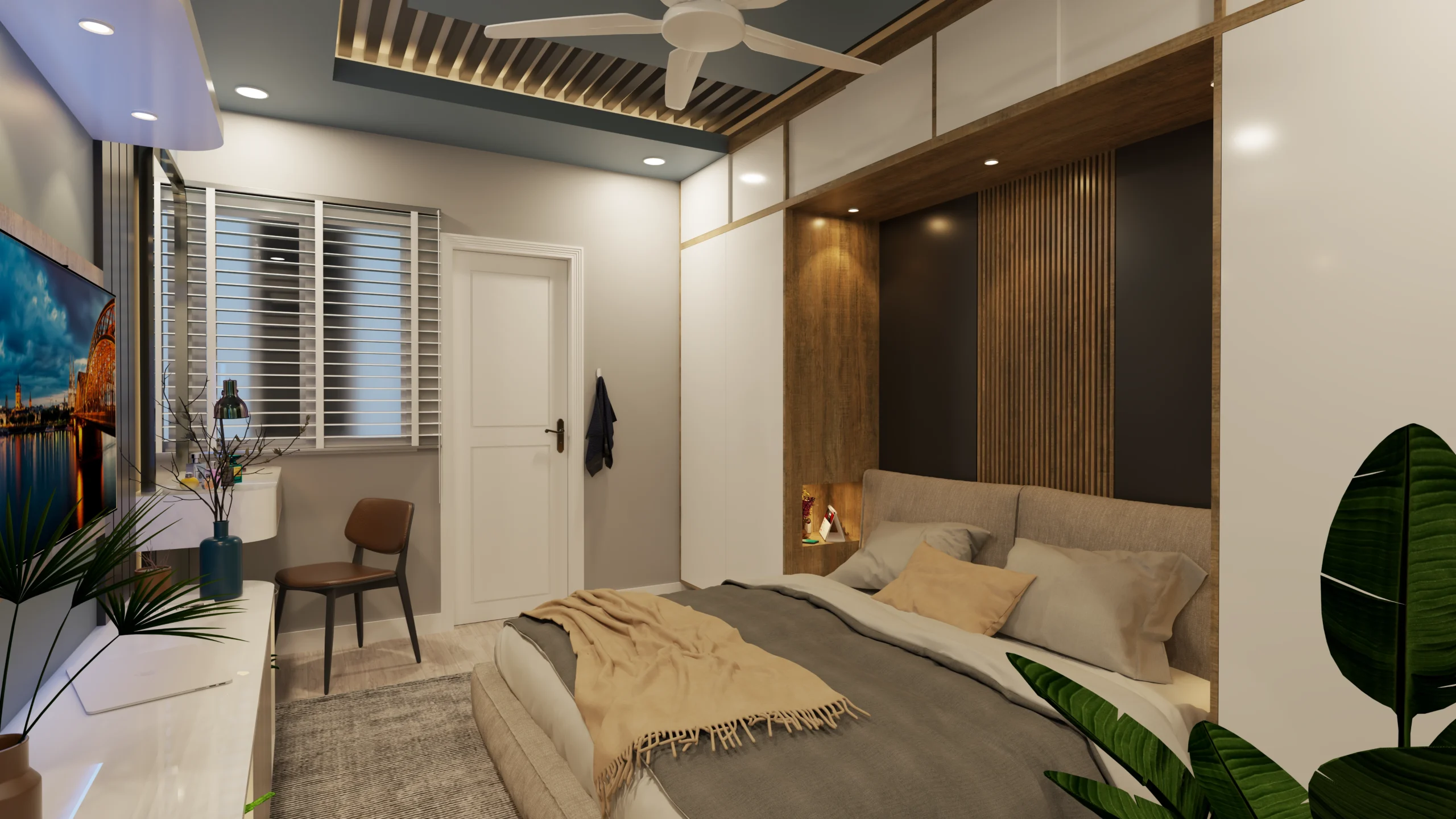
I am writing this from a quiet corner of a dealer’s gallery in Mayfair, where a seventeenth-century Flemish cabinet stands beneath a shaft of grey morning light, its brass fittings worn to a soft, honeyed patina that no factory could ever replicate. There is something profoundly settling about being in the presence of an object that has outlived empires, that has absorbed the conversations and silences of centuries. It is precisely this quality, this accumulated gravity, that I have spent the better part of two decades trying to honour within the contemporary interior. The question I return to, again and again, is not whether antiques belong in modern spaces; it is how we integrate history into 21st-century design with the intelligence and restraint that such objects demand.
Timeless interiors are not assembled; they are composed. They require the same editorial discipline as a well-considered wardrobe, the same cultural literacy as a curated library. When a client invites me into their home or their boardroom, I am not simply looking at square footage and natural light. I am reading the space as a narrative, asking what story it wishes to tell, and identifying where the weight of history might anchor that story with quiet authority. An antique, placed with intention, does not interrupt a modern room. It completes it.
The Language of Patina: Why Age Is the Ultimate Luxury
Reading the Surface of Time
There is a vocabulary that only aged materials possess, and it is one that no contemporary production process can convincingly forge. The surface of a well-worn piece of furniture, a marble console whose veining has deepened over decades, or a length of aged leather that has softened to the texture of warm skin, speaks a language of authenticity that the discerning eye recognises immediately. Patina is not imperfection; it is biography. It is the visual record of a life well-lived, and within the context of timeless interiors, it functions as the most credible form of provenance a space can offer.
The Sensory Dimension of Historical Objects
Consider the sensory experience of a room that contains a genuine antique. There is often a faint, resinous quality to the air near very old wood, something between beeswax and dry earth, that registers below conscious thought but contributes enormously to the feeling of settledness a space can produce. The weight of a cast-iron door handle, the slight unevenness of hand-laid stone flooring, the way candlelight catches the imperfections in antique mirror glass: these are not accidents to be corrected. They are the very details that transform a room from a showroom into a sanctuary. When we integrate history into 21st-century design, we are, in essence, inviting the senses to slow down and pay attention.
The pursuit of the perfectly uniform, the relentlessly new, has produced interiors of considerable technical accomplishment but very little soul. I have walked through penthouses finished to an extraordinary standard, where every surface gleams with precision, and felt nothing. Contrast this with a room where a single Georgian writing desk sits against a wall of contemporary plaster, its dark mahogany absorbing the afternoon light, and the entire space shifts into a register of meaning. The antique does not compete with its surroundings; it contextualises them. It reminds the room, and its occupants, that beauty is not a product of the present moment alone.
The Art of the Edit: Selecting Antiques with Architectural Intelligence
Proportion, Scale, and the Discipline of Restraint
The single greatest error I observe when clients attempt to integrate historical pieces into contemporary settings is the absence of editorial discipline. Antiques, like strong personalities, require space in which to breathe. A room crowded with period furniture does not feel rich; it feels anxious. The art of integrating history into 21st-century design lies in the selection of one or two genuinely significant pieces and allowing them the architectural prominence they deserve. A seventeenth-century armoire placed in a room of clean-lined contemporary furniture becomes a focal point of extraordinary power. The same armoire surrounded by six other period pieces becomes merely part of a collection, its individual authority diluted.
Dialogue Between Eras
What I seek, in every project, is a conversation between periods rather than a monologue from any single era. A slab of honed Calacatta marble on a contemporary kitchen island speaks the same language of geological permanence as an antique stone fireplace surround in the adjacent drawing room. A length of aged, hand-stitched leather on a modern sofa frame echoes the worn leather of a Victorian club chair placed nearby. These are not accidents of styling; they are deliberate acts of spatial storytelling, where the designer’s role is that of an editor, selecting only those elements whose voices contribute meaningfully to the whole. The result is a timeless interior that feels neither frozen in the past nor anxiously contemporary.
I often ask my clients to consider what they wish to feel upon entering a room, before we discuss what they wish to see. Feeling precedes vision in the most successful interiors. When the answer is “grounded,” or “significant,” or “as though this space has always existed,” the antique becomes not a decorative choice but a philosophical one. It is a commitment to the idea that quality endures, that beauty is not seasonal, and that a space designed with genuine material intelligence will remain relevant not merely for the next five years, but for the next fifty.
Material Intelligence: Pairing Antiques with Contemporary Surfaces
The Hierarchy of Raw Materials
At The Shape Interiors, our material philosophy is rooted in a deep respect for what the earth produces: stone quarried from ancient seabeds, timber felled from forests that predate the industrial age, metals worked by hand into forms of quiet utility. These raw materials share a fundamental kinship with antique objects, because both are products of time and craft rather than speed and volume. When we place an antique bronze sculpture on a plinth of raw travertine, or set a period oil painting against a wall finished in Venetian plaster, we are not creating contrast; we are creating continuity. The contemporary surface becomes the frame, and the historical object becomes the subject.
Colour, Light, and the Temporal Interior
Colour plays a critical role in the successful integration of antiques into modern spaces. I have long favoured the deeper, more complex tones of the natural world: the warm ochres of aged parchment, the blue-greens of oxidised copper, the near-black of ebonised oak. These are colours that do not date, because they are not colours of fashion; they are colours of geology and botany, of things that exist outside the cycle of trend. When the walls of a room are finished in a tone that echoes the palette of the antiques within it, the space achieves a coherence that feels inevitable rather than designed. The room appears to have arrived at itself organically, which is, of course, the highest compliment one can pay to any interior.
Lighting, too, must be considered with particular care when historical objects are present. The cool, blue-white light of contemporary LED fixtures can flatten the warmth of aged wood and render the subtleties of patina invisible. I consistently advocate for warm-spectrum lighting in rooms where antiques are featured, supplemented by the irreplaceable quality of candlelight where the setting permits. There is a reason that the great houses of Europe were designed around the fireplace and the candelabra: these light sources were sympathetic to the materials of their age, and they remain sympathetic to those same materials today.
The Elena Edit: Design Dictates for Integrating Antiques
Principles for the Considered Collector
Before I share the principles I return to most consistently, I want to acknowledge that integrating history into 21st-century design is not a formula. It is a practice, one that deepens with experience and sharpens with genuine curiosity about the objects and periods one encounters. That said, there are certain editorial disciplines that I consider non-negotiable when working with antiques in contemporary settings.
- Prioritise provenance over perfection: An antique with a verifiable history and honest wear is infinitely more valuable, spatially and culturally, than a reproduction finished to appear aged. Authenticity is the foundation of timeless interiors.
- Observe the rule of significant singularity: In any given room, allow one antique to hold primary authority. Supporting pieces should complement, not compete.
- Honour the material conversation: Pair antiques with contemporary surfaces that share their elemental vocabulary: stone with stone, leather with leather, metal with metal.
- Resist the impulse to restore aggressively: Patina is not damage. Over-restoration strips an object of its biography and diminishes its spatial power considerably.
- Consider scale before acquisition: An antique that overwhelms its setting loses its authority. Proportion is the grammar of good design.
- Commission bespoke joinery to bridge eras: A custom-built bookcase or cabinetry piece, designed to house or frame an antique, creates an architectural dialogue that elevates both the contemporary and the historical.
The Living Archive
I think of a well-composed interior as a living archive, a space that holds the evidence of human making across time and presents it with clarity and intention. The antique within such a space is not a relic; it is an active participant in the room’s ongoing narrative. It asks questions of the contemporary objects around it, and in doing so, it asks questions of the people who inhabit the space. What do we value? What do we wish to preserve? What does it mean to live with beauty that predates us and will, if we care for it properly, outlast us? These are not merely aesthetic questions. They are questions of character, and the spaces we create in response to them are, ultimately, portraits of who we are.
The integration of history into 21st-century design is, at its most essential, an act of humility. It is an acknowledgement that we are not the first to seek beauty, nor the last, and that the objects which have survived the centuries have done so because they were made with a quality of attention that transcends the moment of their creation. To place such an object within a contemporary interior is to enter into a conversation with that attention, to commit to a standard of care and consideration that the object itself embodies. It is, I believe, one of the most meaningful things a designer, or a client, can do.
As I prepare to leave this gallery, the Flemish cabinet still holding its quiet ground in the morning light, I find myself reflecting on how rarely we allow ourselves to be in the presence of things that are simply, irreducibly old. We live in an age that prizes the new with an almost anxious fervour, and yet the spaces that move us most deeply, the rooms we remember long after we have left them, are almost always those that contain some evidence of time. Perhaps the most radical act of design in the twenty-first century is not innovation at all, but the considered, intelligent embrace of what endures. I would be very glad to know your thoughts on this; what is the oldest object in your home, and what does its presence mean to the space around it?
The architecture of your legacy is defined not merely by the objects you choose, but by the standard of life you refuse to compromise on. At The Shape Interiors, we specialise in the silent language of luxury, transforming raw space into sophisticated environments that resonate with the human spirit and professional excellence. Whether you are defining a private sanctuary or a global corporate headquarters, the requirement remains the same: a vision executed with absolute precision.
We invite you to explore our work and discover why the world’s most discerning individuals trust us with their most personal and professional environments.
Refine Your World.
Your journey toward an unparalleled environment begins with a single conversation. Connect with our global design team to initiate your bespoke project.