
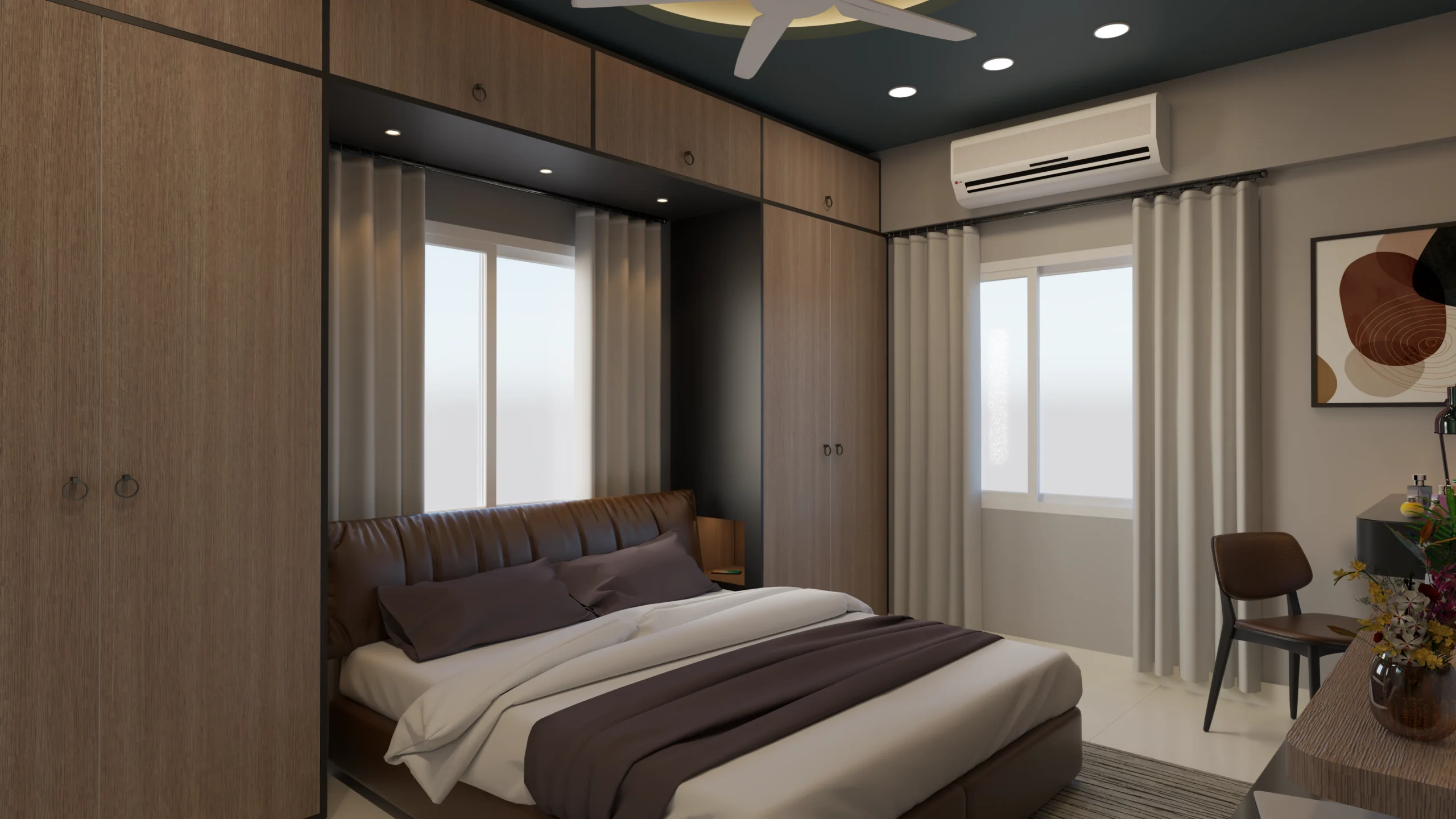
I am writing this from a quiet corner of a gallery in Mayfair, where the afternoon light has just shifted from a cool, silvered grey to something altogether warmer, almost amber, as it pours through the tall sash windows and settles across the limestone floor like a whispered confidence. It is the kind of light that makes you pause. The kind that reminds you, with absolute certainty, that a room is never truly finished until you have considered what the sun will do to it at four o’clock on a Tuesday in November. This is the conversation I find myself returning to again and again, both in my own practice and in the broader world of luxury interior design: the profound, endlessly nuanced dialogue between space and light.
It is a relationship that predates every trend, every material innovation, every architectural movement we care to name. Long before we spoke of biophilic design or circadian rhythms in the context of interiors, the great builders of antiquity understood instinctively that light was not merely a functional necessity. It was the primary material. The Pantheon’s oculus, the clerestory windows of a Gothic cathedral, the riad’s central courtyard open to the sky: these were not accidents of engineering. They were deliberate, philosophical choices about how human beings ought to inhabit the world. And that philosophy, I would argue, is more relevant to the practice of luxury interior design today than it has ever been.
The Architecture of Illumination: How Light Defines Spatial Narrative
Light as the First Material
When I begin any project, before a single swatch of fabric is considered or a stone sample is laid upon the table, I ask my clients to spend time in their space at different hours of the day. This is not a romantic suggestion; it is a rigorous design discipline. The quality of natural light in a room determines everything that follows: the warmth of the plaster finish, the depth of the timber stain, the precise undertone of the marble we select for the kitchen island. Light is not something you add to a room after the fact. It is the invisible architecture upon which every visible decision rests, and understanding it is foundational to any serious conversation about luxury interior design.
The Emotional Register of a Room
There is a reason certain rooms make us feel expansive and others make us feel held, cocooned, safe. It is rarely the furniture alone that creates this effect. It is the relationship between the volume of the space and the quality of light that moves through it. A high-ceilinged drawing room flooded with northern light carries a particular emotional register: cool, intellectual, slightly formal, the kind of room that invites considered conversation and quiet contemplation. A lower-ceilinged library with south-facing windows and the warm, raking light of late afternoon feels entirely different; it is intimate, generous, the kind of room that encourages you to stay. Understanding this emotional grammar of light is, to my mind, one of the most sophisticated skills a designer can cultivate, and one of the most undervalued in an industry that too often prioritises the visual over the visceral.
Material Intelligence: The Way Surfaces Receive and Transform Light
The Living Quality of Raw Materials
One of the great privileges of working with genuinely exceptional materials is witnessing the way they respond to light across the course of a day. A slab of Calacatta marble, for instance, is not a static object. In the cool morning light, its grey veining reads as almost blue, lending the surface a certain austerity, a quiet restraint that feels entirely appropriate for a kitchen or bathroom designed for the early hours. By midday, that same marble warms considerably, the gold and ochre tones within the stone becoming visible, almost luminous, as if the material itself is breathing. By evening, under the amber glow of carefully positioned incandescent sources, it becomes something else entirely: rich, sensuous, deeply alive. This is the living quality of raw materials, and it is precisely why I will always advocate for them over their synthetic counterparts, which remain, by their very nature, inert.
Aged Leather, Patinated Bronze, and the Passage of Time
The same principle applies to aged leather, to patinated bronze, to hand-plastered walls finished in a Venetian technique that catches the light at an oblique angle and reveals a depth that no paint can replicate. These materials do not merely reflect light; they absorb it, hold it, and release it in ways that are subtly different every time you look. They carry within them the evidence of time, and time, in the context of luxury interior design, is perhaps the most precious material of all. A space that has been designed with material intelligence, with a genuine understanding of how surfaces will age and evolve in relationship to their light environment, is a space that will remain compelling for decades. It is the antithesis of the fast furniture aesthetic, and it is the foundation upon which truly enduring interiors are built.
The Edit: Curating Space to Allow Light Its Full Expression
The Discipline of Restraint
There is a particular kind of courage required to leave space empty. In a culture that equates abundance with success, the decision to remove rather than add is a radical act, and nowhere is this more apparent than in the relationship between space and light. A room that is over-furnished, over-accessorised, and over-decorated is a room in which light cannot move freely. It becomes trapped, fragmented, reduced to a series of small, disconnected pools that illuminate objects rather than animating the space as a whole. The edit, as I have always maintained, is the most powerful tool in a designer’s repertoire. It is the discipline of asking, with absolute honesty, whether each element earns its place, not merely aesthetically, but spatially and luminously.
The Elena Edit: Design Dictates for the Space-Light Dialogue
- Always assess your space at multiple times of day before committing to a material palette; light will reveal undertones that artificial conditions conceal.
- Prioritise raw, natural materials over synthetic alternatives; marble, stone, aged timber, and hand-finished plaster all possess a luminous depth that manufactured surfaces cannot replicate.
- Treat window placement and glazing specification as primary design decisions, not afterthoughts delegated to the architect alone.
- Resist the impulse to fill every surface; negative space is not emptiness, it is the room breathing, and it is essential to the quality of light within it.
- Layer your artificial lighting with the same rigour you apply to natural light; consider colour temperature, directionality, and the specific mood each zone of a room requires after dark.
- Allow materials to age; patina is not deterioration, it is the evidence of a life well-lived within a space, and it deepens the relationship between surface and light over time.
- Consider the scent and sound of a space alongside its visual qualities; light affects our perception of both, and a truly considered interior engages all the senses simultaneously.
Artificial Light as Architectural Instrument
Beyond the Overhead Fitting
The conversation about light in luxury interior design cannot be confined to the natural. As the day recedes and the city beyond the window settles into its evening register, the interior must be capable of a transformation that is equally considered, equally intentional. This is where artificial lighting, deployed with genuine architectural intelligence, becomes one of the most powerful tools available to a designer. The overhead fitting, that blunt instrument of the speculative developer, is almost never the answer. It flattens a room, eliminates shadow, and reduces the spatial narrative to something clinical and uninspiring. The rooms that I find most compelling after dark are those in which light arrives from multiple sources at varying heights, creating a layered luminosity that mimics, in its complexity, the quality of natural light at its most beautiful.
The Role of Shadow in Spatial Composition
Shadow is not the absence of light. It is light’s most eloquent collaborator, and any serious discussion of the dialogue between space and light must give it its proper due. It is shadow that gives a room its depth, its mystery, its sense of inhabitable volume. A space without shadow is a space without dimension, and it is, ultimately, a space without soul. At The Shape Interiors, we approach the placement of every light source with this understanding at the forefront: we are not merely illuminating a room, we are composing it, sculpting its planes and volumes with light and shadow in the same way that a sculptor works with form and negative space. The result, when it is achieved with precision and sensitivity, is a room that feels not merely beautiful but genuinely alive, responsive to the presence of the people within it and to the shifting quality of the world beyond its walls.
What strikes me most, returning always to that gallery in Mayfair as the light continues its slow, unhurried transformation across the limestone floor, is how deeply personal this dialogue between space and light truly is. It is not a formula. It cannot be reduced to a specification sheet or a mood board, however beautifully curated. It is, at its core, a conversation between a space and the people who inhabit it, mediated by the most democratic and the most extraordinary material in the designer’s palette. Light asks nothing of us except our attention. And in giving it that attention, in designing spaces that honour its complexity and its beauty, we create interiors that do something far more significant than merely looking well: they make us feel, quietly and profoundly, that we are exactly where we ought to be. I would be genuinely curious to know which quality of light speaks most deeply to you in your own spaces; please do share your thoughts in the comments below.
The architecture of your legacy is defined not merely by the objects you choose, but by the standard of life you refuse to compromise on. At The Shape Interiors, we specialise in the silent language of luxury, transforming raw space into sophisticated environments that resonate with the human spirit and professional excellence. Whether you are defining a private sanctuary or a global corporate headquarters, the requirement remains the same: a vision executed with absolute precision.
We invite you to explore our work and discover why the world’s most discerning individuals trust us with their most personal and professional environments.
Refine Your World.
Your journey toward an unparalleled environment begins with a single conversation. Connect with our global design team to initiate your bespoke project.