
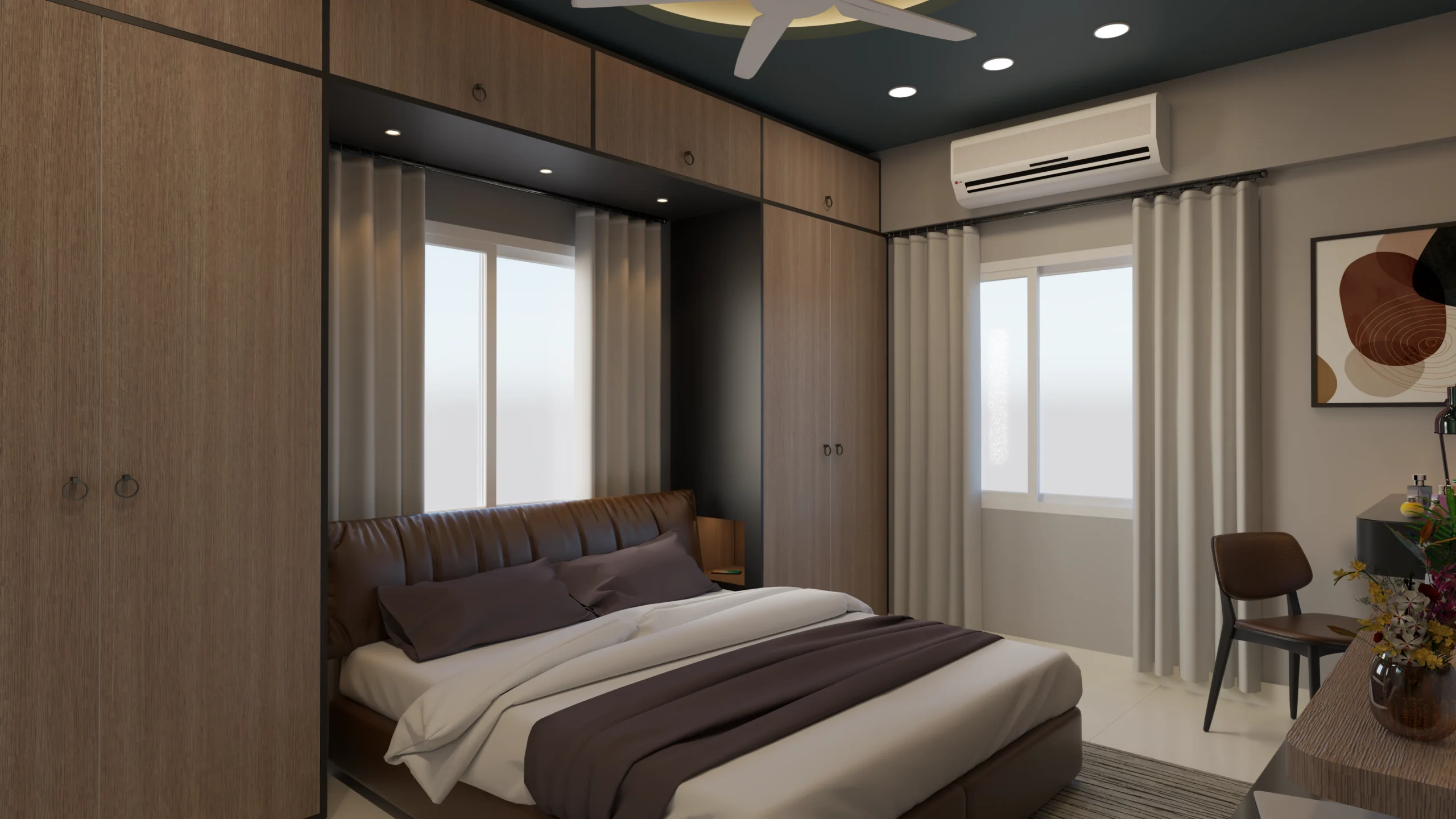
I am writing this from a quiet corner of a gallery in Mayfair, where a single sculpture occupies the centre of an otherwise spare room. There is no clutter, no competing narrative, no visual noise to dilute the conversation between the object and the space it inhabits. It is, in the truest sense, a room with a point of view. And it is precisely this quality, this deliberate, unwavering editorial conviction, that separates a space which merely functions from one that genuinely moves you. Luxury interior design philosophy, at its most refined, is not about the accumulation of beautiful things. It is about the courage to make a decision and hold it.
I have spent the better part of two decades walking through rooms on four continents, and the spaces that remain with me are never the ones that tried to please everyone. They are the rooms that knew exactly what they were. A library in a Florentine palazzo, its walls the colour of aged cognac, its shelves weighted with leather-bound volumes that smelled faintly of cedar and time. A penthouse in Hong Kong where a single slab of book-matched marble formed the entire eastern wall, catching the harbour light at dusk in a way that felt almost choreographed. These spaces had an editorial eye behind them, a guiding intelligence that understood restraint as a form of power.
Spatial Storytelling and the Architecture of Atmosphere
The Role of Light in Defining a Narrative
No point of view survives poor lighting. Light is the medium through which every other design decision is either validated or undermined, and yet it remains the most consistently underestimated element in the design process. Natural light, with its shifting quality across the hours of the day, is the most sophisticated design tool available, and the spaces that harness it with intelligence, that position a reading chair to catch the particular quality of late afternoon sun, or orient a dining table to receive the blue-grey light of a northern exposure, feel alive in a way that no amount of artificial illumination can fully replicate.
Artificial lighting, when approached with the same editorial rigour, becomes a form of spatial choreography. The layering of ambient, accent, and task light, each on its own circuit, each calibrated to a specific mood and hour, allows a room to shift its emotional register throughout the day. A space that feels crisp and clear at noon can become intimate and contemplative by evening, not through any physical change, but through the considered manipulation of light. This is spatial storytelling at its most sophisticated: the room itself becomes a narrative that unfolds in real time.
Proportion, Silence, and the Power of the Pause
The editorial eye understands something that the untrained eye often misses: the most powerful element in a room is frequently the space between things. Proportion is not simply a matter of scale; it is a matter of rhythm, of the visual breath that a room takes between one object and the next. A wall left bare is not a wall that has been forgotten; it is a wall that has been given a role. The silence between notes is what gives music its tension and release, and the same principle governs the most considered interiors. When you resist the impulse to fill every surface, every corner, every visual pause, you allow the room to speak with a clarity that crowded spaces never achieve.
The Curated Life: Living with Intention in a Crowded World
The Edit as a Daily Practice
The editorial eye is not a skill reserved for the design process alone. It is, at its deepest level, a philosophy of living. The clients whose spaces I find most compelling are invariably those who apply the same rigour to their lives that they apply to their rooms: they acquire slowly and deliberately, they release what no longer serves the narrative, and they understand that the quality of their environment is a direct reflection of the quality of their attention. To live with a point of view is to resist the relentless pressure of accumulation, to choose depth over breadth, and to understand that a single extraordinary object, placed with intention, will always outperform a room full of adequate ones.
The Elena Edit: Design Dictates for a Space with a Point of View
- Establish the emotional intention of a room before selecting a single material or piece of furniture. The feeling precedes the form.
- Choose materials for their provenance and patina, not their price point. Aged leather, hand-quarried stone, and artisan textiles carry narratives that manufactured finishes cannot.
- Resist the impulse to fill silence. Empty space is not absence; it is the room breathing.
- Commit to a colour position. Indecision in a palette reads as indecision in the room itself.
- Layer light with the same deliberateness as any other material. Natural and artificial light are not afterthoughts; they are the medium through which everything else is perceived.
- Edit ruthlessly and regularly. A room is not a finished object; it is a living editorial, and it requires the same ongoing attention as any considered creative practice.
- Allow one element to lead. A room with a single, confident focal point, whether architectural, material, or artistic, will always feel more resolved than one that distributes its ambitions equally across every surface.
The spaces that endure, the ones that appear in the memory long after the visit has ended, are never the result of accident or abundance. They are the result of a sustained, disciplined point of view, applied with patience and held with confidence. In a world that increasingly rewards the immediate, the abundant, and the algorithmically optimised, the truly luxurious act is to slow down, to look carefully, and to choose with the kind of quiet authority that needs no validation from the prevailing trend. What would your most important room say about you, if it were given a voice? And more pressingly, is that the thing you would want it to say?
The editorial eye is, ultimately, an act of self-knowledge. To design a space with a genuine point of view requires that you first understand your own, that you know what moves you, what steadies you, what quality of light makes you feel most fully yourself. The rooms that achieve this are not merely beautiful; they are true. And truth, in design as in life, is the rarest and most enduring luxury of all. I would be genuinely curious to know: what is the point of view of the space you inhabit most, and did you choose it, or did it simply happen to you? I invite you to share your thoughts below.
The architecture of your legacy is defined not merely by the objects you choose, but by the standard of life you refuse to compromise on. At The Shape Interiors, we specialise in the silent language of luxury, transforming raw space into sophisticated environments that resonate with the human spirit and professional excellence. Whether you are defining a private sanctuary or a global corporate headquarters, the requirement remains the same: a vision executed with absolute precision.
We invite you to explore our work and discover why the world’s most discerning individuals trust us with their most personal and professional environments.
Refine Your World.
Your journey toward an unparalleled environment begins with a single conversation. Connect with our global design team to initiate your bespoke project.