
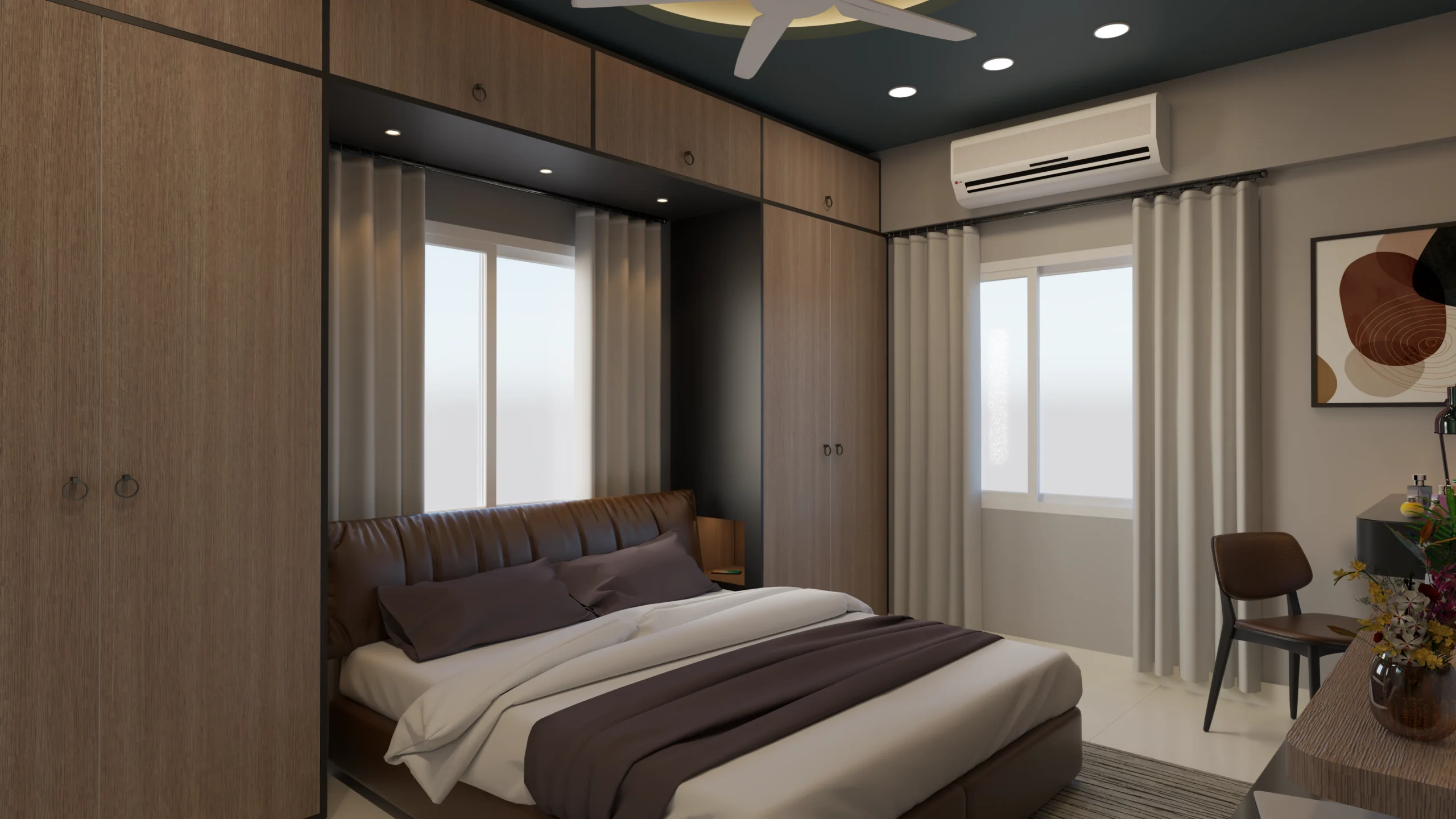
I am writing this from a quiet corner of a gallery in Mayfair, where a single Brutalist sculpture sits beneath a wash of northern light, and I find myself utterly transfixed. Not by its scale, nor its obvious craft, but by what it seems to be saying without uttering a single word. There is a conversation happening in this room, between the weight of the stone, the geometry of the plinth, and the cool, considered silence of the white walls surrounding it. This, I have always believed, is the very essence of great design: a silent conversation conducted entirely in the language of form. It is a language that the most discerning among us have always understood intuitively, even if we have never quite had the vocabulary to articulate it.
The language of form in interior design is not a new concept, yet it remains one of the most profoundly misunderstood. We live in an era saturated with imagery, where spaces are styled for a photograph rather than composed for a life. The result is a kind of visual noise, a cacophony of trend-led choices that speak loudly and say very little. True design, the kind that endures across decades and cultures, operates on an entirely different register. It whispers. It suggests. It invites you to lean in, to slow down, and to feel something you cannot immediately name. That feeling, that ineffable sense of rightness within a room, is the hallmark of a space that has been genuinely considered rather than merely decorated.
The Grammar of Space: How Form Communicates Without Words
The Architecture of Feeling
Every room possesses what I would describe as an emotional grammar: a set of structural and material choices that, taken together, produce a specific psychological and sensory response. The height of a ceiling does not merely determine how much air a room contains; it determines how expansive your thoughts feel within it. A low, intimate ceiling clad in aged oak panelling creates a sense of enclosure that is not claustrophobic but rather deeply reassuring, like the interior of a well-appointed library where the world outside ceases to matter. Conversely, a soaring double-height space with raw concrete walls and a single, dramatic pendant light speaks of ambition, of clarity, of a mind uncluttered by the superfluous. These are not accidental effects. They are the result of a designer who understands that form is always, at its core, a form of communication.
The Weight of Material Truth
Consider the language of materials, which is perhaps the most immediate dialect within the broader language of form in interior design. Marble, for instance, carries within its veining the memory of geological time; to introduce it into a space is to anchor that space in something ancient and immovable. Aged leather, worn to a particular softness by years of use, speaks of continuity and of lives well-lived. Raw linen, slightly rumpled, suggests an ease that is entirely intentional, a studied nonchalance that only the truly confident can carry. These materials do not merely look beautiful; they communicate values. They tell a story about the person who chose them, about their relationship with quality, with history, and with the quiet luxury of things that improve with age rather than deteriorate with it. When I work with clients at The Shape Interiors, the conversation about materials is always, at its heart, a conversation about identity.
Proportion as Punctuation
Proportion, too, is a form of punctuation within the language of form. A sofa that is too large for its room does not merely look wrong; it shouts, it dominates, it refuses to participate in the broader conversation of the space. A perfectly scaled armchair, positioned at precisely the right angle to a window, creates a pause in the room’s narrative, an invitation to sit, to look, to be still. The golden ratio, that ancient mathematical principle beloved of architects from antiquity to the present day, is not a rigid rule but rather a deeply intuitive guide to the kind of proportional harmony that the human eye recognises and the human spirit responds to. It is the visual equivalent of a perfectly constructed sentence: balanced, purposeful, and quietly satisfying in a way that is difficult to articulate but impossible to ignore.
Silence as a Design Element: The Power of Restraint
The Edit as an Act of Courage
There is a particular courage required in the act of restraint, and it is a courage that separates the truly great designers from the merely competent. In a world that equates abundance with success, choosing to remove rather than to add is a radical act. The empty wall, the unadorned surface, the single object given space to breathe: these are not signs of incompletion but of supreme confidence. The language of form in interior design is never more eloquent than when it is at its most spare. Think of the great Japanese aesthetic of ma, the concept of negative space as an active, meaningful presence rather than an absence. In the most considered interiors, the spaces between objects are as carefully composed as the objects themselves, creating a rhythm that the eye follows with pleasure and the body inhabits with ease.
Light as Narrative
Light, of course, is the great narrator of any interior, the element that transforms a static composition into something living and temporal. The quality of light in a room changes its entire emotional register, from the cool, intellectual clarity of northern morning light falling across a stone floor, to the amber warmth of a single table lamp casting its pool of gold against a wall of dark, textured plaster. A designer who understands light understands that they are not merely illuminating a space but composing a series of moods, a sequence of experiences that shift with the hours and the seasons. This is not a technical consideration alone; it is a deeply philosophical one, rooted in the understanding that we do not simply see our environments but feel them, and that light is the primary instrument through which that feeling is orchestrated.
The Scent of a Room
It would be remiss, in any serious discussion of the language of form, to overlook the olfactory dimension of a space. Scent is perhaps the most primal of our senses, the one most directly connected to memory and emotion, and yet it is the element most consistently neglected in the design of interiors. The faint mineral coolness of a marble bathroom, the warm, slightly resinous scent of aged timber in a panelled study, the clean, almost imperceptible fragrance of well-laundered linen in a bedroom: these are not incidental qualities but essential components of a room’s character. A space that engages all the senses simultaneously is a space that communicates on every available frequency, and it is this totality of experience that distinguishes a truly considered interior from one that is merely visually accomplished.
The Language of Form in Interior Design: Reading a Room Like a Text
Decoding the Narrative of Objects
Every object within a room is a word in the sentence of that space, and like words, objects carry connotations that extend far beyond their literal function. A stack of well-worn books on a side table speaks of intellectual curiosity and a life engaged with ideas. A single, significant piece of art, chosen with evident conviction rather than decorative convenience, speaks of a collector’s eye and a willingness to commit to a point of view. The objects we choose to live with are, in the most literal sense, a form of autobiography, and the designer’s role is to help curate that autobiography with clarity and intention, ensuring that every element contributes to a coherent narrative rather than a collection of unrelated anecdotes. This is the art of the edit, and it is, in my experience, the most intellectually demanding aspect of the entire design process.
Cultural Fluency in Design
The most sophisticated interiors are those that demonstrate a kind of cultural fluency, an ability to draw from multiple traditions and periods without becoming pastiche. A Murano glass vessel on a mid-century credenza beside a fragment of ancient Roman mosaic: this is not eclecticism for its own sake but a considered dialogue between different moments in the history of human making. The language of form in interior design is, at its most ambitious, a kind of multilingualism, a capacity to speak in several aesthetic registers simultaneously while maintaining a coherent and distinctive voice. This requires not merely taste but genuine knowledge, the kind of deep familiarity with art history, architectural theory, and material culture that allows a designer to make connections that are surprising yet inevitable, unexpected yet entirely right.
The Curated Interior: Principles for a Space That Speaks
The Elena Edit: Design Dictates for a Considered Interior
Before I share the principles I return to again and again in my own practice, I want to acknowledge that these are not rules in the prescriptive sense. They are, rather, a set of orientations, a compass rather than a map, for those who wish to develop a more intentional relationship with the spaces they inhabit or create. The language of form in interior design is ultimately a personal language, and like any language, it becomes richer and more nuanced the more deeply it is studied and practised.
- Prioritise material integrity: Choose raw, honest materials, marble, aged leather, hand-thrown ceramics, that carry the evidence of their making and improve with the passage of time.
- Compose with negative space: Treat the empty areas of a room as active design elements, giving objects room to breathe and the eye room to rest.
- Invest in proportion: Before introducing any new element into a space, consider its scale in relation to everything around it. Proportion is the foundation of visual harmony.
- Layer light with intention: Design a lighting scheme that creates multiple moods within a single space, from the functional to the atmospheric, and consider how natural light changes the room throughout the day.
- Edit with conviction: Remove anything that does not contribute meaningfully to the narrative of the space. The courage to subtract is the mark of a truly confident designer.
- Engage all the senses: Consider the scent, texture, and acoustic quality of a room alongside its visual composition. A space that speaks to every sense simultaneously is a space that is truly alive.
- Seek cultural depth: Introduce objects and references that carry genuine historical or cultural weight, creating a dialogue between periods and traditions that enriches the overall narrative.
The Living Room as a Living Text
The living room, more than any other space in a home or a corporate environment, is where the language of form in interior design is most fully expressed and most keenly felt. It is the room in which we receive others, in which we present ourselves to the world, and in which we retreat from it. It is, in the most profound sense, a portrait of its inhabitant, and it should be composed with the same care and intentionality that one would bring to any serious act of self-expression. The choice of a sofa, the placement of a lamp, the selection of a single work of art for the wall above the fireplace: none of these decisions is trivial. Each one is a word in the sentence of the room, and together they form a statement about who you are, what you value, and how you choose to inhabit the world.
I find myself returning, always, to the conviction that the most beautiful spaces are those that have been lived in with genuine attention, where every choice reflects a considered point of view rather than a passive acceptance of the available and the convenient. Design, at its most elevated, is not a service but a practice, a daily discipline of looking, questioning, and refining that transforms the spaces we inhabit into something that genuinely reflects the quality of our inner lives. The language of form is not spoken once and then forgotten; it is a continuous conversation, evolving as we evolve, deepening as our understanding deepens, and becoming, over time, the most honest and enduring expression of who we truly are. I would love to know: what does the space you inhabit say about you, and is it saying what you intend?
The architecture of your legacy is defined not merely by the objects you choose, but by the standard of life you refuse to compromise on. At The Shape Interiors, we specialise in the silent language of luxury, transforming raw space into sophisticated environments that resonate with the human spirit and professional excellence. Whether you are defining a private sanctuary or a global corporate headquarters, the requirement remains the same: a vision executed with absolute precision.
We invite you to explore our work and discover why the world’s most discerning individuals trust us with their most personal and professional environments.
Refine Your World.
Your journey toward an unparalleled environment begins with a single conversation. Connect with our global design team to initiate your bespoke project.