
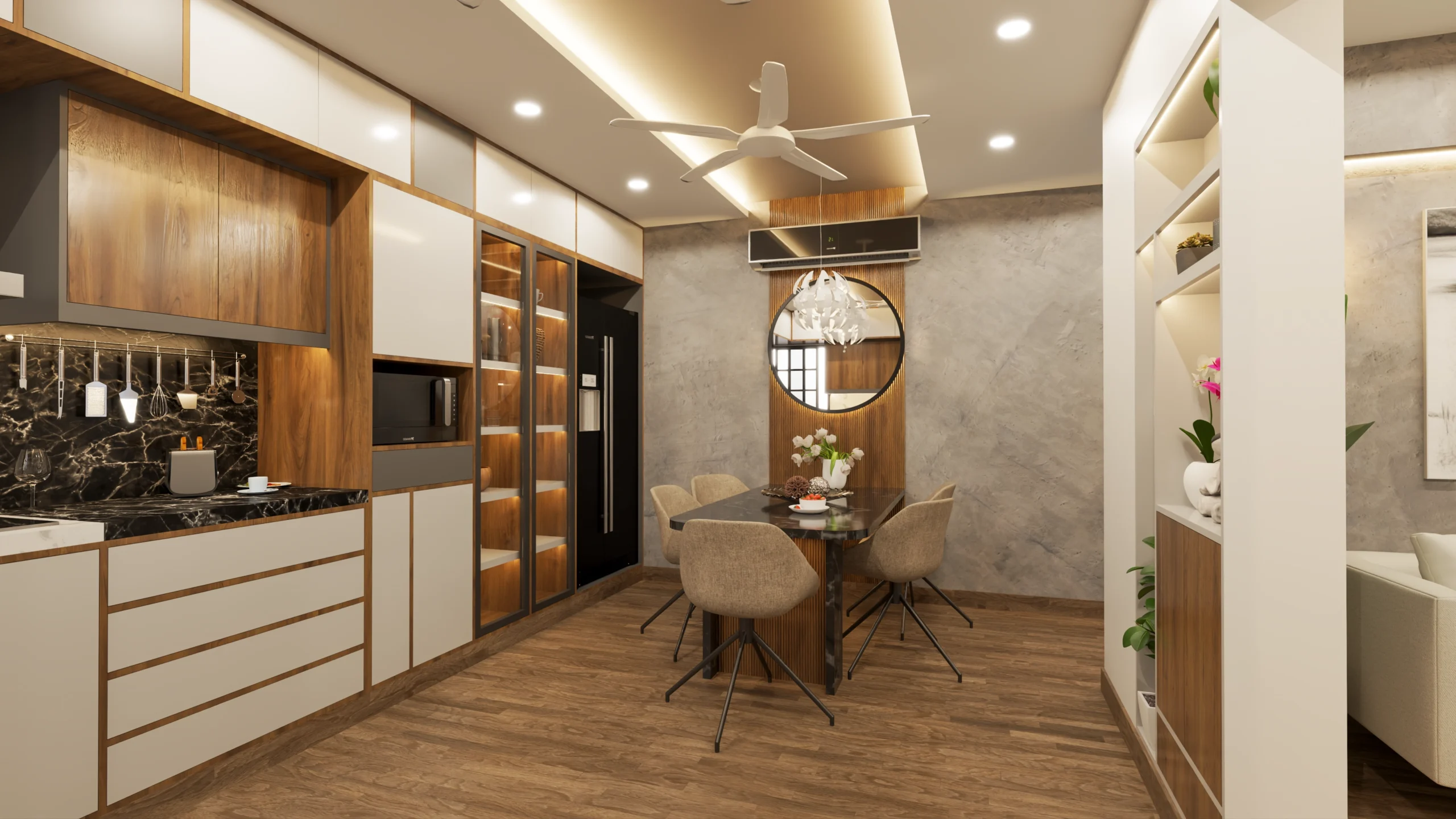
I am writing this from a quiet corner of a members’ club in Mayfair, where the ceiling soars to a height that most modern apartments would consider architecturally ambitious. The exposed brickwork behind me, softened by the amber glow of a single pendant light, reminds me of a particular afternoon I spent in a converted warehouse space in Tribeca, watching the late October light fall in long, diagonal columns across a poured concrete floor. It was the kind of moment that stays with you, not because it was grand or gilded, but because it was honest. That honesty, that refusal to conceal the bones of a building, is precisely what defines the Manhattan loft aesthetic, and it is a design language I find myself returning to with increasing reverence.
The Manhattan loft aesthetic is not simply a stylistic choice; it is a philosophical position. It asks us to consider what we value in a space, whether we seek comfort through concealment or through confrontation with raw, unmediated materiality. For those of us who have spent years navigating the world’s most considered interiors, from the sun-warmed limestone of Provençal farmhouses to the lacquered restraint of Tokyo apartments, the industrial loft offers something quietly radical: a space that wears its history on its walls, quite literally.
Curating the Edit: Restraint as the Highest Form of Luxury
The Art of Spatial Editing
One of the most common misunderstandings about the Manhattan loft aesthetic is that its openness invites accumulation. In reality, the opposite is true. The very scale of a loft space demands a rigorous editorial discipline. When a room offers forty feet of uninterrupted visual field, every object within it carries disproportionate weight. A single oversized artwork, placed with intention against a raw plaster wall, speaks with far greater authority than a gallery of smaller pieces competing for attention. A long, low sofa in aged leather, positioned to face the city view rather than a television, makes a statement about how the occupant chooses to inhabit their time. The edit is everything.
This principle of spatial editing is, I believe, one of the most transferable lessons that the loft aesthetic offers to global interior design more broadly. We live in an era of extraordinary material abundance, and the temptation to fill space, to demonstrate wealth through accumulation, remains powerful. But the most sophisticated interiors I have encountered, whether in a converted warehouse in the Meatpacking District or a Georgian townhouse in Belgravia, share a common quality: they know what to leave out. The negative space is not empty; it is considered. It is the silence between the notes that gives the music its meaning.
The Elena Edit: Design Dictates for the Modern Loft Interior
- Honour the bones: Never conceal structural elements that carry genuine architectural character. Exposed columns, original beams, and industrial window frames are the space’s biography; treat them accordingly.
- Invest in one extraordinary material: Whether it is a slab of book-matched marble for a kitchen island or a single panel of aged brass, one material of genuine quality will anchor the entire composition.
- Control the light layers: Combine the drama of industrial-scale natural light with considered artificial lighting at three distinct heights: ambient, task, and accent.
- Edit with severity: In a loft space, every object is visible from every angle. Remove anything that does not earn its place through beauty, function, or emotional resonance.
- Introduce warmth through texture: Raw concrete and exposed steel require the counterbalance of aged leather, heavy linen, and natural timber to prevent the space from reading as cold or institutional.
- Respect the scale: Furniture must be proportioned to the volume of the space. Undersized pieces in a double-height room create a sense of spatial anxiety rather than comfort.
- Allow the patina to develop: The most compelling loft interiors are not frozen in time; they accumulate character. Choose materials that age gracefully and resist the urge to over-maintain.
The Global Resonance of an American Original
How the World Translated the Loft
What is perhaps most remarkable about the Manhattan loft aesthetic is the fluency with which it has been translated across vastly different cultural and climatic contexts. In East London, the conversion of Victorian warehouses along the Regent’s Canal produced interiors that shared the loft’s structural honesty but layered it with a distinctly British sensibility: darker palettes, heavier textiles, a greater willingness to mix periods and provenance. In Melbourne’s inner suburbs, the same industrial bones were softened by the influence of a more relaxed, outdoor-oriented lifestyle, with the loft’s characteristic openness extended to include generous terraces and the integration of landscape. In Berlin, the aesthetic absorbed the weight of a very particular history, producing spaces of extraordinary emotional complexity where the industrial past was never merely decorative but always present as a form of cultural memory.
Each of these translations enriches our understanding of what the Manhattan loft aesthetic truly is: not a fixed style to be replicated, but a set of principles to be interpreted. The commitment to material honesty, the celebration of scale, the discipline of the edit, and the understanding that a space’s history is one of its most valuable assets; these are ideas that transcend geography. They speak to a universal human desire to inhabit spaces that feel real, that feel earned, that feel, in the deepest sense, alive.
The Future of the Industrial Interior
As cities continue to evolve and the supply of genuinely historic industrial buildings diminishes, the question of how we carry the loft aesthetic forward becomes increasingly pressing. The answer, I believe, lies not in the faithful reproduction of industrial elements but in the deeper internalisation of the values that gave rise to them. A newly built apartment can honour the spirit of the Manhattan loft aesthetic without a single exposed brick, provided it commits to the same principles: generous volume, material authenticity, spatial restraint, and a respect for the way light moves through a room across the course of a day. The aesthetic is not a costume; it is a conviction.
There is something quietly radical about choosing to live in a space that does not attempt to hide what it is. In a world that increasingly values the polished, the curated, and the algorithmically optimised, the loft interior stands as a reminder that beauty and imperfection are not opposites. The scuff on a concrete floor, the slight variation in a hand-applied plaster wall, the way an original steel beam catches the morning light at an angle that no architect could have planned: these are the moments that transform a space from a backdrop into a home. And it is in those moments, I think, that we come closest to understanding what it truly means to live well.
I find myself wondering, as the light shifts here in Mayfair and the room around me settles into its evening register, whether the spaces we choose to inhabit are not simply reflections of our taste but declarations of our values. The Manhattan loft aesthetic, in all its global iterations, asks us to value honesty over artifice, depth over surface, and the slow accumulation of meaning over the immediate gratification of novelty. It is a demanding aesthetic, in the very best sense of the word. And I believe it is one whose most important lessons we are only beginning, as a design culture, to fully absorb. I would be genuinely curious to know: which of these principles resonates most deeply with the spaces you inhabit, and what does your own interior say about the life you are choosing to live?
The architecture of your legacy is defined not merely by the objects you choose, but by the standard of life you refuse to compromise on. At The Shape Interiors, we specialise in the silent language of luxury, transforming raw space into sophisticated environments that resonate with the human spirit and professional excellence. Whether you are defining a private sanctuary or a global corporate headquarters, the requirement remains the same: a vision executed with absolute precision.
We invite you to explore our work and discover why the world’s most discerning individuals trust us with their most personal and professional environments.
Refine Your World.
Your journey toward an unparalleled environment begins with a single conversation. Connect with our global design team to initiate your bespoke project.