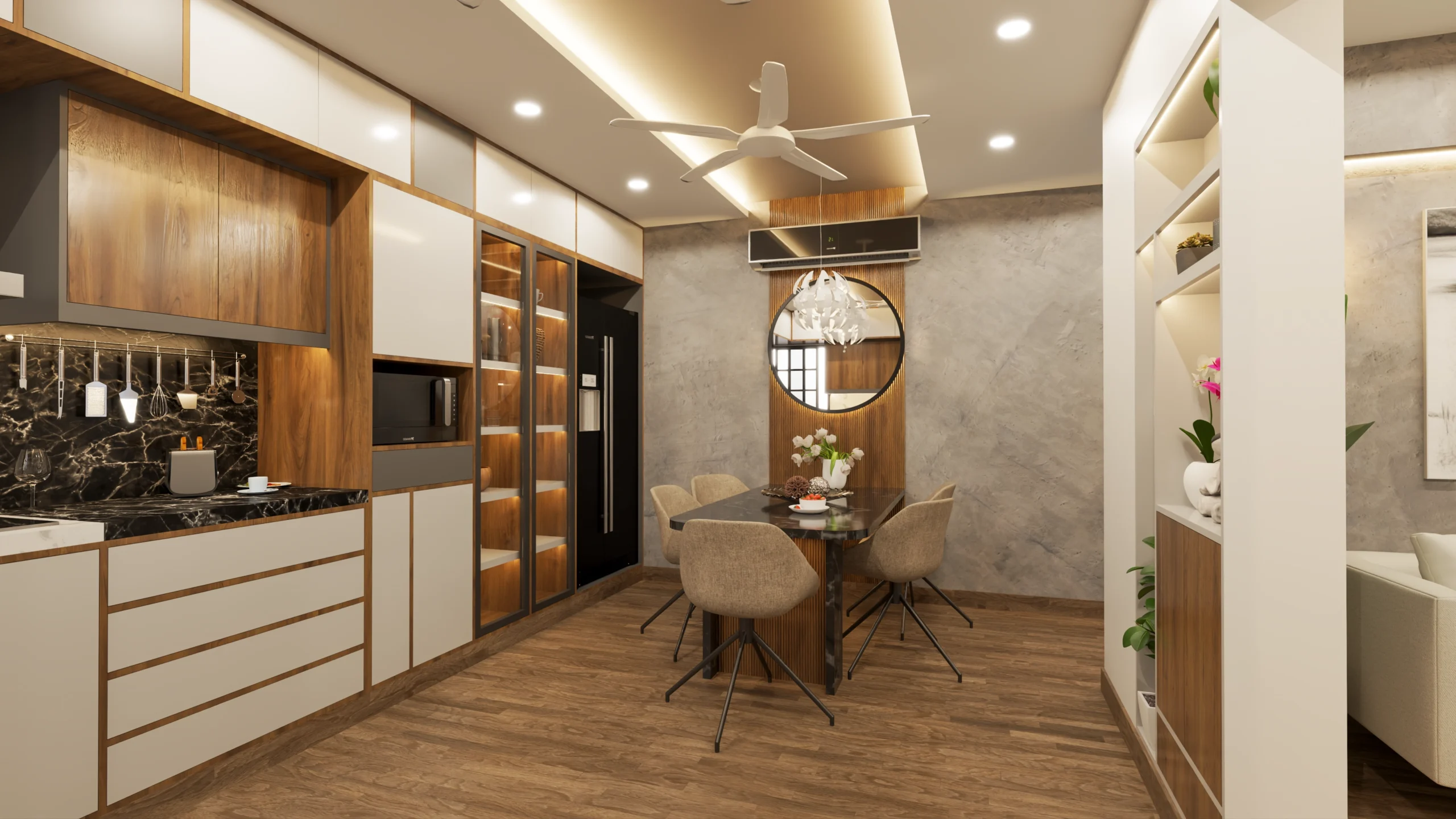
The New Nomadism: How Global Travel Shapes Our Private Spaces

I am writing this from a quiet corner of a gallery in Mayfair, where a single piece of raw-edged travertine sits beneath a pool of warm halogen light, and the room smells faintly of cedar and old paper. It is the kind of space that asks nothing of you and yet gives everything. I have been thinking, as I often do between projects, about the particular way that travel rewires the interior imagination. Not the hurried tourism of airport lounges and hotel lobbies, but the slow, deliberate kind of travel that leaves a residue on the soul and, inevitably, on the walls of one’s home. The new nomadism is not a trend. It is a philosophy, and it is quietly reshaping the way the world’s most discerning individuals approach global interior design.

There is a client I worked with recently, a woman who divides her year between a townhouse in Belgravia, a converted farmhouse in Umbria, and a penthouse overlooking the Bosphorus. When she first came to me, she described her home as feeling “borrowed,” as though the spaces she inhabited had been assembled by someone else’s memory. What she wanted, and what I believe every well-travelled person ultimately desires, is a home that reflects the full breadth of a life lived across latitudes. That is the central challenge and the central beauty of designing for the modern nomad.

The architecture of your legacy is defined not merely by the objects you choose, but by the standard of life you refuse to compromise on. At The Shape Interiors, we specialise in the silent language of luxury, transforming raw space into sophisticated environments that resonate with the human spirit and professional excellence. Whether you are defining a private sanctuary or a global corporate headquarters, the requirement remains the same: a vision executed with absolute precision.

We invite you to explore our work and discover why the world’s most discerning individuals trust us with their most personal and professional environments.

Refine Your World.

Your journey toward an unparalleled environment begins with a single conversation. Connect with our global design team to initiate your bespoke project.

Start the Conversation Now.

Frequently Asked Question

What is global interior design and how does it differ from eclectic decorating?

Global interior design is a deeply considered discipline rooted in cultural intelligence and material knowledge gathered through genuine international experience. Unlike eclectic decorating, which often assembles objects from various origins without contextual understanding, global interior design operates through spatial philosophy. It draws on the architectural logic, material traditions, and sensory qualities of different cultures, translating them into a cohesive, layered interior that feels both cosmopolitan and deeply personal. The distinction lies in depth of knowledge: a globally designed space honours its cultural references through understanding rather than simply borrowing their aesthetic surface.

How can I incorporate global design influences without my home feeling incoherent?

The key lies in the discipline of the edit and a commitment to material quality over quantity. Rather than introducing objects from multiple cultures simultaneously, consider selecting one or two cultural references that hold genuine personal meaning and allowing them to inform the spatial logic of a room. A Japanese-influenced restraint in furniture arrangement, for instance, can coexist beautifully with the warm, textured materiality of a Mediterranean palette. The thread that holds a globally influenced interior together is not stylistic uniformity but rather a consistent commitment to quality, provenance, and intentional placement.

What materials are most associated with sophisticated global interior design?

The materials that define the most enduring globally influenced interiors are invariably those with a strong sense of provenance and natural character. Aged marble, hand-thrown ceramics, raw-edged stone, woven textiles with traceable origins, and patinated metals all carry the memory of their making and their cultural context. These materials reward close attention; they change with light and age with grace. The sophistication of a globally designed interior is often measured not by the rarity of its materials but by the depth of understanding with which they have been selected and placed within the space.

How does travel experience translate into better interior design decisions?

Travel cultivates a form of spatial literacy that is extraordinarily difficult to acquire any other way. To have inhabited a Kyoto machiya, a Provençal farmhouse, or a Manhattan loft is to understand, at a bodily level, how proportion, light, and material combine to create a particular quality of atmosphere. This experiential knowledge informs every design decision, from the height of a ceiling to the temperature of a light source to the weight of a door handle. The well-travelled designer and client bring to a project an archive of sensory memory that elevates the conversation far beyond the purely aesthetic.

Is the nomadic design aesthetic suitable for corporate and commercial interiors?

Absolutely, and increasingly so. The most forward-thinking corporate environments are moving away from the anonymous uniformity of conventional office design towards spaces that reflect genuine cultural intelligence and material quality. A boardroom that incorporates hand-crafted stone surfaces, considered lighting, and textiles with cultural provenance communicates a level of institutional confidence and global sophistication that resonates powerfully with international clients and partners. The nomadic design philosophy, with its emphasis on authenticity, restraint, and material depth, translates with remarkable elegance into high-level commercial and hospitality environments.

Leave a Reply