
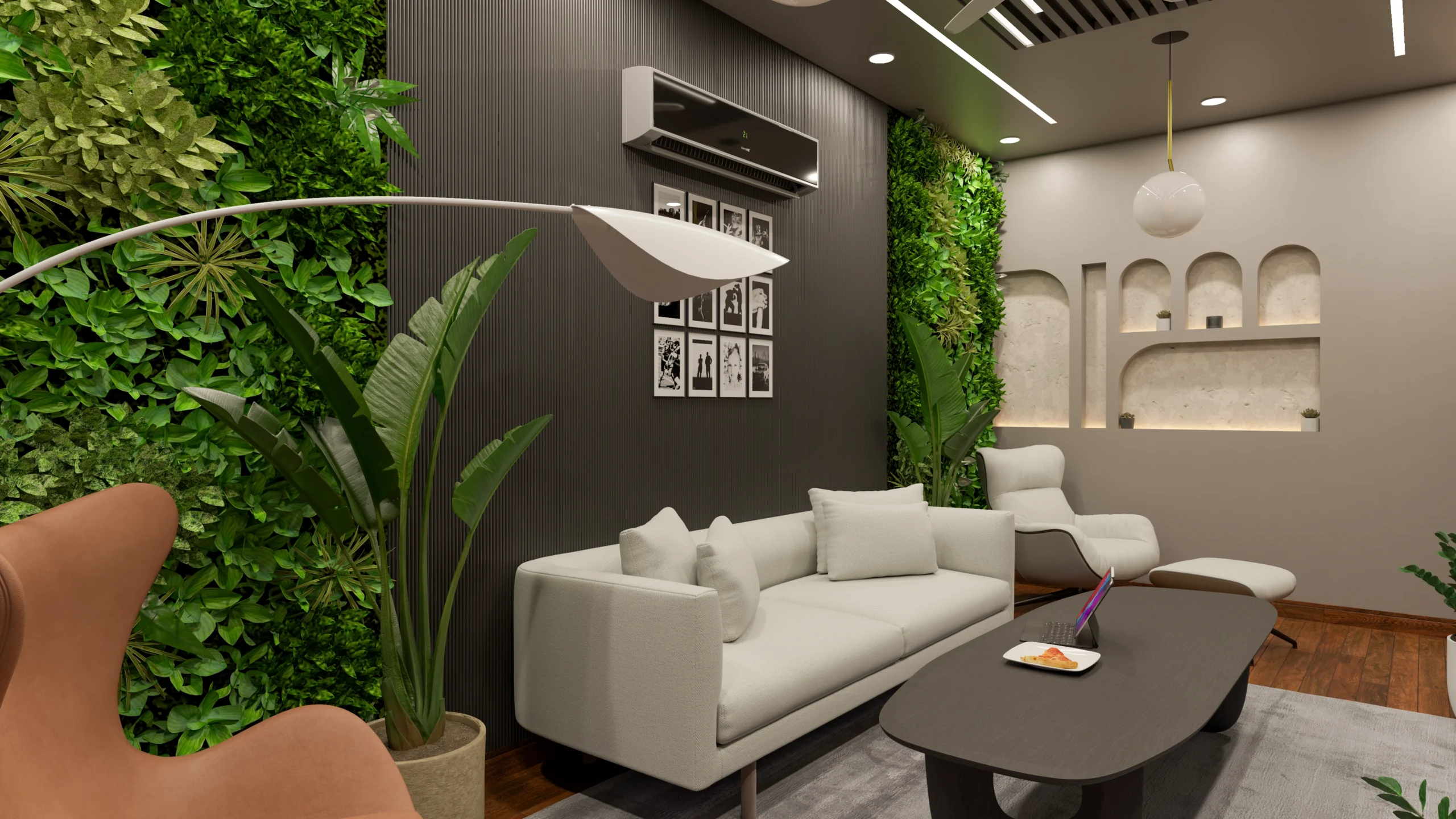
I am writing this from a quiet corner of a gallery in Mayfair, where a single monumental sculpture commands an entire room without uttering a word. The visitors orbit it instinctively, drawn by something they cannot quite name, a gravitational pull that exists somewhere between architecture and emotion. It is, in the purest sense, a focal point doing precisely what it was always meant to do: anchoring the human experience within a space. This moment, unremarkable to the casual observer, is the very thing I have spent the better part of two decades studying, refining, and translating into the private residences and corporate environments that pass through the hands of my studio. The art of the intentional focal point is, I would argue, the single most underestimated principle in luxury interior design. It is not merely about placing something beautiful in a room; it is about orchestrating where the eye travels, where the body follows, and ultimately, where the soul settles.
There is a question I return to at the beginning of every project, one that I believe every discerning homeowner and property developer ought to ask before a single piece of furniture is sourced or a single wall is painted: what is this room trying to say? A space without a focal point is a sentence without a subject. It may contain beautiful words, exquisite materials, and considered proportions, yet it communicates nothing of consequence. The intentional focal point is the subject of that sentence, the anchor from which all other design decisions radiate with purpose and clarity. Understanding this principle is not simply a matter of aesthetic taste; it is a matter of spatial intelligence, and it separates the truly considered interior from the merely expensive one.
The Architecture of Attention: What Focal Points Actually Do
The Eye as a Traveller
When we speak of focal points in the context of luxury interior design, we are speaking of something far more nuanced than a statement sofa or an oversized artwork. We are speaking of the deliberate choreography of human attention within a three-dimensional space. The eye, much like a seasoned traveller, craves orientation. It enters a room and immediately seeks a landmark, a reference point from which to begin its exploration. Without that landmark, the gaze wanders restlessly, and the body follows suit, never quite settling, never quite feeling at home. This is the invisible discomfort that many people sense in poorly designed spaces but rarely have the vocabulary to articulate. The room feels busy, or cold, or somehow incomplete, and yet every individual element may be perfectly beautiful in isolation.
Hierarchy and the Grammar of Space
The intentional focal point establishes what I think of as spatial hierarchy, a grammar that tells the room’s story in a logical, emotionally resonant sequence. Consider the grand drawing rooms of Georgian townhouses, where the fireplace was never merely a source of warmth but the undisputed sovereign of the space. Every chair, every console, every portrait was arranged in deliberate conversation with that central axis. The room had a subject, and everything else served as eloquent punctuation. This principle of hierarchy is as relevant in a contemporary penthouse in Knightsbridge as it was in a Regency manor in Bath. The materials change, the scale shifts, but the underlying grammar remains constant. A room that understands its own hierarchy feels authoritative, calm, and deeply considered, qualities that resonate profoundly with those who have cultivated a refined sensibility over a lifetime of global experience.
Material Intelligence: Choosing the Right Anchor
The Weight of Raw Materials
Not every beautiful object is capable of anchoring a room, and this is a distinction that separates the instinctive designer from the truly masterful one. A focal point must possess what I call material weight, a quality of presence that transcends its physical dimensions. A slab of book-matched Calacatta marble, veined in warm gold and soft grey, carries a geological authority that no printed surface can replicate. Aged leather, worn to a particular patina by decades of use, speaks of time and continuity in a way that synthetic alternatives simply cannot. These raw, honest materials do not merely occupy space; they command it. They carry within them the memory of the earth, of craft, of human hands, and it is this layered history that gives them the gravitational pull necessary to serve as a true focal point.
Scale, Proportion, and the Courage to Commit
One of the most common errors I encounter in otherwise well-intentioned interiors is the failure of nerve when it comes to scale. A focal point that is too modest for its room becomes a whisper in a cathedral, technically present but functionally invisible. The intentional focal point must be scaled with genuine conviction. This does not always mean enormous; a single, perfectly proportioned antique mirror above a fireplace can anchor a room of considerable grandeur through the sheer authority of its placement and finish. What it does mean is that the chosen anchor must be allowed to breathe, to be seen, to be given the spatial respect it deserves. Surrounding a focal point with competing elements of similar visual weight is the surest way to dissolve its power entirely. Restraint, in this context, is not minimalism; it is generosity towards the thing that matters most.
Light as the Silent Collaborator
Natural Light and the Drama of the Reveal
No conversation about intentional focal points is complete without an honest reckoning with light, the most transformative and most frequently neglected element in residential and commercial design alike. Natural light, when understood and directed with intelligence, can elevate a focal point from the merely impressive to the genuinely transcendent. Consider the way a shaft of afternoon light falls across a textured stone wall, animating its surface with a drama that no artificial source can fully replicate. The ancient architects of Rome understood this instinctively; the oculus of the Pantheon is, at its heart, a masterclass in using light to create a focal point of almost spiritual intensity. In a contemporary context, the same principle applies: a north-facing skylight above a sculptural staircase, a carefully positioned clerestory window that washes a feature wall in shifting gold throughout the day. These are not accidents; they are decisions made with the full understanding that light is not merely illumination but narrative.
Artificial Light and the Art of the Accent
Where natural light sets the stage, artificial light writes the script. The considered use of directional accent lighting, whether recessed spotlights angled at precisely the correct degree or a single picture light casting its warm beam across a canvas, is what separates a professionally designed space from a beautifully furnished one. The focal point must be lit with intention, drawing the eye towards it in the evening hours with the same authority that natural light provides during the day. Colour temperature matters enormously here; a warm 2700K source will enrich the amber tones of aged timber and burnished brass, whilst a cooler source might be employed to heighten the crystalline quality of a marble installation. These are not technical footnotes; they are the difference between a room that performs and a room that merely exists.
The Edit: Composing the Room Around Its Centre
The Discipline of Subtraction
Once the focal point has been identified and established with the full weight of material intelligence and considered lighting, the most important work begins: the edit. This is the process of removing everything that competes with, diminishes, or distracts from the room’s chosen anchor. It is, in my experience, the most difficult discipline for clients to embrace, because it requires a genuine willingness to let go of objects that may be individually beautiful but collectively destructive to the room’s coherence. A room curated around a single, powerful focal point will always feel more luxurious, more intentional, and more emotionally resonant than a room filled with equally expensive objects competing for dominance. The edit is not an act of deprivation; it is an act of profound respect for the space and for the people who inhabit it.
The Curated Conversation Between Elements
The objects that remain after the edit must be chosen for their ability to enter into a quiet, respectful conversation with the focal point rather than to challenge it. A console table positioned beneath a statement artwork should complement its scale and palette without mimicking it. A pair of chairs flanking a fireplace should acknowledge the fireplace’s authority through their orientation and proportion without drawing the eye away from it. This is the art of the curated room, a space where every element knows its role and performs it with quiet confidence. It is the spatial equivalent of a well-composed photograph, where the subject is unmistakable and every other element exists in service of that clarity. At The Shape Interiors, this philosophy of intentional composition is the foundation upon which every project is built, from a private study in Belgravia to a boardroom overlooking the Thames.
- Identify before you furnish: Determine the room’s focal point before sourcing a single piece of furniture. Let the anchor inform every subsequent decision.
- Invest in material authority: Choose raw, honest materials for your focal point. Marble, aged timber, hand-applied plaster, and patinated metals carry a presence that manufactured surfaces cannot replicate.
- Respect the breathing room: Allow your focal point adequate negative space. Crowding it with competing elements dissolves its power entirely.
- Layer your light deliberately: Plan both natural and artificial lighting in direct relationship to your focal point. The anchor must be as compelling at 9pm as it is at noon.
- Edit with conviction: Remove anything that competes with the room’s centre. Beauty in a curated space is defined as much by what is absent as by what remains.
- Consider sightlines from every entry point: The focal point should be visible and legible from the primary point of entry into the room. First impressions are architectural.
- Honour scale above all: A focal point that is too small for its room is worse than no focal point at all. Commit to the scale the space demands.
There is a particular quality of stillness that settles over a room when everything within it is in its rightful place, when the focal point is established with confidence, the light is considered, the edit is complete, and the remaining elements exist in harmonious, purposeful conversation with one another. It is a quality that cannot be purchased outright or replicated by accumulation alone. It is earned through the patient application of principle, through the willingness to ask difficult questions of a space and to listen carefully to its answers. I have stood in rooms of extraordinary financial investment that felt restless and unresolved, and I have stood in rooms of far more modest means that felt like a deep, considered breath. The difference, invariably, has been the presence or absence of intention. The focal point is not a decorative flourish; it is the room’s reason for being. And when it is chosen and composed with genuine intelligence, it transforms a collection of beautiful objects into something altogether more rare: a space that knows exactly who it is.
The architecture of your legacy is defined not merely by the objects you choose, but by the standard of life you refuse to compromise on. At The Shape Interiors, we specialise in the silent language of luxury, transforming raw space into sophisticated environments that resonate with the human spirit and professional excellence. Whether you are defining a private sanctuary or a global corporate headquarters, the requirement remains the same: a vision executed with absolute precision.
We invite you to explore our work and discover why the world’s most discerning individuals trust us with their most personal and professional environments.
Refine Your World.
Your journey toward an unparalleled environment begins with a single conversation. Connect with our global design team to initiate your bespoke project.