
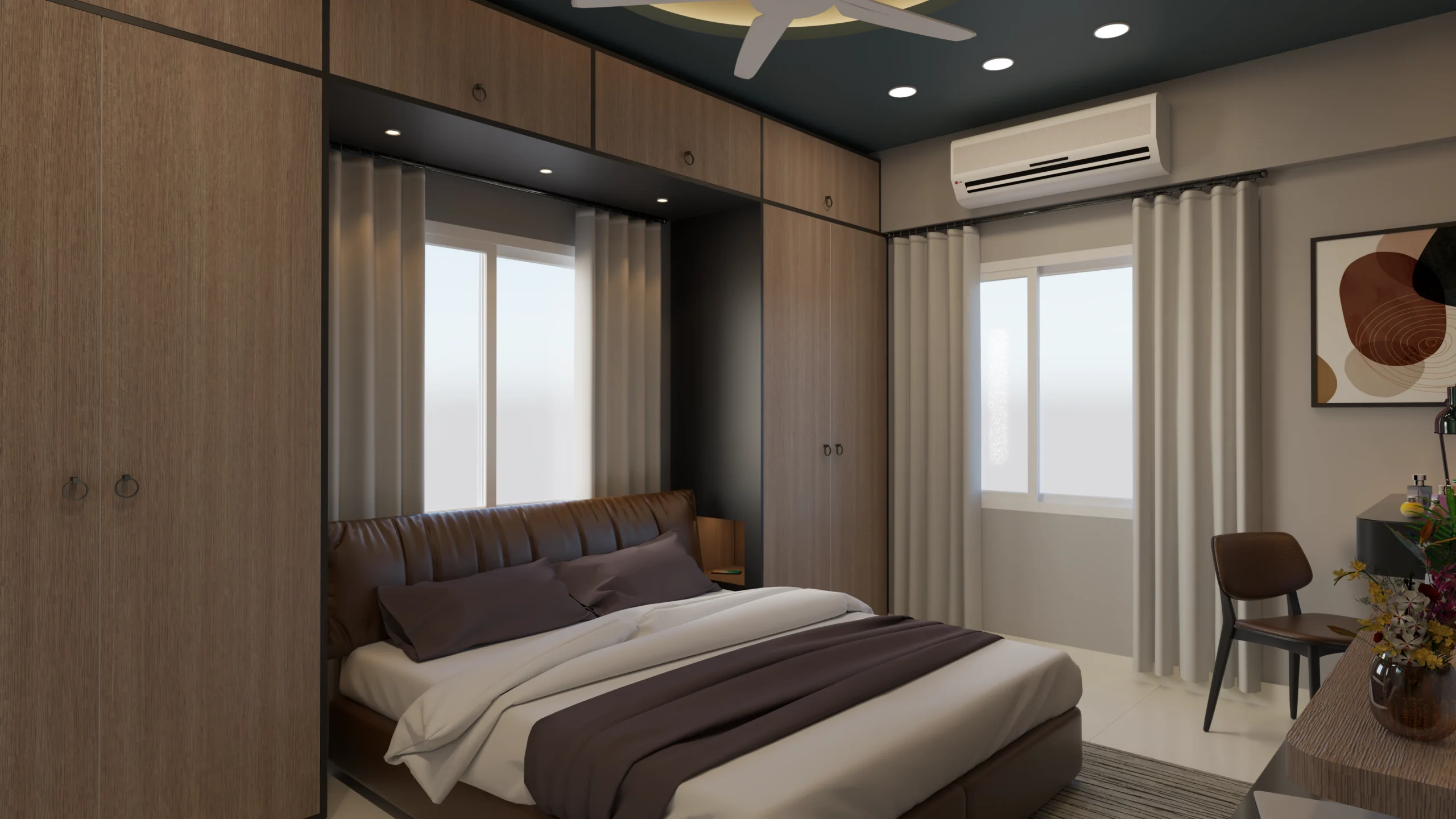
I am writing this from a quiet corner of a gallery in Mayfair, where a single piece of aged travertine sits beneath a pool of warm afternoon light, doing absolutely nothing except existing with complete and utter conviction. There are no accessories crowding its surface, no trend-driven flourishes competing for attention; there is simply the stone, the light, and the profound silence of something made to last. It is, I find myself thinking, the most honest form of luxury design philosophy I have encountered in some time. And it is precisely this kind of honesty, this commitment to substance over spectacle, that I want to explore with you today. Because in an era saturated with fast content, faster furniture, and the relentless churn of seasonal aesthetics, the question I keep returning to is this: what does it truly mean to design with depth?
The Luxury Design Philosophy of Permanence Over Trend
Why Trends Are a Conversation, Not a Commitment
There is a fundamental misunderstanding that pervades much of contemporary interior culture, and it is the conflation of style with trend. Style, in its truest architectural sense, is a deeply personal and considered language; it evolves slowly, accumulates meaning over time, and speaks with the quiet authority of someone who has nothing to prove. Trend, by contrast, is a conversation, often a fascinating one, but a conversation nonetheless, one that begins, peaks, and concludes within a cycle that grows shorter with every passing season. The danger, for those who invest seriously in their environments, is in mistaking the volume of that conversation for its permanence. I have walked through spaces that were photographed for publications three years ago and now feel curiously hollow, not because the furniture was poor quality, but because every decision within them was made in response to a moment rather than a life. The rooms had no interior design substance; they were beautiful costumes worn by spaces that had never truly found their own voice.
The Architecture of Conviction
What separates a space of genuine distinction from one that merely reflects the current mood of a design fair is, I believe, a quality I can only describe as conviction. It is the sense that every material, every proportion, every considered silence within a room has been chosen not because it was seen on a mood board or endorsed by an algorithm, but because it was right, specifically and irreversibly right, for that particular space and the particular life being lived within it. Conviction in design is not arrogance; it is the opposite. It is the result of deep listening, of understanding a client’s history, their sensory preferences, the quality of light that enters their home at seven in the morning, and the emotional register they wish to inhabit at the end of a long day. When I speak of a luxury design philosophy, I am speaking of this: the discipline to resist the seductive noise of trend and to build, instead, from a foundation of genuine understanding. The spaces that endure, the ones that appear in retrospective exhibitions and are referenced decades after their completion, are invariably the ones built on conviction rather than currency.
Material Intelligence and the Weight of Authenticity
Reading a Room Through Its Raw Materials
There is a language spoken by raw materials that no surface treatment or digital rendering can fully replicate, and learning to read it is, I would argue, one of the most essential skills in the pursuit of timeless interior design. When I run my hand across a slab of honed Calacatta marble, I am not simply assessing its visual appeal; I am reading its geological biography, the millennia of compression and mineral migration that produced those particular veins in that particular configuration. When I select aged leather for a reading chair, I am choosing a material that will continue to tell its story long after the initial installation, deepening in character with every year of use. This is what I mean by material intelligence: the capacity to understand not just how a material looks, but how it lives, how it ages, how it responds to the specific conditions of a space, and what emotional resonance it carries for the person who will inhabit that space daily. Fast furniture, by contrast, is designed to look its best on the day of delivery and to decline gracefully thereafter, which is, of course, not graceful at all.
The Sensory Vocabulary of a Considered Space
A room of genuine interior design substance communicates through every sense simultaneously, and this is something that photographs, however beautifully composed, can never fully capture. There is the particular coolness of a stone floor beneath bare feet on a summer morning; the faint, warm scent of beeswax polish on antique oak; the way a heavy linen curtain filters afternoon light into something almost amber, casting the room in a quality of illumination that feels less like decoration and more like atmosphere. These are not incidental details; they are the very architecture of experience, and they are the elements that transform a well-furnished room into a space that genuinely nourishes the people within it. I often ask clients to describe not what they want their home to look like, but what they want it to feel like at nine o’clock on a Sunday morning, when there is nowhere to be and nothing to perform. The answers to that question are invariably more useful than any Pinterest board, and they form the true foundation of a design that will sustain its relevance long after the trends that surrounded its creation have dissolved into irrelevance.
The Edit: Spatial Storytelling Through Restraint
The Discipline of Subtraction
There is a particular courage required in the act of subtraction, and it is a courage that I find increasingly rare in a design culture that equates abundance with aspiration. The edit, as I have come to understand it through years of practice and a great deal of productive restraint, is not about minimalism as an aesthetic doctrine; it is about clarity as an intellectual discipline. It is the process of asking, with genuine rigour, what each object within a space is contributing to the whole, and whether its presence serves the narrative of the room or merely occupies its square footage. A space that has been truly edited feels, paradoxically, more generous than one that is filled to capacity; it breathes, it allows the eye to rest, and it creates the conditions for genuine contemplation. The most powerful rooms I have ever encountered have been those in which a single extraordinary object, a piece of sculpture, a work of art, a beautifully proportioned chair, commands the entire space through the quality of its presence rather than the quantity of its companions. This is the luxury design philosophy of restraint: not the absence of beauty, but its distillation.
Curating a Life, Not a Catalogue
The distinction between a curated interior and a decorated one is, I think, one of the most important conversations we can have in contemporary design discourse. Decoration, in its most superficial form, is the application of objects to a space; curation is the construction of a narrative. A curated interior tells you something true and specific about the person who inhabits it: their travels, their intellectual preoccupations, their aesthetic loyalties, the particular quality of beauty they have chosen to surround themselves with over the course of a life. It is not assembled in a single afternoon from a single source; it accumulates, it evolves, it occasionally surprises even its owner with what it reveals. At The Shape Interiors, this philosophy of curation over accumulation is central to every project we undertake, because we believe, with some conviction, that the most beautiful spaces are those that reflect a life genuinely and thoughtfully lived, rather than one aspirationally performed.
Timeless Interior Design and the Long View of Beauty
Designing for the Decades, Not the Season
I want to propose something that may feel counterintuitive in our current cultural moment: that the most radical act available to a designer or a client today is the decision to think in decades rather than seasons. To commission a piece of furniture with the understanding that it will be inherited; to select a stone that will look more beautiful in twenty years than it does today; to resist the renovation impulse triggered by a new trend cycle and instead invest in the slow, patient deepening of a space that already has good bones. This is not conservatism; it is, I would argue, the most sophisticated form of design ambition available to us. It requires a confidence in one’s own taste that is genuinely difficult to sustain in an environment of constant aesthetic stimulation, but it is precisely this confidence, this willingness to commit to a vision and allow it to mature, that produces the spaces that endure. Timeless interior design is not the absence of contemporaneity; it is the presence of something deeper, a quality of intention that transcends the moment of its creation.
The Elena Edit: Design Dictates for Substance Over Surface
Before I close this particular chapter of our conversation, I want to offer what I think of as a set of working principles, not rules, because rules in design are almost always the enemy of genuine expression, but principles that have guided my own practice through the noise of trend and the seduction of the new. Consider these a framework for thinking rather than a prescription for doing:
- Invest in the irreplaceable: Prioritise materials and objects that cannot be easily replicated by mass production. Aged stone, hand-thrown ceramics, and bespoke joinery carry a quality of presence that no catalogue item can approximate.
- Design for the senses, not the camera: Ask how a space feels, smells, and sounds before asking how it photographs. The most enduring interiors are experienced rather than observed.
- Practise the discipline of the edit: Remove before you add. Every object in a room should earn its place through contribution to the whole, not merely through its own individual appeal.
- Choose conviction over consensus: Resist the pressure to validate your aesthetic choices against current trend reports. The spaces that endure are those built from genuine understanding rather than borrowed taste.
- Think in generations: Commission and select with the understanding that the finest interiors are those that deepen in meaning and beauty over time, rather than peaking on the day of completion.
- Honour the architecture: Allow the existing bones of a space to inform every subsequent decision. A room in conversation with its own structure will always feel more resolved than one in conflict with it.
- Embrace productive restraint: Understand that the most powerful statement a room can make is often one of considered silence, a space that knows precisely what it is and requires nothing further to prove it.
The pursuit of timeless interior design is, at its core, a pursuit of honesty: honesty about materials, about proportion, about the life being lived within a space, and about the kind of beauty that sustains rather than merely dazzles. It is a pursuit that requires patience, intellectual rigour, and a willingness to resist the considerable seductions of the immediate and the fashionable. But the spaces it produces, those rooms that feel as though they have always existed and will continue to exist long after we have moved through them, are, I believe, among the most profound expressions of human intelligence and care available to us. They remind us, quietly and without apology, that beauty is not a moment; it is a practice, and one worth committing to with everything we have.
The architecture of your legacy is defined not merely by the objects you choose, but by the standard of life you refuse to compromise on. At The Shape Interiors, we specialise in the silent language of luxury, transforming raw space into sophisticated environments that resonate with the human spirit and professional excellence. Whether you are defining a private sanctuary or a global corporate headquarters, the requirement remains the same: a vision executed with absolute precision.
We invite you to explore our work and discover why the world’s most discerning individuals trust us with their most personal and professional environments.
Refine Your World.
Your journey toward an unparalleled environment begins with a single conversation. Connect with our global design team to initiate your bespoke project.