
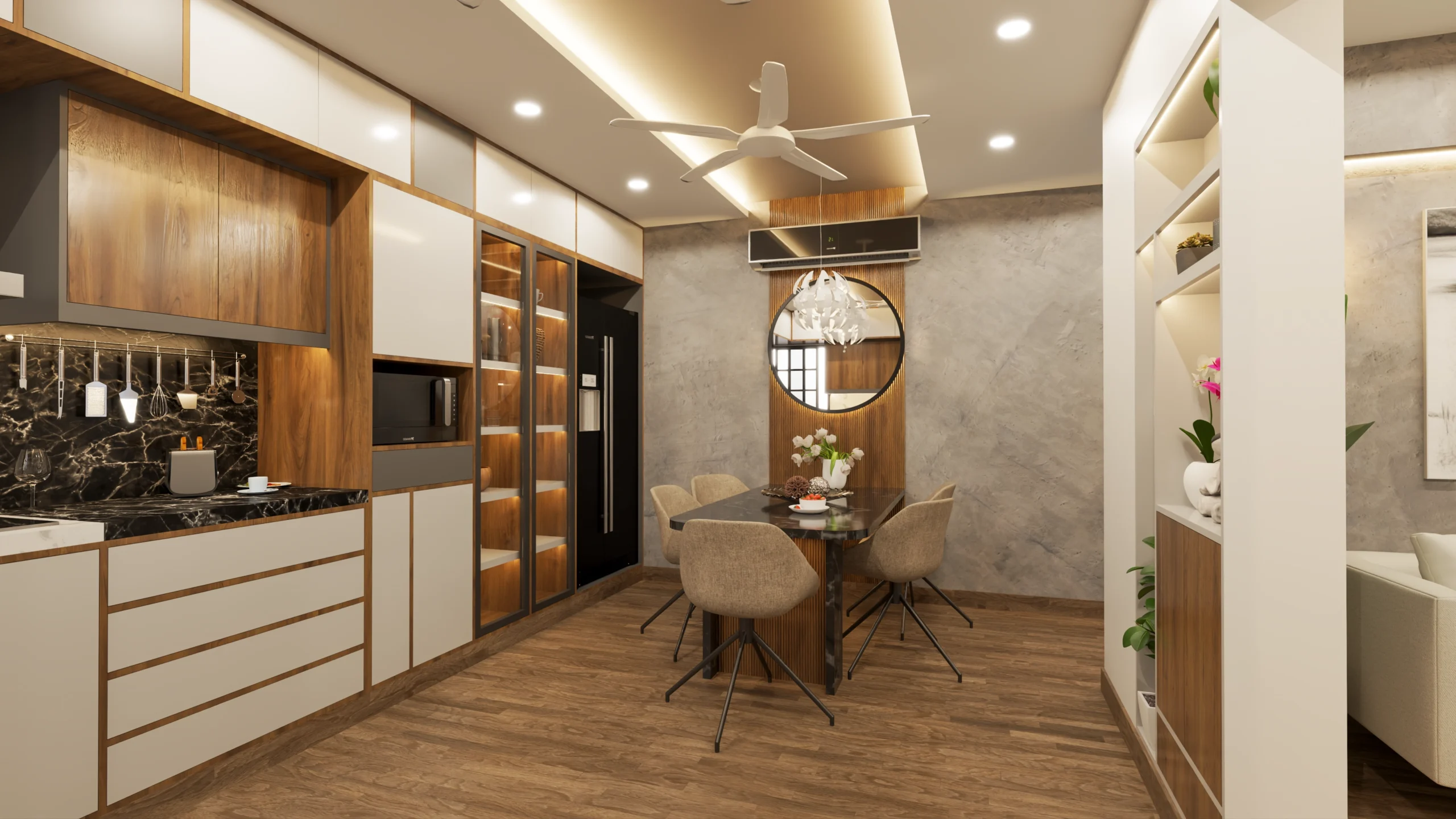
I am writing this from a quiet corner of a private members’ gallery in Mayfair, where a single Hiroshi Sugimoto photograph commands an entire wall with the kind of authority that no amount of decorative excess could ever replicate. There is a glass of Chablis beside me, barely touched, and outside the October light is doing that particular London thing where it turns everything to pewter and gold simultaneously. It is in moments like these that I find myself returning, almost involuntarily, to a question that has shaped my entire design philosophy: what does it truly mean to live with less, and yet feel the presence of everything? This question sits at the very heart of minimalist luxury, and nowhere on earth is it answered more eloquently, or more differently, than in Tokyo and Paris. These two cities represent the twin poles of a global design conversation, one rooted in spiritual restraint, the other in cultivated sensuality, and together they offer the most complete study of refined living I have ever encountered in my career.
The Philosophy of Absence: How Tokyo Defines Minimalist Luxury
Ma: The Architecture of Intentional Space
To understand Tokyo’s relationship with minimalist luxury, one must first understand ma, the Japanese concept of negative space, of the pause between notes, of the room that breathes. It is not emptiness in the Western sense, which so often carries a suggestion of lack or incompletion. In the Japanese spatial tradition, the void is the point. A tatami room with a single hanging scroll, a ceramic vessel placed with surgical precision on a low shelf of aged hinoki cypress, a window framing a moss garden as though it were a living painting: these are not acts of restraint born from austerity. They are acts of profound editorial confidence. The designer, or the inhabitant, has made a decision about what deserves to exist in a given space, and everything that remains carries the full weight of that intention. This is a form of global interior design philosophy that I find endlessly instructive, because it demands a level of curatorial courage that most Western clients initially resist but ultimately come to regard as transformative.
Material Honesty and the Wabi-Sabi Sensibility
What strikes me most forcefully when I walk through the interiors of Tokyo’s finest residences is the quality of material honesty on display. There is no veneer, no imitation, no surface pretending to be something it is not. Aged timber is allowed to show its grain and its history. Unglazed ceramics carry the fingerprints of their maker. Linen is left to crease naturally, because the crease is part of the story. This is the wabi-sabi sensibility translated into contemporary luxury living, and it produces spaces of extraordinary emotional depth. The patina of a hand-forged iron door handle, the slight irregularity of a hand-plastered wall finished in shikkui, the warm, resinous scent of a room lined in sugi cedar: these are not incidental details. They are the entire argument. Minimalist luxury in Tokyo is not about the absence of richness; it is about the presence of authenticity, and that distinction is everything.
The Art of Restraint Reimagined: Paris and the Luxury of the Considered Edit
Haussmann, Hauteur, and the Discipline of the Parisian Interior
Paris approaches minimalist luxury from an entirely different cultural inheritance, and yet arrives at a destination that is, in its own way, equally rigorous. The Haussmann apartment, with its three-metre ceilings, its herringbone parquet of aged oak, its marble fireplace surround and its tall, south-facing windows flooding the room with that particular milky Parisian light, provides a structural framework of such inherent beauty that the temptation to over-furnish it is, for the educated eye, almost offensive. The great Parisian interiors I have had the privilege of studying are defined not by what they contain but by what they have chosen to exclude. A single Louis XVI fauteuil reupholstered in undyed linen. A console of veined Calacatta marble. A mirror of foxed glass that reflects the room back to itself with a slight, flattering distortion. These are the gestures of a culture that understands luxury as the product of discernment rather than accumulation, and it is a lesson that resonates deeply with the global interior design conversation happening right now.
The French Sensory Register: Scent, Light, and Tactile Intelligence
Where Tokyo’s minimalist luxury engages the senses through material honesty and spatial silence, Paris engages them through a more overtly sensory register. The scent of beeswax polish on ancient parquet. The cool, slightly rough texture of a raw plaster wall painted in a tone so close to white that it takes three viewings to identify it as the palest grey. The way afternoon light enters a Marais apartment through shutters left half-closed, casting long, theatrical shadows across a floor of worn limestone. These are the sensory signatures of Parisian restraint, and they are every bit as deliberate as the Japanese approach, simply expressed through a different cultural vocabulary. The French edit is not cold; it is warm with history, layered with the invisible presence of generations, and it achieves its luxury not through newness but through the accumulated authority of things that have endured.
Where East Meets West: The Synthesis of Two Design Philosophies
The Global Interior and the Cultivated Hybrid
The most compelling interiors I encounter in my practice today are those that have absorbed both traditions without being enslaved to either. A London townhouse where a single Japanese tokonoma alcove, framed in blackened steel rather than timber, holds a piece of contemporary sculpture and nothing else, while the rest of the room is furnished with the quiet confidence of a Parisian salon. A Hong Kong penthouse where aged leather seating of European provenance sits on a floor of honed Japanese basalt, and the only decorative gesture is a single branch of dried magnolia in a vessel of unglazed stoneware. These are spaces that speak the language of global interior design fluently, drawing on the world’s most sophisticated design traditions to create something that is entirely of the present moment. At The Shape Interiors, this synthesis is precisely the territory we find most creatively fertile, because it demands both intellectual rigour and genuine cultural literacy.
The Shared Grammar of Minimalist Luxury
Despite their differences, Tokyo and Paris share a fundamental grammar when it comes to minimalist luxury, and it is worth articulating that grammar clearly. Both traditions prioritise the quality of a single object over the quantity of many. Both understand that light is a material in its own right, to be shaped and directed with the same care as marble or timber. Both insist on the primacy of proportion, recognising that a room whose dimensions are correctly balanced will feel luxurious regardless of what it contains. And both, crucially, understand that true luxury is not about the price of things but about the quality of attention paid to them. This is the insight that separates genuinely refined global interior design from mere expensive decoration, and it is the insight that I carry with me from every city I visit.
The Elena Edit: Design Dictates for the Minimalist Luxury Interior
Principles That Transcend Geography
After years of studying these two traditions in depth, and of applying their lessons to projects across London, the Middle East, and Southeast Asia, I have distilled a set of design principles that I consider non-negotiable when approaching a minimalist luxury interior. These are not rules in the prescriptive sense; they are orientations, ways of seeing and deciding that consistently produce spaces of genuine distinction. They apply whether one is working within a Haussmann apartment in the 7th arrondissement or a contemporary residence in Minami-Aoyama, and they form the editorial backbone of every project I undertake.
- Honour the void: Resist the impulse to fill every surface. The empty space is not a failure of imagination; it is the room’s capacity to breathe, and it is where the eye finds its rest.
- Invest in raw materiality: Choose marble, aged leather, hand-plastered walls, and unlacquered timber over synthetic alternatives. The material’s history becomes the room’s biography.
- Edit with conviction: Every object in a minimalist luxury interior must justify its presence. If it does not contribute to the spatial narrative, it does not belong.
- Light is the first material: Before selecting a single piece of furniture, understand how light moves through the space at every hour of the day. Design for that light, not against it.
- Proportion precedes decoration: A room with correct proportions needs very little else. Address the architecture before addressing the furnishings.
- Embrace cultural cross-pollination: The most sophisticated interiors draw on global design traditions without appropriating them. Study the philosophy behind the aesthetic, not merely the aesthetic itself.
- Patina over perfection: Allow materials to age, to carry the evidence of time and use. A surface that shows its history is infinitely more interesting than one that does not.
The Quiet Authority of the Considered Room
There is a quality that the finest minimalist luxury interiors share, whether they are located in Tokyo’s Daikanyama or Paris’s Saint-Germain-des-Prés, and it is a quality I can only describe as quiet authority. These rooms do not announce themselves. They do not perform. They simply exist with a completeness and a confidence that makes the visitor feel, almost immediately, that they have arrived somewhere significant. This quality cannot be purchased directly; it must be designed, and designing it requires the kind of deep cultural knowledge, material intelligence, and editorial discipline that takes years to develop. It is, in the truest sense, the product of a life spent paying attention to the world.
I find myself returning, as I so often do, to that Sugimoto photograph on the gallery wall beside me. It contains, within its silver gelatin surface, the entire argument for minimalist luxury: the power of a single, perfectly chosen thing to render everything else unnecessary. Tokyo understood this through centuries of Zen philosophy. Paris understood it through centuries of aristocratic refinement. And we, as designers and as inhabitants of the spaces we create, are the fortunate inheritors of both traditions. The question worth sitting with, as you consider the rooms you inhabit and the objects you choose to live among, is simply this: what would remain if you removed everything that did not truly matter? I suspect the answer, wherever in the world you find yourself, would be more beautiful than you expect. I would be genuinely curious to know what you discover, and I warmly invite you to share your own reflections in the comments below.
The architecture of your legacy is defined not merely by the objects you choose, but by the standard of life you refuse to compromise on. At The Shape Interiors, we specialise in the silent language of luxury, transforming raw space into sophisticated environments that resonate with the human spirit and professional excellence. Whether you are defining a private sanctuary or a global corporate headquarters, the requirement remains the same: a vision executed with absolute precision.
We invite you to explore our work and discover why the world’s most discerning individuals trust us with their most personal and professional environments.
Refine Your World.
Your journey toward an unparalleled environment begins with a single conversation. Connect with our global design team to initiate your bespoke project.