
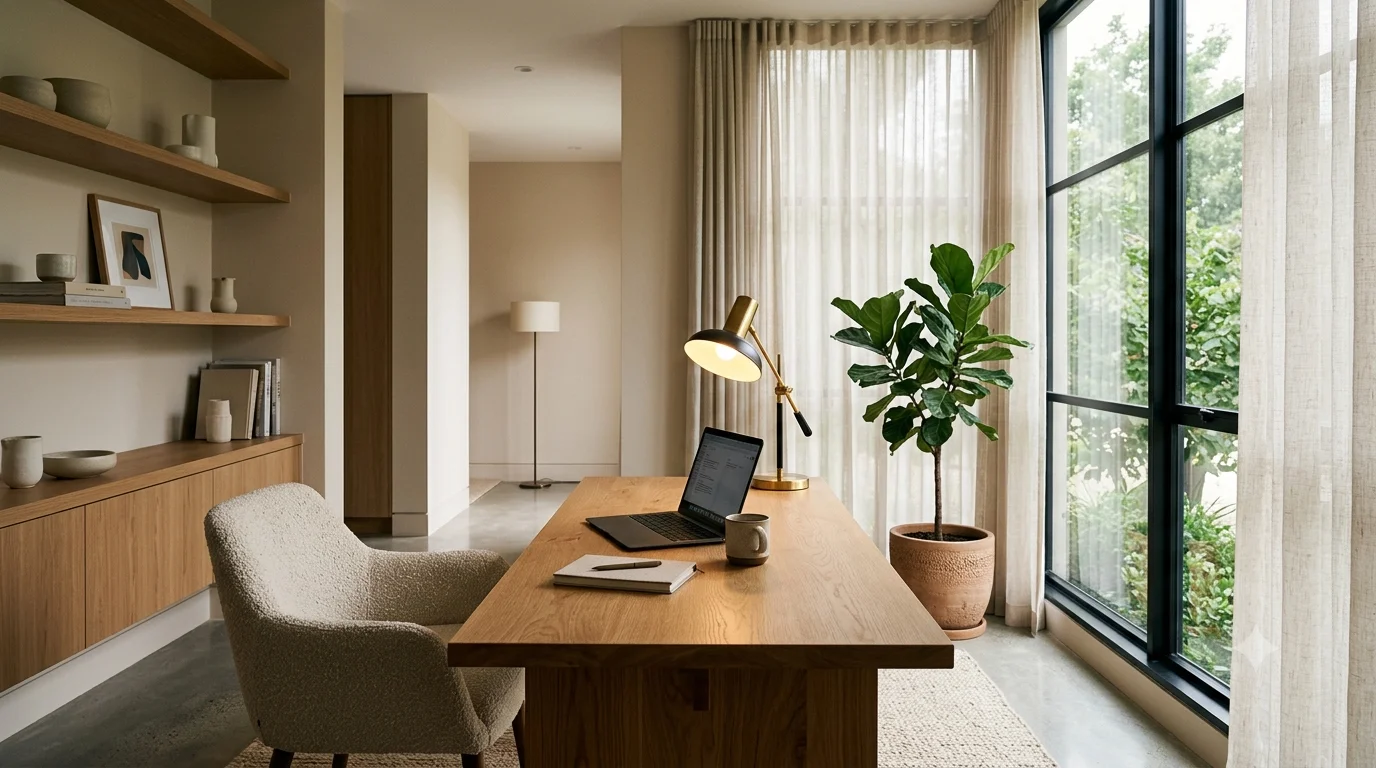
It is 3 p.m. and your team looks tired. Screens glow, but the room feels flat. Nobody can quite explain why focus keeps slipping. Often, the answer is not workload. It is the lighting overhead, quietly working against everyone in the room.
Most offices treat lighting as an afterthought. Fixtures get installed once, then forgotten for years. But light shapes how alert, calm, or drained your team feels every single hour. If you are rethinking your workspace, it helps to book a consultation with The Shape Interiors before you buy a single fixture. Good lighting decisions early save costly rework later.
This guide walks through how office lighting actually affects productivity. It covers the science, the common mistakes, and a practical plan you can follow room by room.
Why Office Lighting Quietly Shapes Productivity
Lighting is not just about seeing your screen or your desk. It affects your body’s internal clock, your energy levels, and even your mood across the workday. Poor lighting builds fatigue slowly, so most people blame everything except the actual light source.
Well-planned lighting does the opposite. It supports alertness in the morning, steady focus at midday, and a calmer wind-down by late afternoon. Teams working under thoughtful lighting tend to report fewer headaches and less eye strain. Over a full year, that adds up to real, noticeable differences in comfort and output.
The Hidden Cost of Getting It Wrong
Bad lighting rarely announces itself directly. Instead, it shows up as low energy, frequent breaks, or unexplained irritability by mid-afternoon. Many offices spend heavily on furniture and decor while lighting gets a tiny leftover budget. That imbalance is a mistake, because lighting touches every task performed in the room, all day long. Employees who squint at screens or shift chairs to dodge glare are spending mental energy on discomfort instead of on their work. Multiply that small drain across a full team, and the cumulative loss becomes significant, even if it never shows up on a single line item.
Fixing lighting after the fact is also almost always more disruptive and expensive than planning it correctly the first time. Rewiring circuits, relocating fixtures, or replacing an entire ceiling grid once furniture and finishes are already in place adds cost and downtime that could have been avoided. Treating lighting as an early design decision, rather than a final touch, consistently saves both money and hassle down the line.
Why This Matters More in 2026
Hybrid schedules mean fewer hours in the office, but those hours now carry more weight. When a team is only in the physical office two or three days a week, the space needs to earn its place. A room with poor lighting quietly discourages people from wanting to be there at all, which undermines the entire point of maintaining a physical office. Getting lighting right is no longer just a comfort upgrade. It has become part of the case for the office existing in the first place.
The Science Behind Light and Focus
Human bodies run on an internal clock called the circadian rhythm. Light is the single strongest signal that keeps this clock accurate. When office lighting ignores this rhythm, your team’s natural energy patterns get disrupted without anyone realizing why.
Circadian Rhythms and Alertness
Bright, cooler light in the morning tells your brain it is time to be alert and focused. As the day progresses, warmer and dimmer light signals it is time to wind down naturally. Offices that use a single flat lighting setting all day ignore this rhythm completely. That mismatch is one of the most overlooked productivity drains in modern workplaces. Adjusting light intensity and tone across the day, even in small steps, noticeably improves how alert people feel by late afternoon. This does not require a complex system. Even manually switching between two lighting scenes, one for morning and one for afternoon, makes a measurable difference.
Understanding Color Temperature in Office Design
Color temperature is measured in Kelvin, and it describes how warm or cool a light appears to the eye. Getting this right for each zone of your office has a direct effect on comfort and concentration. Below is a breakdown of the three main ranges you will encounter when planning office lighting.
Warm Light (2700K–3000K)
Warm light has a soft, yellow-orange tone similar to a sunset. It works well in lounges, break rooms, and informal meeting corners. This tone is not ideal for intense focus work, since it can feel too relaxing for sustained tasks.
Neutral Light (3500K–4100K)
Neutral light strikes a balance between warmth and crispness. It suits general desk work, open-plan areas, and most day-to-day office activity. Many designers treat this range as the safest default for shared workspaces.
Cool Light (5000K–6500K)
Cool light has a bluish, energizing tone that mimics daylight at its brightest. It works best for detail-heavy or task-intensive zones like drafting tables or technical workstations. Used everywhere in an office, though, it can feel harsh and eventually raise stress levels.
Brightness and Lux Levels Worth Knowing
Color temperature is only half the equation. Brightness, measured in lux, determines whether a space feels dim, comfortable, or overly harsh. General office areas typically feel most comfortable somewhere in a moderate brightness range, while focused task areas benefit from slightly higher levels. Rooms that are too dim force eyes to strain, while rooms that are too bright create fatigue from constant glare. A designer measuring actual lux levels in your space, rather than guessing, removes this uncertainty entirely.
Common Lighting Mistakes That Drain Productivity
Even well-intentioned offices repeat the same lighting mistakes. Recognizing these patterns is the first step toward fixing them. Here are the mistakes that show up most often during workspace audits.
- Relying on a single overhead light source for the entire room, which creates harsh shadows and uneven brightness across desks.
- Ignoring glare on computer screens, which forces employees to squint or reposition monitors constantly throughout the day.
- Using inconsistent color temperatures across adjoining rooms, which creates a jarring, disjointed feel when people move between spaces.
- Placing desks directly under skylights or windows without any glare control, causing discomfort during peak sun hours.
- Skipping task lighting entirely and assuming ambient light alone is enough for detailed, close-up work.
- Never adjusting lighting levels across the day, even as natural daylight outside changes significantly.
- Choosing fixtures purely for their appearance in a showroom, without testing how they perform in the actual room they will occupy.
Layered Lighting: Building a System That Works
Professional lighting design rarely relies on one single source. Instead, it layers several types of light together, each serving a different purpose. This layered approach is what separates a flat, tiring office from one that feels genuinely comfortable to work in.
Ambient Lighting Sets the Foundation
Ambient lighting provides the overall base brightness for a room. It should be even, glare-free, and bright enough for general movement and casual tasks. Without a solid ambient layer, every other lighting choice in the room will feel unbalanced. Recessed ceiling fixtures, linear LED panels, and indirect cove lighting are all common ways to achieve this base layer without creating harsh shadows underneath.
Task Lighting Supports Focused Work
Task lighting targets specific work areas like desks, drafting tables, or reading nooks. It should be adjustable, since different people need different brightness levels for comfortable focus. Desk lamps, under-cabinet lights, and adjustable pendant fixtures all fall into this category. Giving individual employees control over their own task lighting also respects the fact that eyesight and preference genuinely vary from person to person.
Accent Lighting Adds Depth and Character
Accent lighting highlights architectural features, artwork, or specific zones within the office. It is not about function first, but it does shape how a space feels to move through. A well-placed accent light can make a plain corridor feel intentional rather than forgotten. Used sparingly, accent lighting also helps visually separate different zones within an open-plan office, without needing to build physical walls.
Natural Light and Daylight Strategy
Natural daylight remains the gold standard for supporting energy and mood at work. No artificial fixture fully replicates the subtle shifts of real sunlight across a full day. That said, daylight needs careful management, or it can create as many problems as it solves.
Balancing Daylight Without Creating Glare
Large windows are wonderful for morale, but direct sun on a screen makes work nearly impossible. The goal is to bring daylight deep into the room while controlling its intensity near workstations. Achieving this balance usually requires more than curtains, and often involves specific desk orientation choices, along with the right glazing or film on the glass itself.
Desk Placement Relative to Windows
Position desks perpendicular to large windows rather than directly facing or backing onto them. This reduces glare on screens while still allowing daylight to fill the room. It is a simple adjustment that costs nothing but changes comfort significantly, and it is often the very first thing worth correcting in an existing office.
Window Treatments That Diffuse Rather Than Block
Sheer or semi-transparent blinds let daylight scatter softly into the room instead of blocking it entirely. Fully blackout curtains during work hours often force teams back onto artificial light, defeating the purpose of the windows in the first place. Diffusing daylight keeps the room bright without harsh direct rays landing on desks or screens.
Glare Control on Digital Screens
Anti-glare monitor coatings and adjustable screen angles help reduce discomfort near bright windows. Combined with proper blind placement, these small measures prevent the squinting and eye strain that daylight can otherwise cause. Addressing glare early avoids a common source of afternoon fatigue that many teams simply learn to tolerate instead of fixing.
Lighting for Different Work Zones
Not every part of an office needs the same lighting approach. Different activities call for different brightness levels, tones, and fixture types. Planning zone by zone produces a far more comfortable result than applying one blanket lighting scheme everywhere.
Private Offices and Focus Rooms
Private offices benefit from adjustable lighting that the occupant can control directly. Being able to shift from cool, energizing light to a softer tone later in the day supports sustained focus. A single dimmable fixture combined with a desk lamp usually covers most private office needs well, without requiring a complicated setup.
Open Workstations and Shared Desks
Open areas need even, glare-free ambient lighting paired with individual task lights at each desk. Because multiple people share the space, lighting preferences will vary, so flexibility matters here. Overhead lighting alone rarely satisfies everyone in a busy open-plan layout, especially across a full working day.
Meeting and Conference Rooms
Meeting rooms benefit from layered lighting that can shift between presentation mode and open discussion mode. Dimmable overhead lights paired with accent lighting near screens make video calls and presentations far more comfortable. Harsh, uniform brightness in these rooms often causes visible fatigue during longer meetings, particularly ones that run back to back.
Breakout and Lounge Areas
Breakout spaces are where warmer, softer lighting genuinely earns its place. These areas exist for informal conversation and short mental breaks, so a relaxed tone supports that purpose well. Bright, cool lighting here can feel oddly clinical and discourage people from actually pausing to rest, which defeats the entire point of the space.
Reception and Entryway Zones
The reception area sets the first impression for clients and visitors, so lighting here deserves particular attention. A warm, welcoming tone at the entrance transitions smoothly into the more neutral tones used deeper in the office. Getting this transition wrong, with an abrupt shift from warm to cool light, can make the space feel disjointed the moment someone walks in. Even a short stretch of corridor deserves thought here, since a dim, poorly lit hallway between reception and the main workspace can undercut an otherwise strong first impression.
How Lighting Needs Shift Across Roles and Work Styles
Not every employee performs the same kind of work, and lighting needs shift accordingly. A one-size-fits-all approach ignores real differences between analytical tasks, creative work, and collaborative sessions.
Analytical and Detail-Oriented Work
Roles involving spreadsheets, code, or fine detail benefit from brighter, cooler lighting that supports sustained visual focus. These tasks demand consistent attention over long stretches, so glare-free, even brightness matters more here than anywhere else in the office. Task lighting becomes especially important for employees doing this kind of close, repetitive visual work.
Creative and Design Work
Creative roles often benefit from a slightly warmer, more flexible lighting setup that allows for mood shifts throughout the day. Designers and writers frequently report that overly clinical, cool lighting feels restrictive during ideation sessions. Giving creative teams some control over their immediate lighting environment tends to support more comfortable, sustained creative output.
Collaborative and Meeting-Heavy Roles
Employees who spend much of their day in meetings need lighting that reduces fatigue during long stretches of screen time and conversation. Soft, even lighting without harsh overhead glare helps prevent the tired, drained feeling that often follows a day full of back-to-back calls. Meeting rooms designed with this in mind tend to produce noticeably more energized discussions later in the day.
Hybrid Workers on Office Days
Employees who split their week between home and the office often notice lighting differences more sharply than full-time office staff. A poorly lit office day, compared with a well-adjusted home setup, can feel like a step backward rather than a change of scenery. Making office lighting genuinely comfortable helps justify the commute and supports the case for keeping hybrid teams coming in at all.
Lighting and Energy Efficiency Without Sacrificing Comfort
Energy efficiency and employee comfort are often treated as competing priorities, but thoughtful lighting design can support both at once. Modern LED systems use a fraction of the electricity older fixtures required, while still delivering the brightness and color quality a productive office needs.
How Daylight Harvesting Reduces Artificial Lighting Use
Daylight harvesting uses sensors to automatically dim artificial lights as natural daylight increases in a room. This keeps overall brightness consistent while reducing unnecessary electricity use during bright hours of the day. It also prevents the jarring feeling of artificial light competing unnecessarily with strong daylight streaming through a window.
Zoning Circuits for Smarter Control
Splitting a room’s lighting into separate circuits allows different zones to be switched or dimmed independently, rather than as one single block. This means a meeting room can stay bright while an adjacent quiet zone dims for focused reading, without one setting compromising the other. Zoning is a relatively low-cost upgrade that pays off significantly in day-to-day flexibility.
Thinking About Return on Investment
Efficient lighting upgrades often pay for themselves over time through reduced electricity bills, even before counting the harder-to-measure productivity gains. Teams evaluating a lighting overhaul should weigh both the direct energy savings and the less tangible, but very real, benefits of a more comfortable workspace. Viewed this way, lighting stops looking like a pure expense and starts looking like a long-term investment in how the office actually performs.
Smart Lighting Controls and Automation
Smart lighting systems have become far more accessible in recent years, and they offer real, practical benefits for offices. Automation removes the burden of manually adjusting lighting throughout the day, which most teams simply never do consistently on their own.
Scheduling Light to Match the Workday
Programmable systems can automatically shift color temperature and brightness across the day, mimicking natural light patterns without any manual input. Morning settings lean cooler and brighter, while late afternoon settings gradually warm and dim. This kind of automation supports circadian alignment without requiring anyone to remember to adjust a switch.
Motion Sensors and Occupancy-Based Lighting
Motion sensors ensure lighting activates only in occupied areas, which reduces both energy waste and unnecessary glare in empty rooms. This is particularly useful in meeting rooms and private offices that see intermittent use throughout a typical day. Beyond the energy savings, occupancy-based systems also reduce the temptation to leave harsh overhead lights running in empty spaces.
Tunable and Dimmable Fixture Systems
Tunable fixtures allow both brightness and color temperature to be adjusted from a single control point, often through an app or wall panel. This flexibility means the same fixture can support focused morning work and a softer afternoon atmosphere, without installing separate fixtures for each purpose. For offices renovating on a budget, tunable systems often deliver more value per fixture than fixed, single-purpose lighting.
Seasonal and Local Climate Considerations
Lighting strategy should also account for local climate and seasonal daylight patterns, which vary significantly depending on where your office is located. In Karachi, for example, strong year-round sunlight means glare control often matters more than adding extra brightness.
Adjusting Strategy for Intense Natural Light
Offices in sunnier climates frequently need stronger glare management rather than additional artificial brightness, since daylight alone often exceeds comfortable working levels. Investing in quality window film, adjustable blinds, and screen positioning pays off more here than adding extra ceiling fixtures. During the hottest, brightest months, controlling glare becomes the priority, while artificial lighting plays a smaller supporting role.
Managing Shorter, Cloudier Days
During cooler or overcast months, artificial lighting needs to compensate more actively for reduced natural daylight. Slightly increasing ambient brightness during these periods helps maintain consistent energy levels across the team. A flexible lighting system that can be adjusted seasonally, rather than left static year-round, adapts far better to these real climate shifts.
Choosing Between AI Design Tools and Professional Lighting Planning
AI design apps have genuinely improved over the past few years, and they deserve credit for that. They can generate quick mood boards, suggest fixture styles, and give a rough sense of layout options within minutes. For early inspiration or a starting point, they are a genuinely useful, low-cost option, especially when a project is still in its earliest, most exploratory phase.
Where these tools tend to fall short is in the physical realities of a specific room. They cannot measure your actual daylight patterns, account for your building’s electrical layout, or walk your space at different times of day. A generated image might look stunning, but it cannot confirm whether the glare near your east-facing windows will make afternoons unbearable. If you would like to see how these decisions play out in real projects, it is worth browsing The Shape Interiors’ completed projects for a sense of how layered lighting looks once installed.
Professional lighting planning also accounts for how a space will actually be used over months and years, not just how it looks in a single rendered image. A strategic designer asks about your team’s working hours, your climate, and your specific tasks before recommending fixtures. That context is difficult for a generic AI tool to gather without extensive back-and-forth prompting, and even then, the tool still cannot physically visit the space. In practice, many teams use AI tools for early inspiration, then bring in a designer to translate that inspiration into something that works physically in the room.
Independent freelancers sit somewhere in between these two options. They often bring genuine design skill and can be more affordable than a full studio engagement. The trade-off is usually availability, ongoing support, and access to a wider team for complex, multi-room projects. For a single small room, a freelancer might be a perfectly reasonable choice, especially on a tighter budget.
Large firms, on the other hand, bring deep resources and experience with big commercial rollouts. They can be a strong fit for large, multi-floor corporate headquarters with complex logistics. For a boutique office or a growing small business, though, that scale can sometimes mean less personal attention to the specific details that matter most to a smaller team.
Why Lighting Deserves a Place in Office Culture Conversations
Lighting rarely comes up when teams discuss company culture, yet it quietly shapes how people feel about coming into the office. A space that feels genuinely comfortable communicates care, in a way that free snacks or motivational posters simply cannot replicate.
Signals Lighting Sends Without a Single Word
A well-lit, thoughtfully designed office tells employees that their daily comfort was actually considered during planning. Harsh, uneven, or flickering lighting sends the opposite message, even if that was never the intention behind it. Over time, employees notice these small signals, and they shape how they talk about the workplace to others.
- A comfortable, well-lit office supports longer, more focused stretches of deep work.
- Thoughtful lighting reduces the small daily frictions that quietly erode morale over time.
- Visitors and clients form impressions of a company partly through how the space feels to walk into.
- Teams tend to describe well-lit offices as calmer, even when they cannot articulate exactly why.
Budget Considerations and Where to Invest First
Lighting budgets vary widely depending on the size and complexity of the space. Knowing where to spend first helps you get the most benefit without overcommitting early. Here is a practical order of priority for most office lighting projects.
- Start with task lighting at individual desks, since this has the most direct effect on daily comfort.
- Next, address glare control near windows and screens, since discomfort here compounds throughout the day.
- Upgrade ambient lighting to layered, dimmable fixtures rather than a single flat overhead source.
- Add accent lighting last, once the functional layers are already working well.
- Consider smart controls only after the physical layout and fixture choices are finalized.
- Reassess reception and meeting room lighting once the core work zones are already comfortable.
Materials and Finishes That Interact With Light
Lighting does not exist in isolation from the surfaces around it. Wall colors, flooring, and ceiling finishes all reflect or absorb light in ways that change how a room actually feels, regardless of the fixtures chosen.
Reflective Surfaces Amplify or Soften Light
Glossy surfaces bounce light around a room, which can either brighten a dim space or create unwanted glare, depending on placement. Matte finishes absorb more light, producing a softer, calmer effect that suits focus-heavy areas better than reflective ones. Understanding this interaction helps avoid the common mistake of blaming a fixture for a problem actually caused by the surfaces around it.
Flooring Choices and Light Distribution
Lighter flooring reflects more ambient light back into a room, reducing the total number of fixtures needed to reach comfortable brightness. Darker flooring absorbs more light, which can make a space feel cozier but may require slightly stronger fixtures to compensate. Neither choice is wrong, but each one changes the lighting math involved in the room.
Wall Colors and Perceived Brightness
Pale, neutral wall colors help distribute light evenly and make rooms feel larger and brighter overall. Bold, dark wall colors create a more dramatic atmosphere but absorb significant light, often requiring extra fixtures nearby to compensate. Choosing wall color and lighting plan together, rather than separately, avoids costly surprises after paint has already gone up.
Ceiling Finishes and Indirect Light
Light-colored ceilings help indirect and cove lighting spread more evenly across a room, softening shadows throughout the space. Textured or dark ceilings can absorb this indirect light, reducing the effectiveness of fixtures designed to bounce light off the ceiling plane. This is a detail many offices overlook entirely until after installation, when it becomes far more expensive to correct.
Maintenance and Long-Term Lighting Performance
Lighting design does not end once fixtures are installed. Ongoing maintenance keeps a well-planned system performing the way it was originally intended. Neglecting this step slowly undoes even the most carefully designed lighting plan.
Building a Simple Maintenance Routine
A basic maintenance routine prevents small issues from turning into larger, more expensive problems. Regularly cleaning fixtures, checking for flickering, and replacing aging bulbs before they fail keeps light quality consistent across the office. Dust buildup alone can noticeably dim a fixture’s output over time, even when the bulb itself is still functioning correctly.
- Clean fixture covers and diffusers every few months to prevent dust from dimming output.
- Replace bulbs proactively in batches, rather than waiting for individual failures across the office.
- Recalibrate smart lighting schedules seasonally, since daylight patterns shift throughout the year.
- Periodically walk the office at different times of day to catch new glare or shadow issues early.
Getting Started: A Practical Lighting Audit
Before changing any fixtures, walk your office at three different times of day: morning, early afternoon, and late afternoon. Note where glare appears, where shadows fall, and where people naturally gravitate for informal breaks. This simple observation exercise reveals far more than any single photograph or floor plan ever could.
Write down which zones feel comfortable and which feel draining, room by room. Pay attention to how your team behaves, not just how the room looks. If people consistently avoid a certain desk or corner, lighting is often part of the reason, even if nobody says so directly.
Once you have this picture, prioritize the zones causing the most daily friction. A full office overhaul is not always necessary in the first phase. Often, targeted improvements to two or three problem areas deliver most of the comfort gains, while keeping the budget manageable and the disruption minimal.
It also helps to involve a small group of employees in this audit, rather than relying only on management observation. The people sitting at a desk every day often notice glare, flicker, or dim corners long before anyone else does. Asking a few honest questions, like which spots people avoid or which times of day feel hardest to focus, surfaces problems that a purely visual walkthrough might miss. This kind of input costs nothing to gather, yet it often points directly to the highest-impact fixes.
Bringing It All Together
Office lighting is easy to overlook and expensive to get wrong twice. Small, thoughtful choices around color temperature, layering, and daylight management add up to a workspace that genuinely supports your team’s energy and focus. The goal is not a perfect showroom look, but a space that quietly works in the background, every single day.
None of this requires replacing every fixture at once or committing to a massive renovation from day one. Many of the improvements covered in this guide, like desk orientation, window treatments, and task lighting, can be phased in gradually without disrupting daily work. What matters most is treating lighting as a deliberate design decision rather than an afterthought bolted on after everything else is finished.
If you are ready to move beyond guesswork and plan lighting that fits your specific space, team, and climate, reach out and learn more about The Shape Interiors. Strategy, after all, outlasts any passing trend in style.
Written by The Shape Interiors — Strategic Interior Design & 3D Visualization Studio, Karachi.